
- July 14th, 2025
ASCAME participated in the ‘Paths That Last – Collaborating for a Sustainable Tourism in the Mediterranean’ event, held in Split (Croatia) on June 25 and 26. The 2-day summit, organised by the Mediterranean Multi-Programme Mechanism (MMM), brought together the Managing Authorities of the 8 Interreg MED Programmes and over 200 project partners on sustainable tourism in the Mediterranean. This event was an excellent opportunity to connect with project partners and beneficiaries across the eight programmes; share insights, best practices, and results from sustainable tourism initiatives; and co-develop strategies and key recommendations to influence the future of tourism in the region.
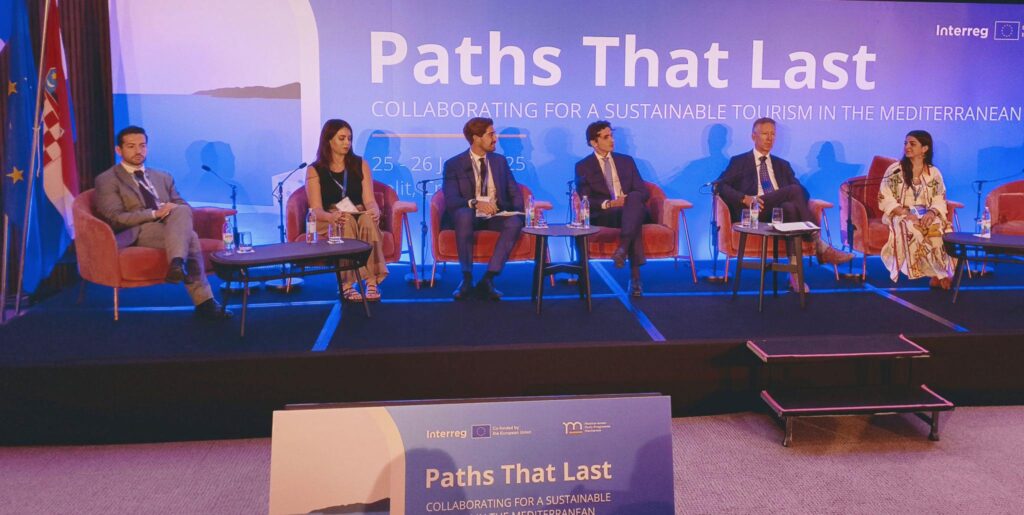
On the first day, the roundtable discussions centered on strengthening cooperation and fostering sustainable tourism across the Mediterranean. The morning roundtables highlighted the collaborative efforts of Interreg programmes through the MMM, showcasing joint activities and capitalisation strategies aimed at enhancing synergies and mainstreaming practices. Experts from Interreg Europe, Central Europe, and other regional bodies shared methodologies for aligning with broader EU cohesion goals. A forward-looking session explored the post-2027 landscape, emphasizing innovation and youth engagement. In the afternoon, keynote speakers from the Union for the Mediterranean, the European Commission, and UNEP/MAP delved into strategic and sectoral initiatives, offering insights into sustainable tourism governance, the Mediterranean Strategy for Sustainable Development, and the role of blue and green transitions in shaping the region’s future.

Unlocking synergies between programmes
A recurring theme across all sessions was the importance of fostering synergies among the 8 Interreg MED Programmes. Panelists reflected on these synergies from different points of view:
- Facilitating knowledge exchange among projects from the different Interreg MED Programmes.
- Creating lasting connections beyond ‘usual’ programmes boundaries.
- Promoting adaptation of successful tools, models, and practices in sustainable tourism.
- Transferring project solutions towards different geographical areas, larger (from cross-border to transnational), or deeper (from transnational to cross-border).
In this context, Mr. Curzio Cervelli, Head of the Joint Secretariat for the Interreg Euro-MED Programme, highlighted the vital role of collaboration among partners across the Mediterranean. He emphasized that such cooperation not only fosters sustainable tourism practices but also strengthens territorial cohesion and ensures that results are effectively applied across public administrations, the private sector, and civil society. According to Mr. Cervelli, “these synergies not only increase the visibility of the Interreg MED initiatives but also contribute to addressing emerging challenges in sustainable tourism”.
Panelists echoed this sentiment, highlighting the tangible local impact of transnational programmes and the need to extend cooperation beyond Europe to include the Southern Mediterranean. Experts agreed that unlocking synergies requires a shift in mindset, innovative thinking, and early-stage collaboration. All speakers recognized the Interreg Programmes as powerful enablers of new solutions, connecting stakeholders across sectors and borders. As they concluded, “It is a key driver for innovation and territorial cohesion in the Mediterranean,” and they stressed the importance of inclusive participation from all types of stakeholders.
Aligning sustainable tourism with blue economy strategies
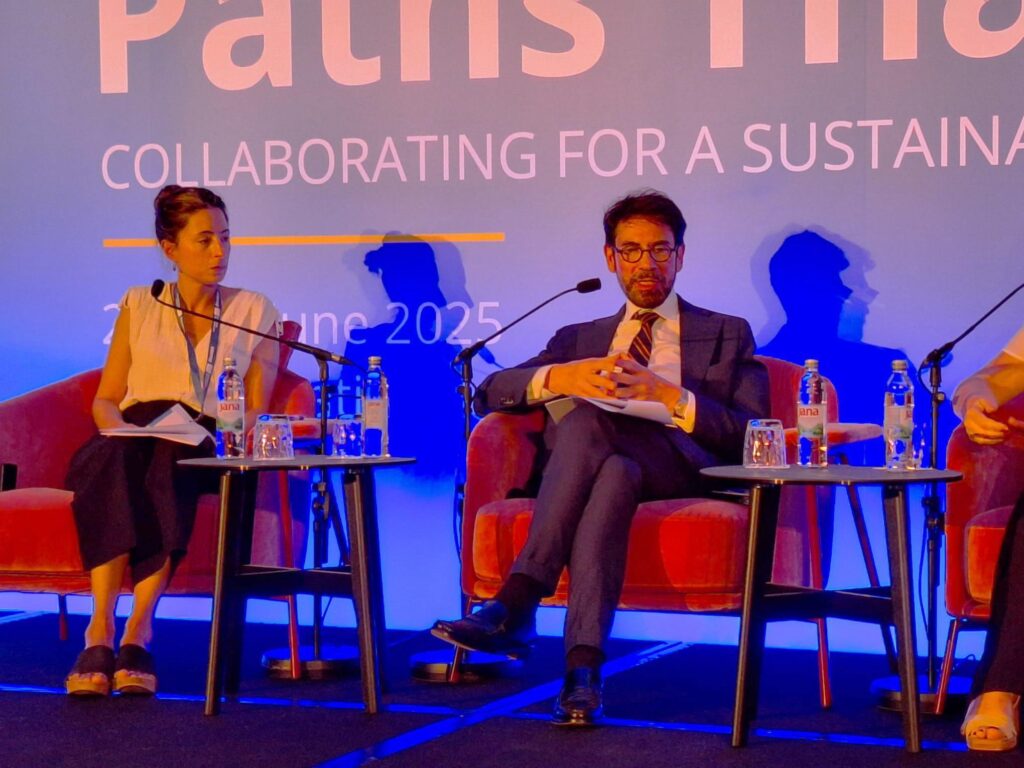
Mr. Christos Economou, Deputy Director for Marine Policy and Blue Economy and Head of Unit for sea-basin strategies, maritime regional cooperation, and maritime security at the European Commission’s Directorate-General for Maritime Affairs and Fisheries (DG MARE), brought a valuable perspective to the discussion. He emphasized the untapped potential of synergies between the tourism industry and the blue economy, noting their capacity to drive sustainable development, economic growth, and environmental stewardship. In his remarks, Mr. Economou underlined opportunities for integrating coastal and marine tourism—such as eco-tourism and recreational activities—with sustainable local economic development. He also stressed the need for effective Maritime Spatial Planning, pointing out that “sustainable tourism is not the only sector competing for maritime space,” and underlining the importance of aligning tourism with other maritime uses.
Building on this, Ms. Adriana Salazar, Sustainable Blue Economy Expert at the Union for the Mediterranean, called for a more strategic integration of the Mediterranean private sector into broader blue economy frameworks. She stressed that private actors in the region have the potential to become leaders in the green and blue transition, contributing to sustainable development while advancing their own economic, social, and environmental goals. As she put it, “The Mediterranean private sector actors have the potential to become leaders and champions of the green and blue transition across the basin, to the benefit of their triple bottom lines”.
Empowering the private sector and the youth in Interreg Programmes
Mr. Economou stressed the private sector’s dual role in launching sustainable ventures and ensuring their long-term viability by transforming innovative ideas into market-ready solutions. During the session “Powering Synergies: Capitalisation & Mainstreaming”, Ms. Mercedes Acitores, Senior Project Manager at INTERACT European Cooperation, reinforced this message by highlighting the importance of transferring knowledge, best practices, and outcomes from Interreg’s sustainable tourism initiatives to private actors: “Companies, clusters, Chambers of Commerce, and business associations can directly participate as project partners, particularly in the field of sustainable tourism”. Ms. Acitores also emphasized that “businesses are essential in scaling up impact and bridging the gap between research and the market”.
Another key discussion topic was promoting youth involvement in the Interreg Programmes. One of the panelists who insisted the most on this idea was Mr. Aldo Puleo, Managing Authority of the Interreg NEXT MED Programme: “We must train the next generation, engage youth and bring EU attention to sustainable tourism”. In his opinion, “The Interreg Programmes are fully committed to engaging young people in their projects and actively involving them in the sustainable transformation of the tourism industry”. There was a youth panel that expressed their expectations of being more involved in creating innovative solutions and policies that transcend borders. To Ms. Emma Magistri, Youth for Future Cooperation‘s representative, “We are a cross-border generation; we want to be part of this process”. In this regard, Mr. Jean-Pierre Halkin, Head of Unit for “Interreg Cross-Border Cooperation, Internal Borders”, pointed out that ensuring a balance of age and gender is tremendously important for decision-making”.
Strategic governance for a sustainable tourism offer
On the second day of the event, ASCAME actively participated in the workshop titled “Shared and Strategic Governance of the Tourism Offer”, one of several thematic sessions organised for Interreg partners. The parallel workshops addressed key topics such as the social dimension of tourism (including employment and upskilling), the green transition, inclusive and accessible tourism, and the development of innovative tourism products. ASCAME’s workshop was coordinated by the Dialogue4Tourism Project (D4T), from the Interreg Euro-MED Programme in the framework of the Mediterranean Multi-Programme Mechanism. This workshop, which counted on the participation of representatives of INTERACT and Interreg Italia–Slovenija, fostered a dynamic exchange on governance strategies and cross-border collaboration in sustainable tourism.
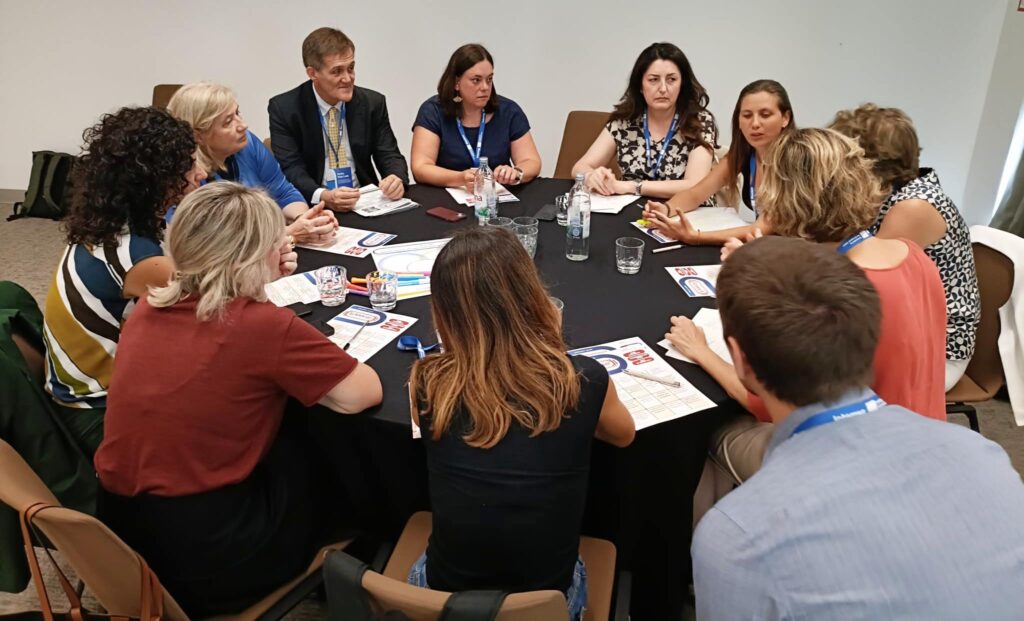
As commented by Ms. Julia Sáiz-Pardo, leader of the D4T Project, during her opening speech at the governance workshop, “the objective is to act as a bridge between thematic projects, which work on practical and local solutions, and policy levels, where broader decisions and strategies are made”. She added: “Without governance projects, the value results, innovations, and learnings from thematic initiatives risk staying isolated. We work for ensuring those outcomes are translated into meaningful policy recommendations, shared visions, and long-term strategies”.
This workshop sought to achieve two main objectives. On one hand, fostering synergies among projects and beneficiaries engaged in sustainable tourism across various programmes. On the other hand, identifying shared challenges to develop common solutions. After two days of discussion, participants came up with many ideas and suggestions:
- The need to have a shared vision with stakeholders, as well as to build up a stronger connection with funds and investments. It was also mentioned that the connection between sports and tourism is a challenge.
- To maximise the impact, they also proposed the need to create a task force, to include more partners in the calls and to capitalise on the network of Tourism Observatories.
- Regarding capitalisation, the workshop concluded the importance of the Community4Tourism Project (C4T) and the D4T Project working together to reach stakeholders, as well as strengthening the STPLs in capacity building.
- As for young people, participants suggested the need to foster synergies, helping youth organisations as “compulsory partners”, to keep the volunteers´ programme and ensure intergenerational cooperation.