
- October 8th, 2026
On the 2nd of October, we held the second executive committee meeting of the year at the headquarters of the Camera di Commercio di Cagliari-Oristano (Sardinia, Italy), in the framework of the new edition of MedaCity Forum 2026, hosted for the second year in a row by this Chamber. We had 16 Chambers out of 19 represented in this meeting, ten of them in person and six online. This committee was symbolically very important because we welcomed Syria back to ASCAME after 14 years following a devastating conflict.
The forum started with a welcome address by Mr. Maurizio De Pascale, President of the Chamber of Commerce of Cagliari-Oristano, who highlighted “the key role of ASCAME as a key interlocutor with the European institutions in the implementation of European policies across the Mediterranean.” He stressed that “the Pact for the Mediterranean represents a strategic opportunity to ensure that the needs, expectations and proposals of businesses and Chambers of Commerce are heard by the European Commission, while also unlocking the full potential of Mediterranean cooperation and strengthening dialogue between the public and private sectors”.
Mr. De Pascale also highlighted MedaCity’s importance as a platform to demonstrate the immense potential of Mediterranean cooperation. He stressed “the need to continue investing in partnerships, fostering dialogue, and developing concrete projects that create opportunities and shared prosperity across the region. In this regard, he noted that the strong participation and support received clearly show the Mediterranean is moving in the right direction”.
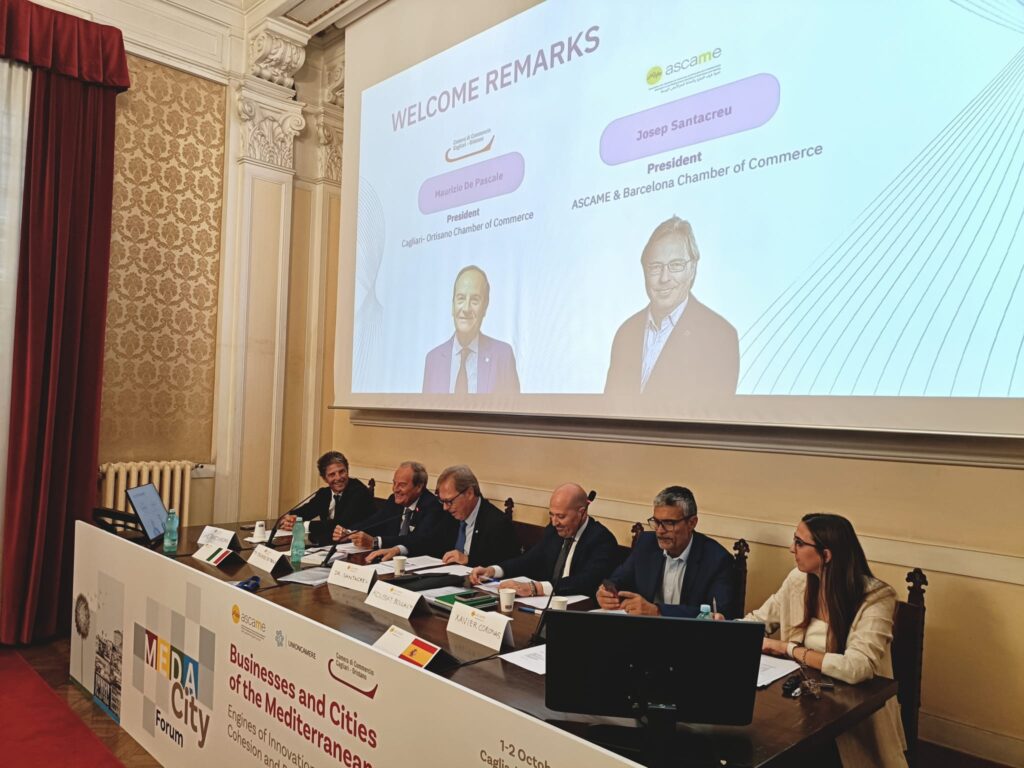
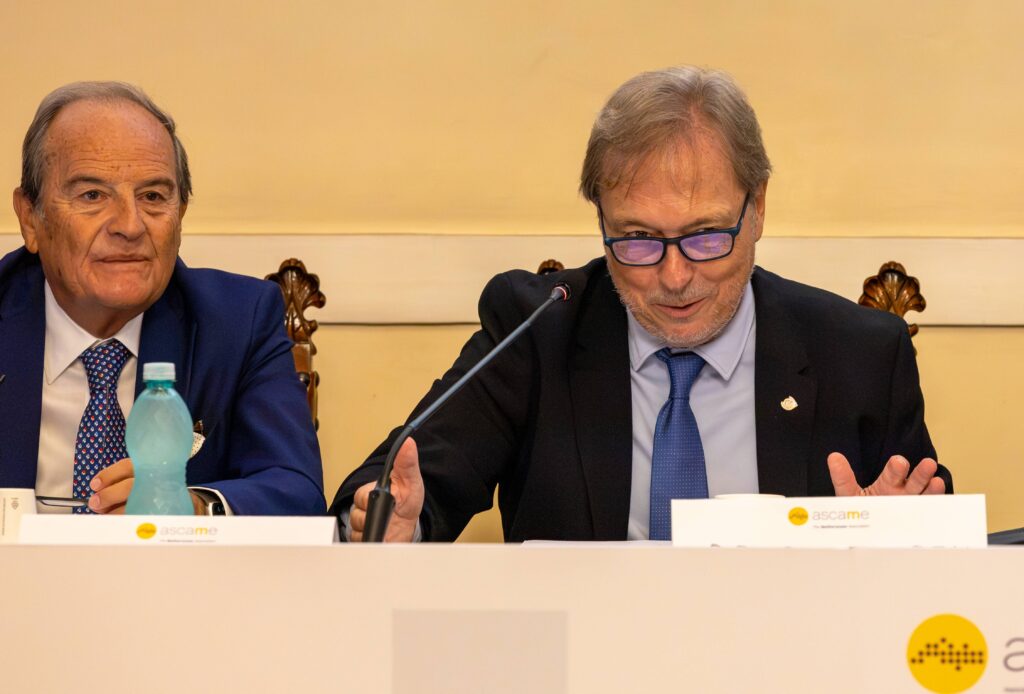
In the same vein, Dr. Josep Santacreu, President of ASCAME, affirmed that “we are making important progress in positioning the institution as a natural interlocutor for the Pact for the Mediterranean”. He added: “Today, we can say that the European Commission and DG MENA recognize the private sector, and ASCAME is an essential partner in this process. ASCAME, and especially our SMEs, are being heard in Brussels by the European Commission, the European Parliament, and the European Economic and Social Committee”. One good example is the selection of ASCAME as the private-sector partner in the Mediterranean University project. Another is the organisation, in the framework of MedaCity Forum 2026, of the ASCAME Lab for the Pact, bringing together 23 companies and organisations from 11 sectors and 7 Mediterranean countries on both shores of the region for the first time to identify priorities for the Pact for the Mediterranean.
Dr. Santacreu also shared a reflection on “the fundamental role that Chambers of Commerce can play as agents of peace, stability and cooperation, particularly in the current difficult times”. He added: “We are not only economic actors; we are connectors, facilitators of dialogue and agents of peace and stability. Let us continue working together to strengthen the ties between our business communities, to keep our economies connected and to promote dialogue and cooperation across the Mediterranean”.
The Mediterranean University, a flagship initiative of the Pact for the Mediterranean
The Executive Committee meeting provided an opportunity to review the significant progress achieved in the implementation of ASCAME’s new strategic plan, developed through a highly participatory process involving all member Chambers. The plan is already delivering tangible results, notably by positioning ASCAME as a key interlocutor in the framework of the Pact for the Mediterranean and by strengthening the representation of the Mediterranean private sector within EU institutions. As Dr. Santacreu noted, “by strengthening our business community, we are also strengthening cooperation, stability and shared prosperity across the Mediterranean”.
During the meeting, Ms. Consuelo Navarro, Special Advisor to ASCAME, presented MEDUNI, the Mediterranean University, a flagship initiative of the Pact for the Mediterranean designed to strengthen academic cooperation and foster a shared Euro-Mediterranean knowledge space. Within the framework of the FIAP (Foundation for the Internationalization of Public Administrations) pillar, ASCAME will play a central role in ensuring that the private sector’s voice is fully integrated into the initiative’s development. Together with its partner, the European Institute of the Mediterranean (IEMed), ASCAME will lead the private sector working group, helping ensure that the needs, expectations, and perspectives of businesses are effectively reflected in the future Mediterranean University.
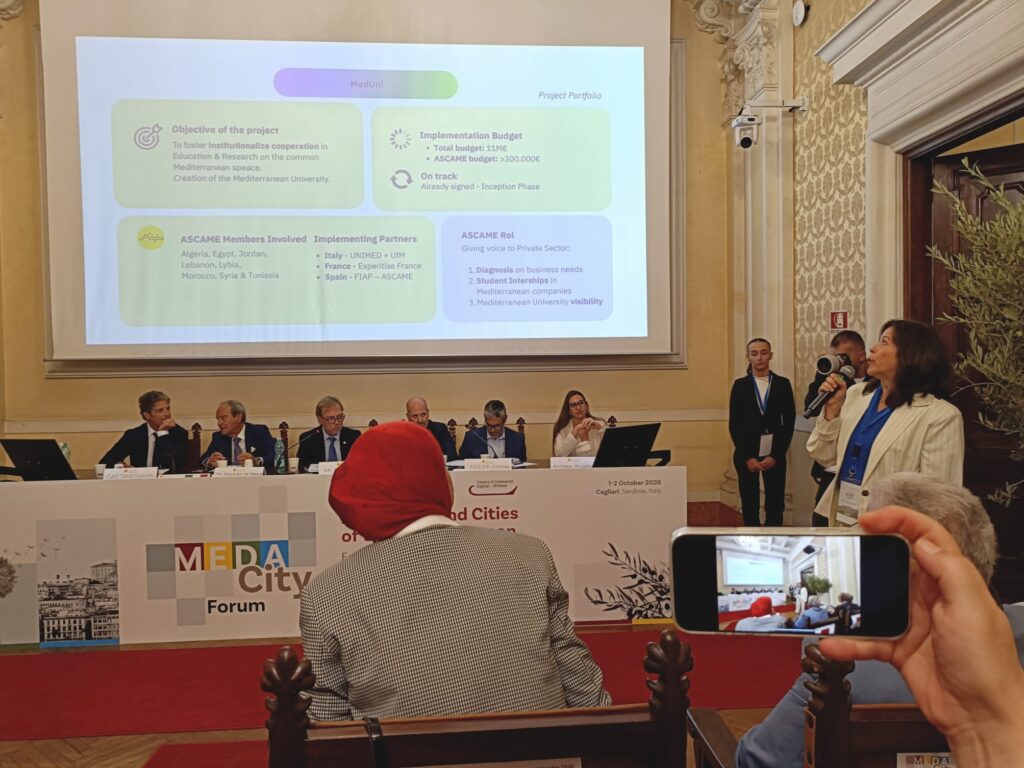
Ms. Navarro highlighted one of the Mediterranean region’s key paradoxes: “The higher the level of education, the more difficult it can be for young people to find qualified employment. At the same time, one-third of private companies report difficulties in finding candidates with the skills they need”. She also emphasized the importance of strengthening links between academia and the business community: “Enhancing university-business cooperation is essential to developing the skills, talent, and opportunities needed for a more competitive, innovative, and interconnected Mediterranean”.
New members and strategic partners strengthening ASCAME’s network
The Executive Committee welcomed the incorporation of new members and strategic partners, further reinforcing ASCAME’s role as the leading voice of the Mediterranean private sector. These new additions expand the network’s reach, expertise, and capacity to foster economic cooperation, innovation, and sustainable development across the region.
During the meeting, ASCAME President Dr. Josep Santacreu announced the accession of two new members from Syria, further strengthening the Association’s presence in the Eastern Mediterranean. Among them is the Damascus Chamber of Commerce, one of the oldest chambers in the Arab world. Based in Damascus, it represents the Syrian business community and plays a key role in promoting trade, investment, economic development, and international business cooperation. The Lattakia Chamber of Commerce also joins the ASCAME network. As one of Syria’s leading business institutions, it represents traders, entrepreneurs, and industrial companies in the country’s main maritime gateway. The Chamber actively promotes trade, industry, investment, and entrepreneurship, while supporting digital transformation, women’s economic empowerment, and the growth of SMEs and local businesses.
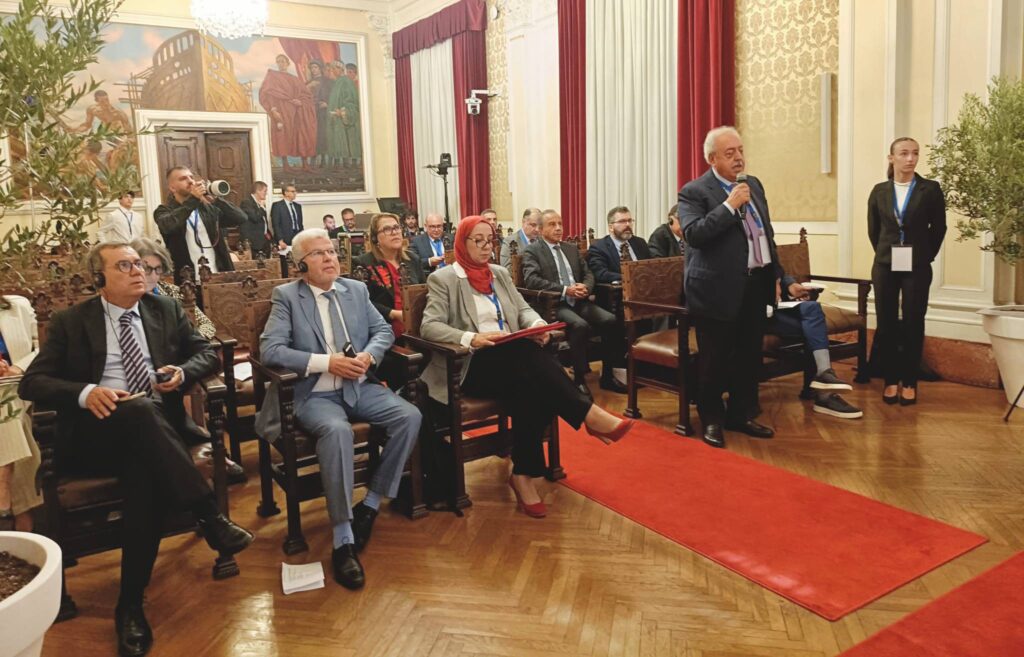
The Executive Committee also welcomed two new Associate Members. The first is the Oman Chamber of Commerce and Industry (OCCI), the leading representative of Oman’s private sector and a key bridge between businesses and government institutions. Headquartered in Muscat, OCCI maintains branches across all governorates of the Sultanate, ensuring close engagement with the business community nationwide. The second is the Chamber of Commerce, Industry and Agriculture of Mauritania (CCIAM), the national representative body of Mauritania’s private sector. The Chamber serves as a key interface between public authorities and enterprises across the commercial, industrial, agricultural, fisheries, and services sectors, promoting business development, investment, and economic cooperation.
The Executive Committee also announced a series of new strategic partnerships aimed at strengthening ASCAME’s visibility, outreach, and capacity to deliver value to its members:
- Med.TV, a media and broadcasting organization active across the Mediterranean region, will serve as the official media partner for ASCAME’s flagship events.
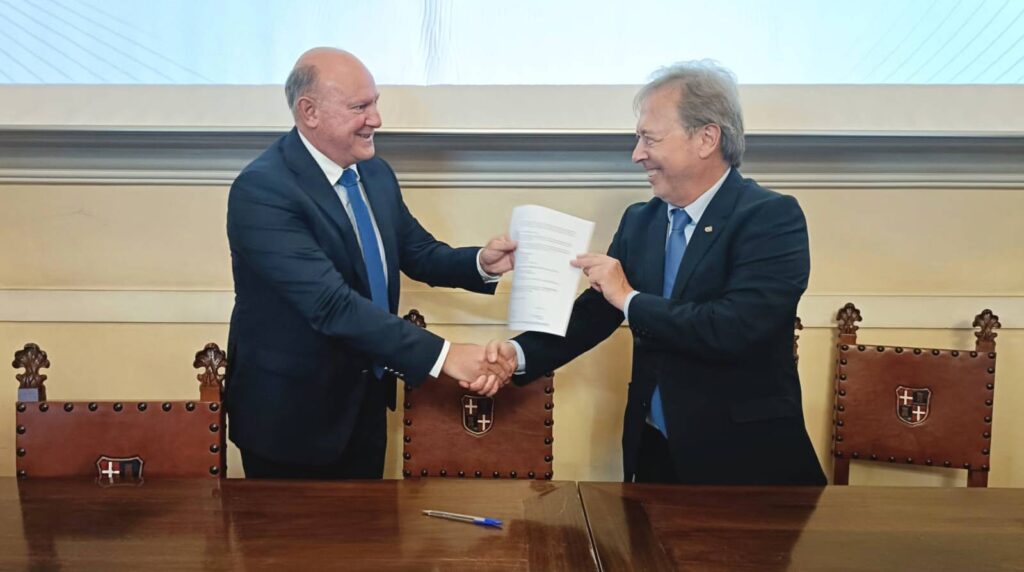
- Prensa Ibérica, one of Spain’s leading multimedia communication groups, will collaborate with ASCAME to co-organize the 4th Mediterranean Economic and Social Forum, to be held in Mallorca (Spain) in March 2027.
- DevelopmentAid, a leading platform for the international development sector, provides access to tenders, grants, donor-funded projects, expert networks, and market intelligence. Through this partnership, ASCAME members will benefit from enhanced access to international funding and procurement opportunities.
- Escola Europea – Intermodal Transport, a Barcelona-based training centre specialized in intermodal logistics, maritime transport, and sustainable mobility, will partner with ASCAME to foster training, knowledge exchange, and capacity-building initiatives.
- Consorci de la Zona Franca de Barcelona (CZFB), one of Barcelona’s leading drivers of Industry 4.0, entrepreneurship, and technological innovation through initiatives such as DFactory Barcelona, will collaborate with ASCAME in the co-organization of MedaLogistics, within the framework of SIL Barcelona, while also developing joint Industry 4.0 initiatives and participating as a strategic partner in innovation events hosted at DFactory Barcelona.