

Events Ascame/ January 28, 2025/ Featured
MedaWeek Barcelona 2024 featured the session ‘Mediterranean Food Industry Platform’ to show the region’s diverse culinary heritage and also to examine how innovation is driving growth and sustainability in the food sector. The sessions focused on the intersection of tradition and innovation within three key panels: Agro-food, Halal industry, and the Mediterranean Diet. Each panel included discussions of food innovation as a transversal theme, examining how new technologies, trends and consumer preferences are shaping the future of the Mediterranean food industry.
Agro-food Innovation
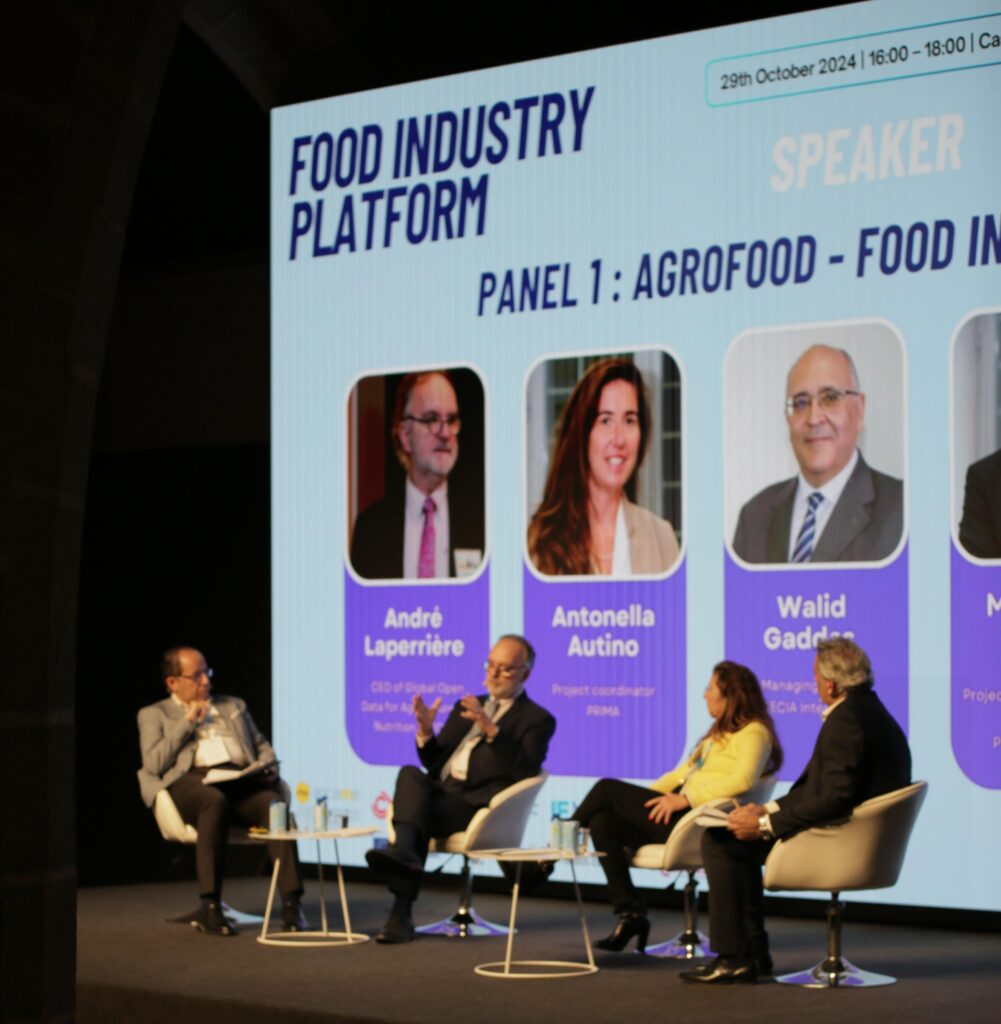
Environmental and social changes are deeply affecting Euro-Mediterranean agro-food systems and water resources. Climate change, unsustainable agricultural practices, over-exploitation of natural resources, new lifestyle behaviors (diet, physical activity and socio-cultural) and low profitability of smallholders put a strain on the sustainable and healthy development of the region, with major impacts on our societies.
In this context, the agro-food industry is evolving rapidly. Innovations in areas like organic products and agritech are shaping their future. According to the panelists, technology can help reduce costs, improve crop yields, and mitigate environmental impact (reducing emissions, absorbing CO2, and reducing water consumption). AI and Blockhain technologies are good examples. To Mr. André Laperrière, CEO of Global Open Data for Agriculture and Nutrition (GODAN), “AI allows us to predict the future and anticipate possible adversities, and Blockchain technology is key to certifying the source of the products and goods we sell, so that we protect crops and people’s safety”.
In addition, Ms. Antonella Autino, Project Coordinator at ASCAME’s partner PRIMA Program, assured that “new technologies allow us to improve food security in our region”. Specifically, the PRIMA Program -which means Partnership on Research and Innovation in the Mediterranean- is an European initiative that aims to implement R+D+I actions that improve the efficiency and sustainability of agri-food systems and the quality, availability, and management of water in the Mediterranean area. In her opinion, “this is the most ambitious joint programme to be undertaken in the frame of the Euro-Mediterranean cooperation”. She added: “PRIMA aims to build research and innovation capacities and to develop knowledge and common innovative solutions for agro-food systems, to make them sustainable. The programme also focuses on the integrated water provision and management in the Mediterranean area, to make those systems and that provision and management more climate resilient, efficient, cost-effective and environmentally and socially sustainable, and to contribute to solving water scarcity, food security, nutrition, health, well-being and migration problems upstream”.
Environmental and social changes are deeply affecting Euro-Mediterranean agro-food systems and water resources. Innovations in areas like organic products and agritech are shaping the future of the agro-food industry
On the other hand, panelists insisted on the fact that public-private collaboration and cooperation between countries is key to ensuring food safety and improving traceability. To Ms. Autino, “there is no country that can tackle these challenges alone. The water or food problem cannot be tackled alone, but in a global way”. In this regard, Mr. Jordi Ciuraneta, President of PIMEC Tarragona and Former Minister of Agriculture at Generalitat de Catalunya, pointed out that “It is not only necessary to carry out joint actions but also to share information on what is currently happening in the agri-food sector and detect new business opportunities that are respectful with the environment”. In his opinion, “the challenges associated with climate change are not only the responsibility of governments and public administrations, but also of all the private sector”.
Halal Industry Development
The second panel of the session dived into the halal products (halal meat, poultry, and seafood), which constitute almost 50% of total global market sales. One of the main reasons for this growth is the certification of all the halal products. According to Ms. Meryeme El Betar, Supervisory Area Manager at Estandar Global de Certificación Halal S.L., “Halal certification helps businesses position in a very complex and demanding market from the point of view of transparency, trust and food safety; the first challenge is to pass the audits of the governments of Muslim countries”. In the same line, Mr. David Ventura, Chief Commercial Officer at Grupo Carinsa, said: “Halal certification is a differential value when choosing one provider or another. In recent years, there has been a significant increase in the number of consumers of halal products who are not Muslims because they are healthy products that have a quality certification”.
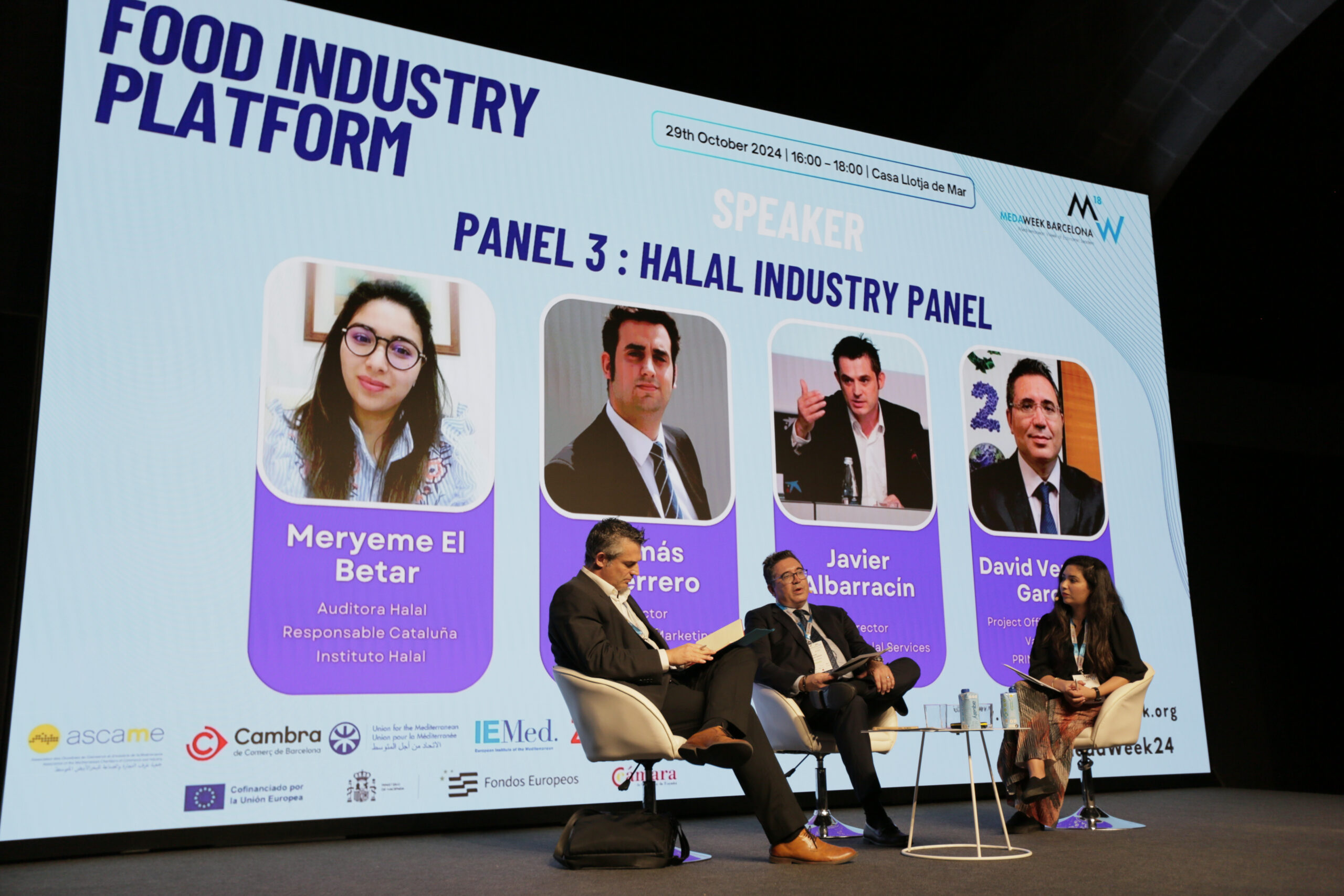
However, the great challenge that this industry faces nowadays is the fragmentation of the market from a regulatory point of view because there are different norms and standards in each country. This is a problem for producers who are not from Muslim-majority countries. Mr. Tomás Guerrero, Director of Halal Trade & Marketing Centre, reflected on this topic: “Each country has its own norms and standards, in addition to the fact that many Muslim-majority countries further encourage such fragmentation when exporting, rather than standardizing processes”.
On the other hand. Mr. Guerrero highlighted another challenge: “the lack of a modern marketing or branding strategy associated with halal products”. He added: “Although today halal products are synonymous with quality, healthy diet and sustainability, there are still consumers who have negative connotations, especially because they are unaware of their quality controls, and they continue to associate them with a population with low purchasing power. To reverse this negative image, a new marketing strategy is needed that highlights the nutritional benefits of halal products and their quality certification”.
According to the panelists, the halal industry faces two challenges. On one hand, the fragmentation of the market from a regulatory point of view because there are different norms and standards in each country. On the other, the lack of a modern marketing or branding strategy associated with halal products
The Mediterranean Diet: Tradition meets innovation
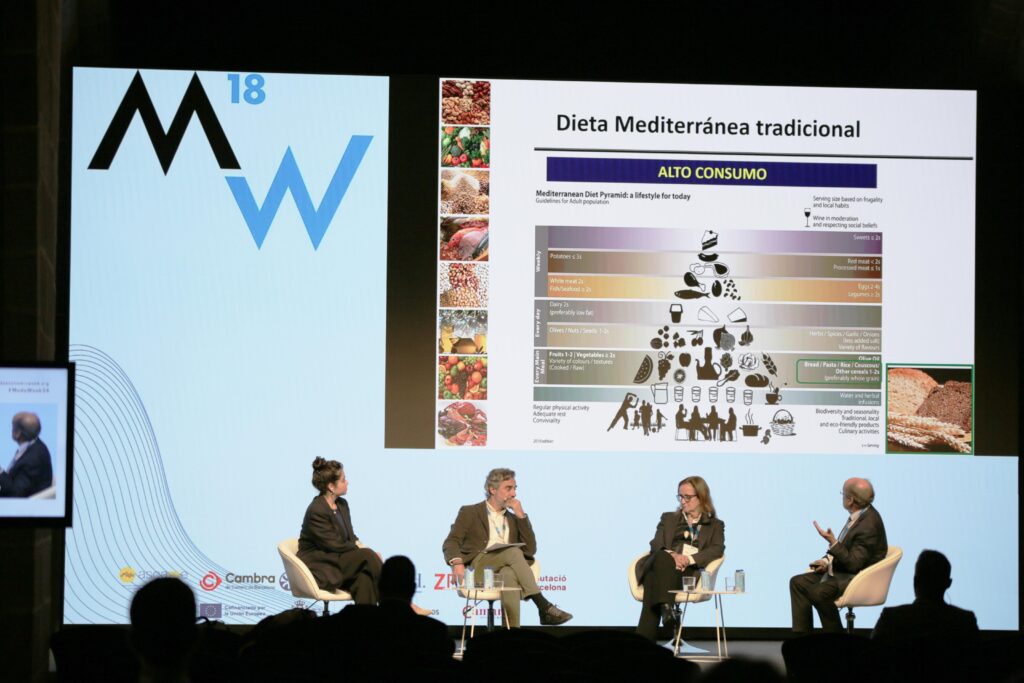
Celebrated for its health benefits, the Mediterranean diet is a pillar of the region’s culinary heritage. This panel focused on the proven health benefits of the Mediterranean diet and how innovation is being used to preserve traditional dishes while adapting them to meet modern consumer preferences and dietary needs, including vegetarian and vegan options. The forum counted on the participation of Mr. Ramón Estruch, President of the Scientific Committee of the Mediterranean Diet Foundation, who highlighted the main healthy benefits of this diet: “It reduces the risk of diabetes by up to 30%, improves arterial lesions, has a positive impact on Alzheimer’s disease, and improves cardiovascular diseases. In addition, it reduces the probability of stroke by up to 50% and reduces overall mortality”.
In addition, Ms. Rosa María Lamuela, Professor and Researcher at the Institute of Nutrition and Food Safety of the University of Barcelona, focused on the health benefits of extra virgin olive oil, “which is one of the basic pillars of the Mediterranean diet due to its nutritional richness and the amount of antioxidants it has”.
Finally, Mr. Santi Mas de Xaxàs, Co-Executive Director of Torribera Mediterranean Center and promoter of the Tomorrow Tastes Mediterranean Conference, insisted on the need for the country’s chefs to participate in scientific debates on the Mediterranean diet. In his opinion, “in these meetings we must involve many sectors so that they work together for a common goal: to eat better and more sustainably, with delicious menus full of flavor, which have an impact on people’s health”. As he explained, “it is an opportunity to publicise the healthy cuisines that exist in the Mediterranean”.