

Events Ascame/ April 17, 2026/ Ascame members
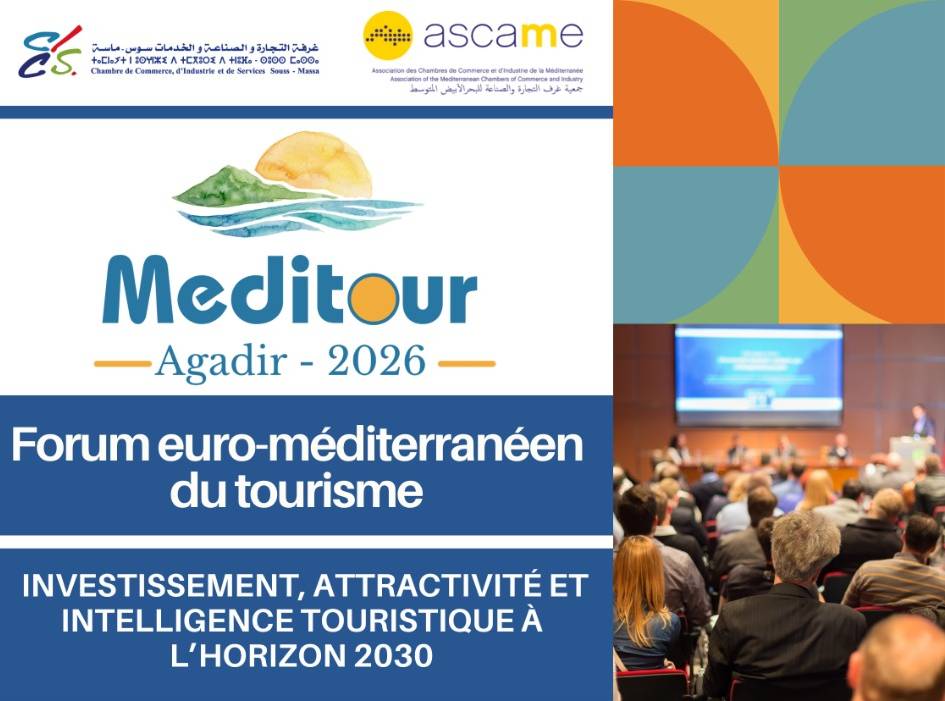
As the Chamber of Commerce, Industry and Services of Souss Massa (CCIS Souss Massa) prepares to host Meditour Agadir 2026, to be held from 18 to 20 June in Agadir (Morocco), the region is moving into a new stage of enhanced visibility and strengthened strategic positioning within the Mediterranean landscape. In this interview, Mr. Saïd DOR, President of the CCIS Souss Massa, shares his vision about Meditour and explains how it can catalyze investment, strengthen cooperation, and accelerate the sustainable transformation of the region’s tourism sector.
Mr. DOR also reflects on the broader economic dynamics shaping Souss Massa today, from agriculture and agribusiness to digital innovation, and highlights the Chamber’s role in supporting businesses and deepening Mediterranean partnerships, particularly through its collaboration with ASCAME.
What does hosting the next edition of Meditour mean for the Souss Massa region and for your Chamber (CCIS)?
First and foremost, it is a responsibility, but it is also an opportunity. Hosting Meditour in Agadir means positioning the Agadir Souss Massa destination within a broader Mediterranean context. It allows us to build connections and open doors to future partnerships. For our Chamber, Meditour Agadir 2026 fully aligns with our mission of connecting stakeholders, facilitating exchanges and promoting regional economic potential. Meditour gives us a platform to highlight what we are building in Souss Massa and to engage directly with Mediterranean actors who can contribute to our development.
What will be the key themes or priorities guiding the 2026 edition?
The priorities are quite clear: investment, attractiveness, and the transformation of tourism. Held under the theme ‘Investment, Attractiveness and Smart Tourism Towards 2030 – Sustainable and Innovative Mediterranean Destinations’, this edition aims to strengthen Mediterranean tourism cooperation and accelerate the sustainable transformation of destinations. This edition key priorities are: boosting investment and enhancing the attractiveness of Mediterranean territories, promoting strategic partnerships between public and private stakeholders, supporting the sustainable and innovative transition of tourism destinations, reinforcing Euro-Mediterranean cooperation as a driver of balanced territorial development, and positioning Agadir as a regional hub for sustainable and innovative tourism by 2030. The idea is to bring different perspectives together and compare experiences. What interests us is not just the diagnosis, but the solutions.
What role can Meditour play in strengthening cooperation and dialogue among stakeholders in Mediterranean tourism?
Meditour’s role is straightforward: to provide a real framework in which meaningful exchanges can occur. Today, cooperation in Mediterranean tourism exists, but it is often fragmented and lacks continuity. What we need are concrete spaces where stakeholders can meet, discuss, and build together. Meditour offers exactly that. This may not solve all the challenges, but it creates the conditions for dialogue and the beginnings of partnerships that can grow into long-term, structured projects.
For our Chamber, Meditour Agadir 2026 fully aligns with our mission of connecting stakeholders, facilitating exchanges and promoting regional economic potential
How can Meditour 2026 help position Souss Massa as a major player in Mediterranean tourism? What long-term impact do you anticipate?
First, hosting Meditour 2026 substantially enhances Souss Massa’s visibility on the regional and international stage. But beyond visibility, it is fundamentally about positioning. It allows us to demonstrate that Souss Massa is not only an attractive tourist destination, but also a region capable of leading projects, attracting investment, and engaging proactively with international dynamics. In the long term, the impact will depend on the tangible outcomes: the partnerships we build, the projects that emerge, and the networks that take shape. If Meditour becomes a catalyst for sustained cooperation and concrete initiatives, then its legacy for the region will be significant, and that is exactly what we aim to achieve.
Tourism is one of the pillars of the Souss Massa economy. How would you describe its role today?
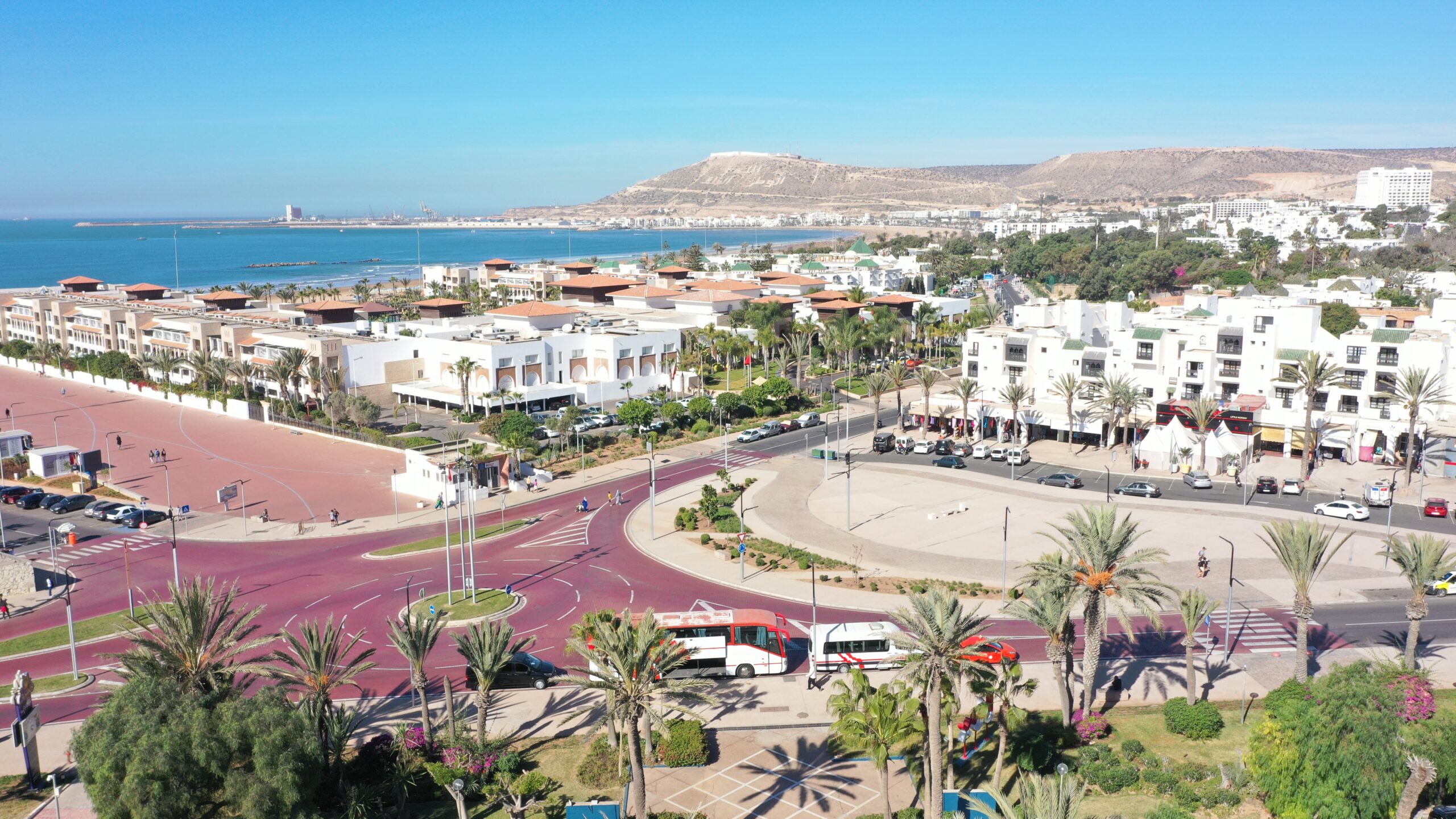
Tourism is a major driver of the regional economy, especially for Agadir, Morocco’s leading seaside destination. It generates jobs, drives economic activity, and enhances the region’s overall attractiveness. But today, the sector is also undergoing a real transformation. It is no longer only about receiving visitors. It is about offering a more diverse, higher-quality experience that is better integrated into the region’s identity and long-term development.
What challenges must the region overcome to continue developing its tourism sector, and how is the Chamber addressing them?
The challenges are well known: strengthening competitiveness, diversifying the tourism offer, improving service quality, and adapting to new visitor expectations. A major challenge remains the coordination among the stakeholders. This is precisely where the Chamber plays a key role in connecting stakeholders, supporting businesses, and fostering a shared, coordinated dynamic that allows the sector to grow more coherently and sustainably.
Sustainable tourism is becoming increasingly important. How is Souss Massa incorporating this aspect?
Sustainability is no longer an option; it has become a necessity. In Souss Massa, it translates into the development of ecotourism and rural tourism, the enhancement and protection of natural resources, and responsible land use planning. The objective is to strike the right balance between economic development and environmental preservation. It is a gradual process, but an essential one for ensuring that tourism growth remains both sustainable and beneficial for the region in the long term.
What are the other key economic sectors driving growth in the Souss Massa region today?
Tourism is essential, but it is far from the region’s only economic engine. Agriculture remains a cornerstone of Souss Massa’s economy, particularly given its role as one of Morocco’s leading agricultural basins. Alongside it, agribusiness, fishing, and processing industries form a robust ecosystem that drives growth and employment. This interconnection between sectors creates new opportunities. Agriculture feeds into agribusiness, fishing supports processing and export activities, and tourism creates demand for local products and experiences. This cross-sector dynamic is where many of the region’s new opportunities are emerging in value chains, innovation, and complementarities that reinforce one another.

In the Souss Massa region, agriculture feeds into agribusiness, fishing supports processing and export activities, and tourism creates demand for local products and experiences. This cross sector dynamic is where many of the region’s new opportunities are emerging in value chains, innovation, and complementarities that reinforce one another
How does the Chamber help local businesses strengthen their competitiveness and innovation capacity?
We focus above all on providing support and creating the right connections. This includes tailored support programs, training initiatives, and capacity-building activities that help businesses strengthen their skills and competitiveness. We also work to open doors by creating opportunities for companies to network with partners, institutions, and markets at both the national and international levels. Ultimately, our role is not to do the work for businesses, but to equip them with the tools, knowledge, and networks they need to innovate, grow, and position themselves more effectively in an increasingly competitive environment.
The Mediterranean region is a strategic hub for trade. How do you see Souss Massa’s position within this dynamic?
The Mediterranean is a space of exchange, but also of competition. Souss Massa has several key strengths: its strategic geographic location, its tourism potential, its solid infrastructure, and its strong capacity for adaptation. The challenge now is to deepen our integration within the wider Mediterranean ecosystem: to strengthen partnerships, connect more effectively with regional actors, and position ourselves within broader economic and tourism networks. By doing so, Souss Massa can fully leverage its assets and play a more influential role in the region’s development.
What initiatives are being implemented to promote digital transformation and innovation in the region?
There is a strong and growing commitment to advancing digital transformation and innovation in the region. This progress is being driven both by public sector initiatives – which are modernizing services and supporting digital infrastructure – and by private sector efforts, particularly in tourism and services, where digital tools are becoming essential. Digitalisation is now an essential lever of competitiveness: it enhances the visitor experience, improves business performance, and opens the door to new models of value creation. The goal is to ensure that digital transformation becomes a shared lever for development across all sectors of Souss Massa’s economy.
How would you describe the strategic value of the partnership between the Chamber and ASCAME?
This is a strategic partnership. ASCAME allows us to place our initiatives within a broader Mediterranean framework, giving them greater visibility and impact. It also facilitates dialogue and cooperation among Chambers of Commerce across the region, opening doors to new partnerships and joint projects. Meditour is a clear example of this added value: through ASCAME, we are able to connect with a wide network of Mediterranean actors and anchor Souss Massa more firmly within regional dynamics.