
- October 6th, 2026
Following the success of previous editions, the Mediterranean community once again came together on 1-2 October in Cagliari (Sardegna, Italy) for the Mediterranean Cities Economic Forum, MedaCity Forum 2026, dedicated to the role of cities and businesses in the economic and social development of the Euro-Mediterranean region. Organized by the Chamber of Commerce of Cagliari-Oristano, in collaboration with ASCAME, the summit brought together institutional representatives, local authorities, international organisations, Chambers of Commerce, universities, businesses and stakeholders from across the Mediterranean.
Discussions focused on the region’s key challenges, including cooperation, investment, urban sustainability, tourism, ports and territorial development. However, the central focus of this year’s edition was the Pact for the Mediterranean, an initiative launched last year by the European Commission to deepen cooperation and strengthen economic connectivity between the European Union and the countries of the Southern Shore. In this context, MedaCity provided a platform for dialogue between institutions and the business community with the aim of identifying practical proposals to translate the strategic objectives of the Euro-Mediterranean partnership into tangible opportunities for territories, businesses and citizens.
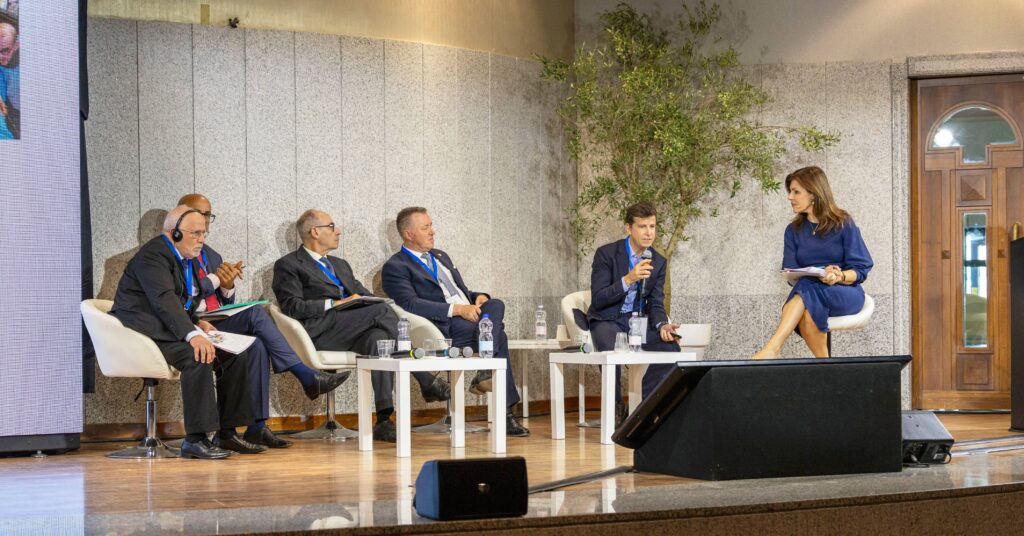
ASCAME Lab for the implementation of the Pact for the Mediterranean
One key milestone of MedaCity Forum 2026 was the workshop entitled “ASCAME Lab for the implementation of the Pact for the Mediterranean”, which gathered businesses, Chambers of Commerce and economic stakeholders to identify needs, opportunities and initiatives capable of contributing to the implementation of the priorities envisaged by the Pact.
This session counted on the participation of 23 companies and organisations coming from 7 Mediterranean countries (Lebanon, Turkey, Tunisia, Morocco, Greece, Spain, and Italy) representing both shores of the region. The sectors they represented were transport & logistics, tourism & hospitality, agri-food, circular economy, shared mobility, marine engineering, industrial systems, training & research, digital services, and retail.
This activity made it possible to gather the direct voice of Mediterranean businesses and highlight the role of the Chambers of Commerce as interlocutors and “territorial antennas” capable of fostering dialogue between European institutions and the private sector. The workshop results were presented the following day on the first panel entitled “Financial Instruments and Investment: The New Pact for the Mediterranean”. These were the main takeaways:
- The most cited barriers: Bureaucracy and regulatory barriers; little knowledge of EU opportunities; access to finance and credit; shortage of skilled people.
- The most selected opportunities: Accessing the Pact’s funds and programmes; partnerships with the other shore; clean energy & sustainability as a market; Mediterranean tourist and trade flows.
- Support most requested: Finance, guarantees and co-funding; technical accompaniment to EU calls; reliable partners and market intelligence; institutional facilitation across borders.
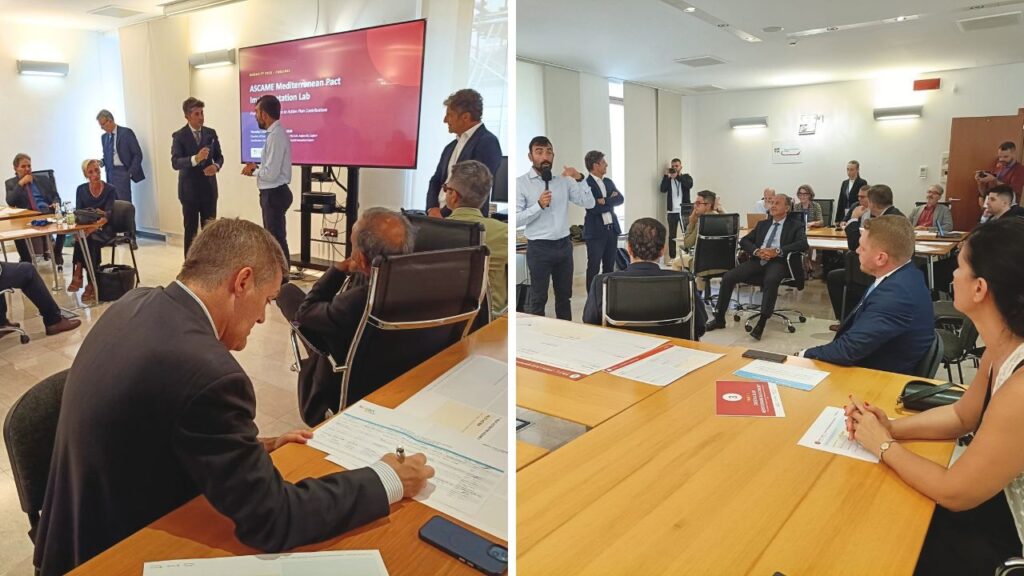
The Lab also endorsed three pilot initiatives for 2027:
- Join and scale up a Euro-Mediterranean training programme for maritime trade and logistics already in its pilot phase with EU and Mediterranean institutions, adding a technical-training track in which SMEs of the Southern shore open their workshops to trainees. Working on the mobility of qualifications across the basin.
- Create a hub enabling corridors between Northern and Southern Mediterranean partners, developed with port authorities, maritime administrations and Chambers of Commerce, to streamline operations and create a replicable model.
- A green logistics dry port, inland in the Euro-Mediterranean area – solar, storage, electric vehicles: a financeable, replicable standard that could be released in 2027.
The discussion will continue at the upcoming Euro-Mediterranean Economic & Business Forum – The Piraeus Summit, organized by the Piraeus Chamber of Commerce and Industry on 18–19 November, to advance further a shared agenda for Mediterranean cooperation and economic integration.
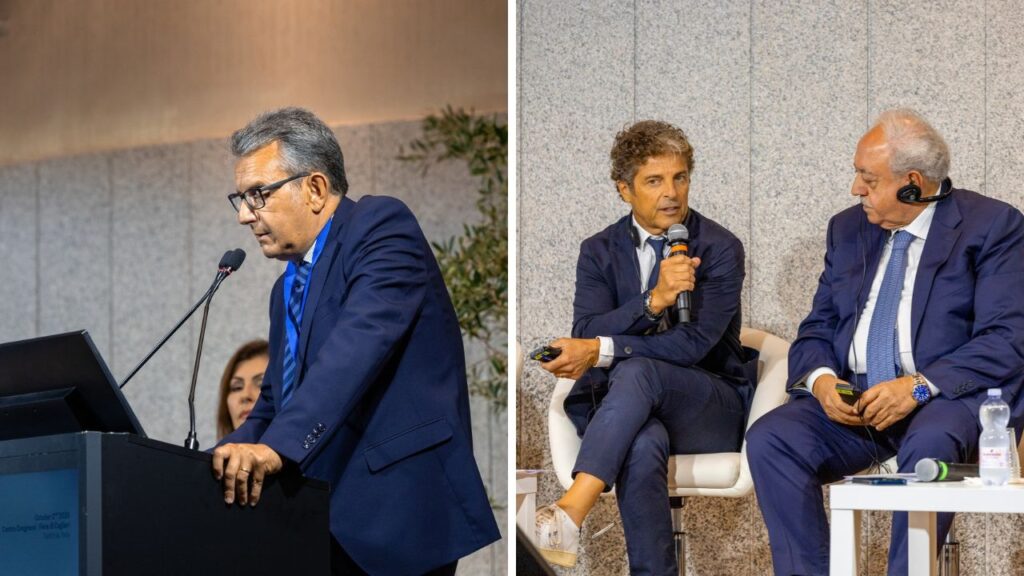
Businesses and Chambers at the heart of the Pact for the Mediterranean
Institutional leaders at the forum underlined that the success of the Pact for the Mediterranean will depend on the active involvement of businesses, Chambers of Commerce and strong public-private partnerships. Mr. Raffaele Fitto, Executive Vice-President of the European Commission, highlighted that “cooperation between territories can generate tangible results by connecting economies, fostering investment, strengthening innovation and creating new opportunities across the region”. Echoing this vision, Mr. Francisco Joaquín Gaztelu, Director for North Africa at DG MENA, stressed that “a successful Pact requires listening to businesses, supporting SMEs and building synergies across sectors, while ensuring that the priorities of the private sector are translated into concrete actions”.
The importance of transforming dialogue into practical cooperation was a recurring theme throughout the discussions. Mr. Marco Stella, Team Leader at DG MENA, emphasized that “the Pact can only succeed through the joint commitment of local authorities, businesses and stakeholders on both shores of the Mediterranean, turning shared priorities into investment, jobs and growth”. Similarly, Mr. Marco Mura, Program Officer at the Parliamentary Assembly of the Mediterranean, insisted on “the strategic value of public-private partnerships in mobilising investment and creating new opportunities for the region”.
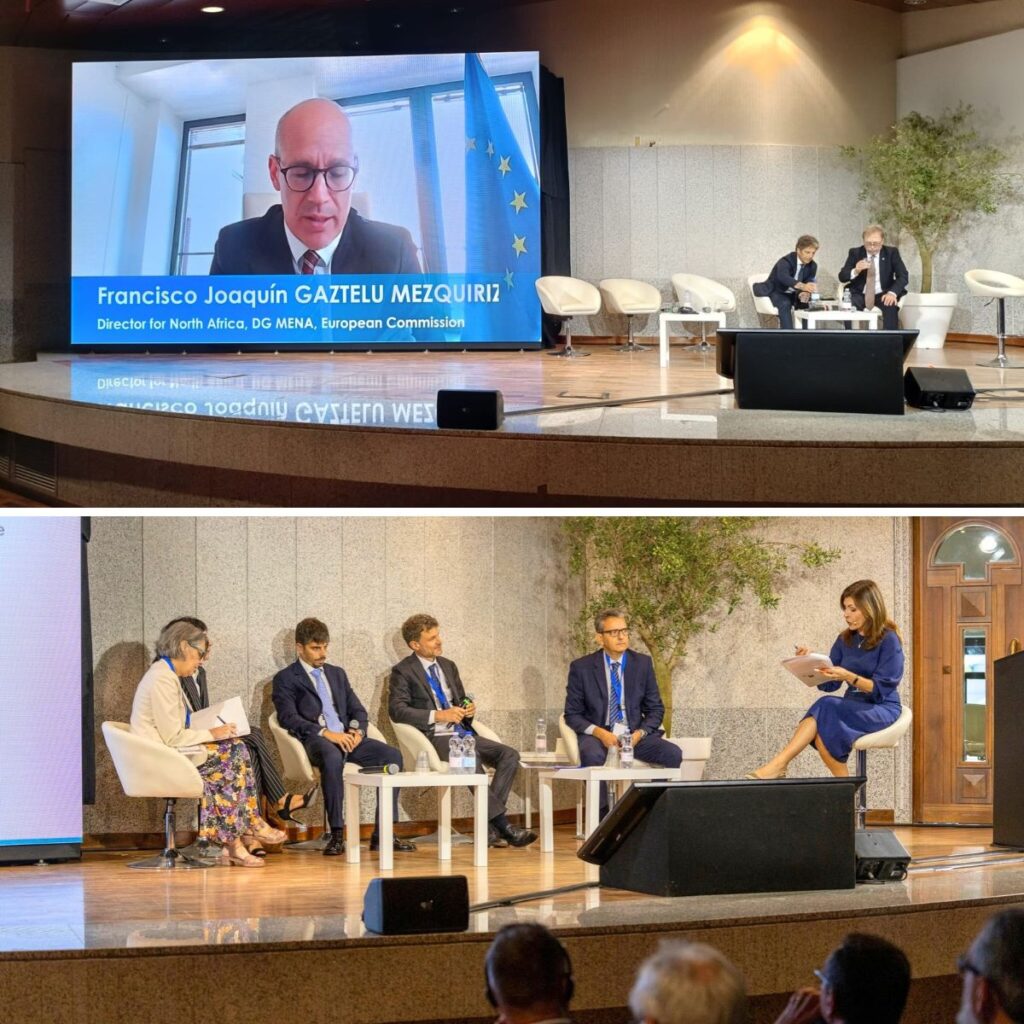
Representatives of ASCAME and its network also reaffirmed the association’s commitment to ensuring that the voice of Mediterranean businesses is reflected in the Pact. Ms. Anna Terrón, ASCAME Advisor, described the association as “a bridge between policymakers and the private sector, capable of translating shared ambitions into concrete opportunities”. In the same sense, Dr. Josep Santacreu, President of ASCAME, underlined that “the Pact must be built collectively by institutions, businesses, cities, universities, civil society and international organisations”.
Finally, Mr. Maurizio De Pascale, President of the Camera di Commercio di Cagliari-Oristano, described the Pact as “a strategic opportunity to place the private sector at the heart of Euro-Mediterranean cooperation, reaffirming ASCAME’s role as the leading voice of Mediterranean business”.