
- June 5th, 2026
Medalogistics 2026 took place on 3 June within the framework of SIL Barcelona, bringing together leading experts and policymakers in logistics, transport, and infrastructure from three continents: Europe, Asia, and Africa. In its 22nd edition, Medalogistics has reaffirmed its position as the Mediterranean’s premier logistics summit.
Organised by ASCAME and the Consorci de la Zona Franca de Barcelona, in collaboration with the Barcelona Chamber of Commerce and Industry and the Port of Barcelona, this year’s edition focused on the key strategic priorities shaping the Mediterranean logistics and transport sector. Discussions centred on sustainability, digital transformation, strategic connectivity, talent development, and public-private cooperation, highlighting the region’s commitment to building a more competitive, resilient, and integrated logistics ecosystem.
The event opened with a keynote address by Dr. Josep Santacreu, President of ASCAME, who outlined the sector’s current and emerging challenges, the strategic role of Chambers of Commerce and the private sector, and the need to reinforce Mediterranean connectivity to achieve a more efficient, resilient, and integrated regional ecosystem. In his words, “the Mediterranean’s economic future depends on our ability to connect territories, markets, infrastructures, and people. Connectivity has become a strategic priority for the region”. He added that the Mediterranean now faces a historic opportunity: “With world-class ports, multimodal corridors, new energy infrastructures, a privileged geographic position, and strong human and business potential, the region is well placed to become a global hub of strategic connectivity. But this requires greater cooperation, coordination, and a shared vision”.
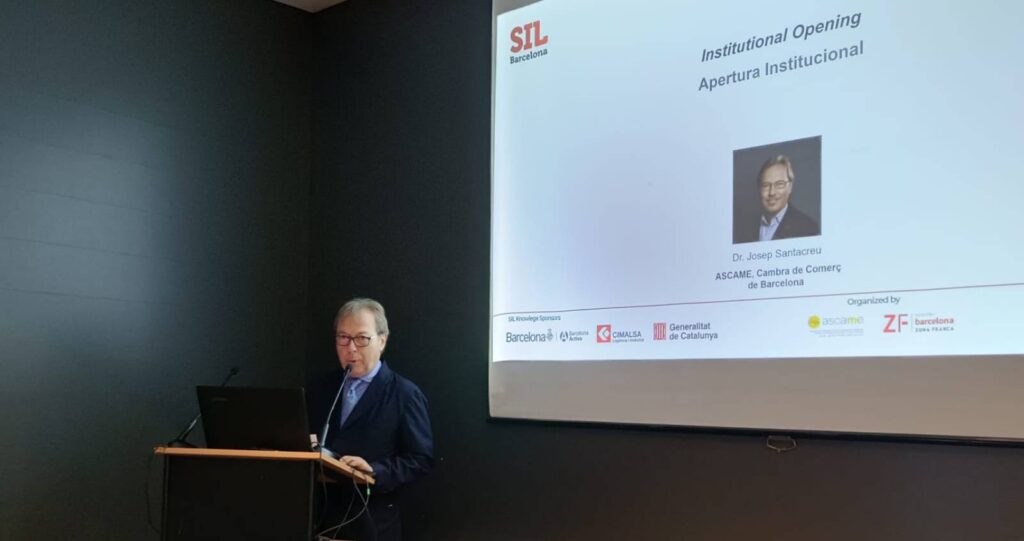
Dr. Santacreu also emphasized that building a more competitive logistics ecosystem will depend on investing in talent, innovation, and digitalization, and on strengthening collaboration among companies, institutions, and business associations.
Goods and Strategic Connectivity in the Mediterranean
In the opening panel, Goods and Strategic Connectivity in the Mediterranean, experts examined how to enhance logistics efficiency and strengthen the integration of strategic corridors across the region. Discussions covered major air cargo operations, their connectivity to key markets, and the operational and regulatory challenges they face. The panel also addressed the development of rail corridors, intermodality with ports and airports, and the need for stronger coordination between public and private stakeholders.
Mr. Jordi Caballé, Managing Director at Marinas de España, highlighted the evolution of Mediterranean maritime connectivity: “Our sector has transitioned toward a more connected, efficient, and environmentally responsible model. Yet significant challenges remain, particularly adapting to stricter environmental requirements, modernising infrastructure through technological and digital innovation, strengthening workforce skills, and improving the integration of marinas with the cities they serve”.
Panelists also explored ways to enhance efficiency and sustainability across the logistics sector. In this regard, Mr. Manel Cebrián, Business Development Manager at Grup Aquacenter, noted that “the Mediterranean is undergoing a structural transformation: global trade demands greater efficiency, climate change is accelerating transport electrification, and pressure on water resources is creating unprecedented uncertainty”. He stressed that “competitive logistics will increasingly depend on competitive energy and water security, especially in a region where industry, agriculture, water scarcity, and extreme climate events are reshaping our shared future”.
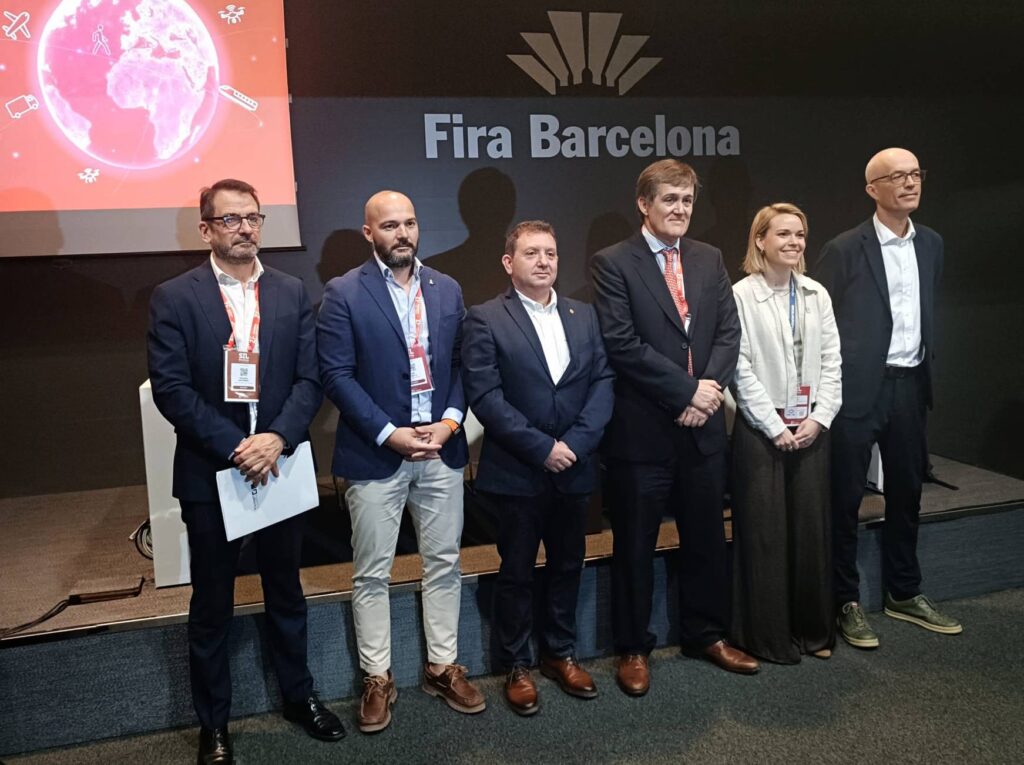
Along these lines, Mr. Eduardo San Román, Managing Director at Agencia Logística de la Comunidad de Madrid, highlighted the importance of governance, sharing Madrid’s successful experience: “Co-governance is emerging as the collaborative model shaping Madrid’s logistics future. This approach aligns public authorities, businesses, and infrastructure to position Madrid as a more efficient, sustainable, and innovative logistics hub”.
On the other hand, Ms. Marta Miquel, Deputy General Director at Escola Europea – Intermodal Transport, reflected on the training and knowledge transfer needed to address current and future challenges in the logistics sector: “Across the Mediterranean, ports are aligning around shared priorities: greater efficiency, stronger sustainability, deeper digitalisation, and improved stakeholder coordination. These common challenges show that cooperation and skills development have become strategic imperatives. Competitiveness no longer depends solely on infrastructure, but on delivering the most sustainable, efficient, and high-value services”.
Finally, Mr. Jordi Torrent, Secretary General of the MEDPorts Association, offered insightful reflections on the growing relocation of production plants to the Mediterranean. He noted that “supply chain disruptions are forcing companies to rethink their operations by increasing stock levels, relocating production – particularly to Egypt, Türkiye, and Morocco – and adapting to rising volatility in transport and energy costs”. He stressed that the instability of container rates and fluctuations in oil and natural gas prices demonstrate that “resilience is no longer optional; it has become a core requirement for competing in an uncertain global environment”.
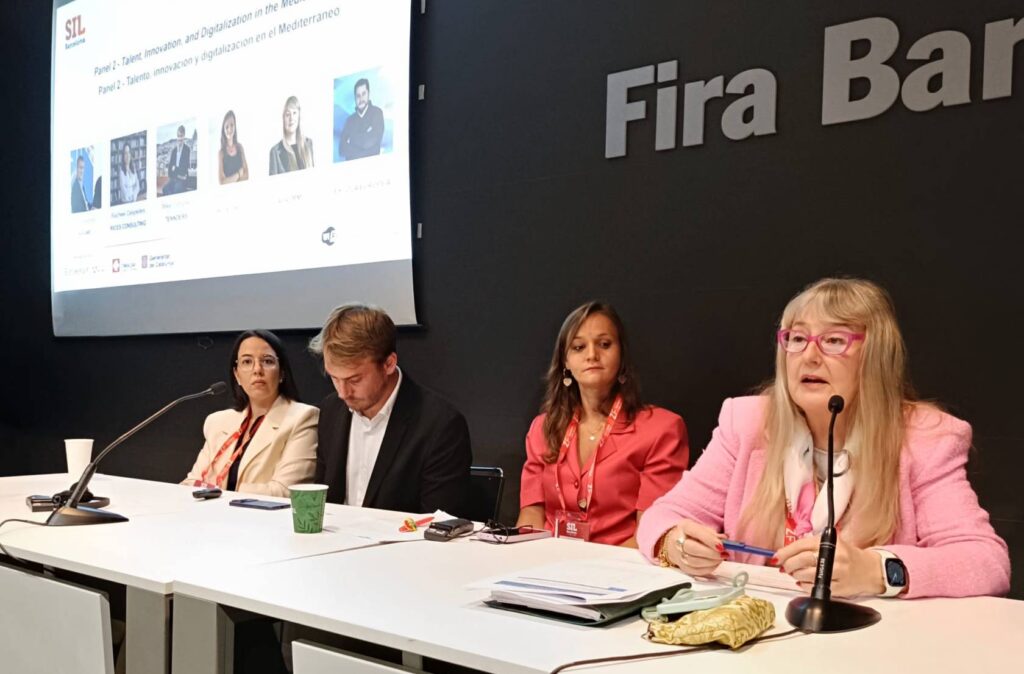
Talent, Innovation and Digitalisation in the Mediterranean
This second panel addressed the role of people and technology as drivers of logistical change. The conversation focused on the growing talent gap, the emergence of new professional profiles, and the importance of training, reskilling and stronger cooperation between companies and institutions.
Ms. Racheel Céspedes, Consultant and Founder of Rices Consulting, stressed that “the transformation reshaping logistics is not technological but human.” In her view, “data, automation and AI matter, but true innovation comes from people who adapt, learn continuously, and manage change. The future of logistics will be defined not by the tools we use, but by the people capable of using them to improve processes and results”.
Echoing this perspective, Mr. Orlando Reveco, Digital Products Manager at Escola Europea – Intermodal Transport, underlined the growing importance of human capabilities in an increasingly digital environment. “The logistics workforce of the future must be able to make decisions, solve problems, and work confidently with different types of data to optimise processes. It’s not just about having digital tools, but about understanding how to use them. AI can support continuous evolution, but without the ability to read the environment and apply knowledge in practice, technology alone achieves nothing”.
To this, Ms. Mª Helena de Felipe, President of AFAEMME, added an important perspective on diversity and female leadership in the logistics sector. She noted that “women represent only 22% of the logistics and transport workforce, and barely 10% hold managerial or leadership roles. Female talent remains scarce across the sector, and almost nonexistent in women-led start-ups. She stressed that the most significant gap in logistics is not digital but human: “The lack of female talent directly impacts productivity and competitiveness. Reversing this trend will require stronger cooperation between public and private institutions”.
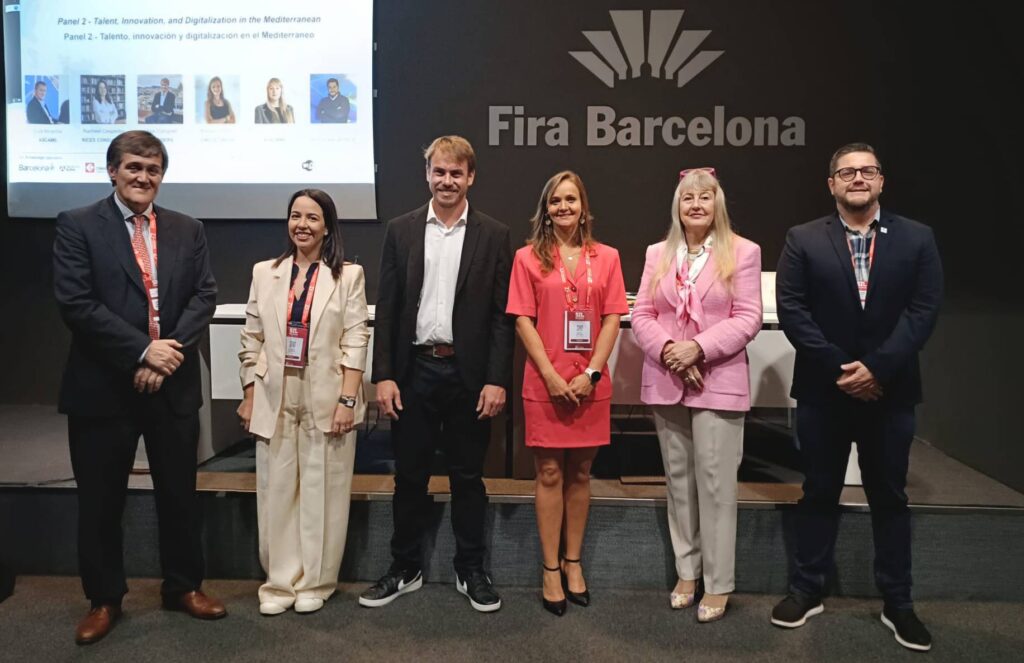
Panelists also reflected on tech innovation and digital solutions for Mediterranean logistics operators. A standout example was Tennders, a Barcelona-based digital logistics start-up that has become a leading digital services aggregator for the European road freight market. Through its SaaS model, the company connects carriers, shippers, and operators across Europe, offering tailored solutions aimed at reducing inefficiencies and empty trips, cutting costs and transit times, and lowering the sector’s carbon footprint.
The session featured the company’s CEO and co-founder, Mr. Mike Cuingnet, who analysed how tech start-ups are reshaping Mediterranean logistics. As he explained, “Mediterranean start-ups are transforming logistics not by imposing technology, but by solving real frictions with faster, more adaptable tools. The goal isn’t to digitalise everything, but to focus on where technology truly improves operational outcomes. And while AI will never replace the human relationships that sustain this industry, it can organise data, suggest decisions, and free up time to manage the exceptions that matter”.
In this regard, Ms. Marika Gillardo, Marketing Manager at Circle Group, highlighted Spain’s position as the first European country to require the digital Control Document for all domestic road freight transport. She noted that “this is a major step forward, as authorities will be able to verify documentation in real time through QR codes or electronic identifiers, speeding up inspections and reducing errors”. She added that “AI will further accelerate this digital transition, enabling the logistics sector to adapt more quickly and effectively to the new European regulatory framework”.
Building a more competitive Mediterranean logistics ecosystem
The summit concluded with a dynamic round table in which experts explored avenues for cooperation, emerging opportunities, existing barriers, and the potential for joint projects and future alliances. Mr. Eduard Rodés, Founder and Director of Escola Europea – Intermodal Transport, highlighted one of the central themes of the event: Mediterranean connectivity. According to him, “the logistics sector is not only about connecting infrastructures; it is about connecting companies, institutions, academia, and people”.
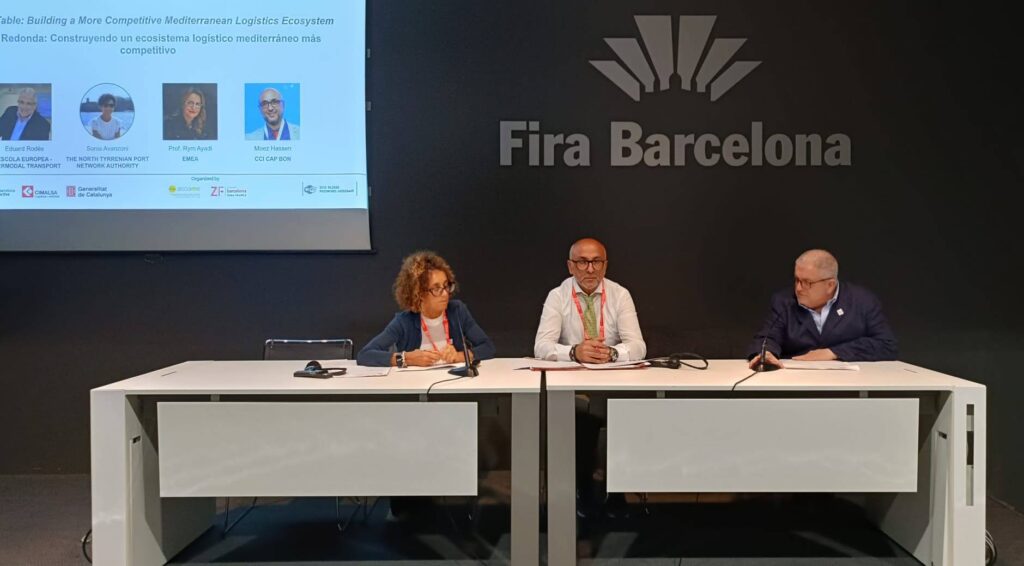
He added: “Intermodality strengthens competitiveness and regional cooperation, proving that teamwork creates greater added value. Our ports are ready for this approach and are confident that it will generate more traffic and new opportunities. But growth must be sustainable. Technology is essential, yet it is the right people who ultimately make progress possible”.
In the same vein, Ms. Sonia Avanzoni, Manager of the Training Center at Autorità di Sistema Portuale del Mar Tirreno Settentrionale, underscored the strategic moment the region is facing: “The current geopolitical crisis is an opportunity to rethink the region and position the Mediterranean as a true logistics platform. Better connectivity goes beyond digitalisation; it requires stronger links between ports, logistics companies, and the intermodal sector. We face the same challenges, so learning from one another is essential. What we need now is a level of connection that truly strengthens the Mediterranean’s attractiveness as a unified logistics space”.
Finally, Mr. Moez Hassen, Director General of the Chamber of Commerce and Industry of Cap Bon (Tunis), brought the North African and Southern Mediterranean perspective to the discussion: “Stronger Mediterranean cooperation is essential. Public and private sectors must share data and training to build a more efficient and sustainable network. Competitiveness will depend not on size, but on network efficiency. Our Chambers of Commerce all share the same mission: connecting businesses, creating B2B opportunities, and identifying new prospects together. The future is a fully digital Mediterranean supply chain, led by our network of chambers to link ports, universities, and SMEs”.