
- May 14th, 2026
On May 11-12, ASCAME hosted the SMAC Project Steering Committee in Barcelona, gathering all the partners’ projects coming from Greece, Egypt, Spain, Tunisia, and Türkiye. The Sustainability Model for Accommodation MSMEs (SMAC) Project, which is led by the Drama Chamber of Commerce and Industry, tackles the urgent need for sustainability in the tourism sector by supporting accommodation MSMEs, many of which lack the digital tools and expertise needed to adopt greener practices.
The project counts on the participation of the Alexandria Chamber of Commerce, the Chamber of Commerce and Industry of Tunis, and the Confederation of Egyptian European Business Associations (CEEBA) as partners and members of ASCAME, as well as the Chamber of Commerce and Industry of Serbia as an associated partner of the project and ASCAME’s member.
The ASCAME team, led by the Projects Managers Ms. Estela Delgado and Mr. Luis Miranda, together with the General Coordinator, Ms. Míriam González, welcomed the SMAC Project partners on May 11. In their welcome address, they highlighted that it was a valuable opportunity to strengthen collaboration, exchange best practices in sustainable tourism, and advance cross-border cooperation across the Mediterranean. Ms. González emphasized the project’s impact in creating jobs, supporting local economies, and connecting communities across the region. According to her, “real impact comes when cooperation is translated into concrete action on the ground, as it is the approach of the SMAC Project”.
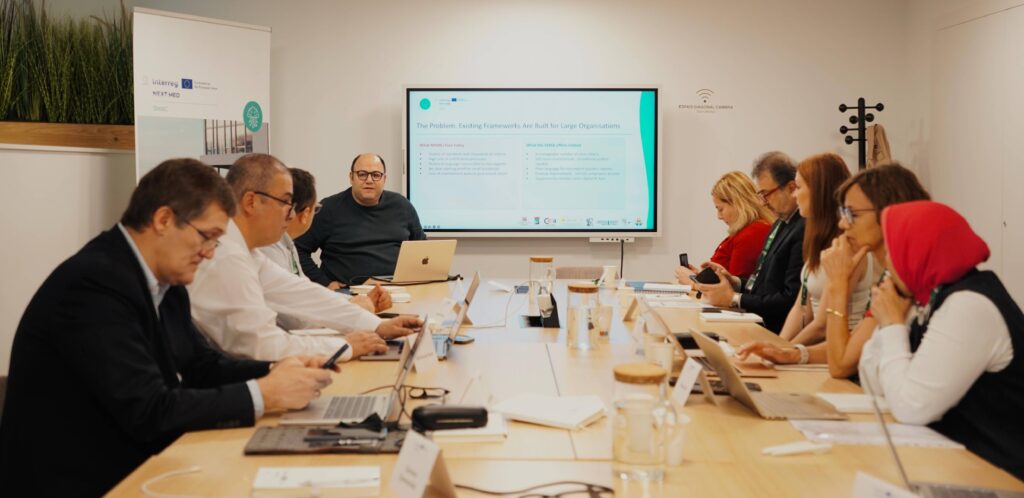
On the first day of the Steering Committee, partners talked about the project main mission -making sustainable tourism tangible, pragmatic, and inclusive, ensuring no small accommodation business is left behind in the green transition- and the two key tools to support this mission: the Simplified Sustainability Model for Accommodation (SSMA) and an Artificial Intelligence Recommendation Tool (AIRET). These tools, combined with tailored training for Mediterranean MSMEs, aim to turn sustainability into a competitive advantage.
Discussions also emphasized the expected benefits across the value chain:
- MSMEs: Lower operating costs, stronger market positioning, and access to sustainability-minded guests.
- Guests & Visitors: More responsible tourism experiences and improved service quality.
- Staff & Workers: Better working conditions, formal contracts, and new sustainability skills.
- Communities & policymakers: Support for local producers, progress toward destination-level sustainability goals, and access to useful policy data.
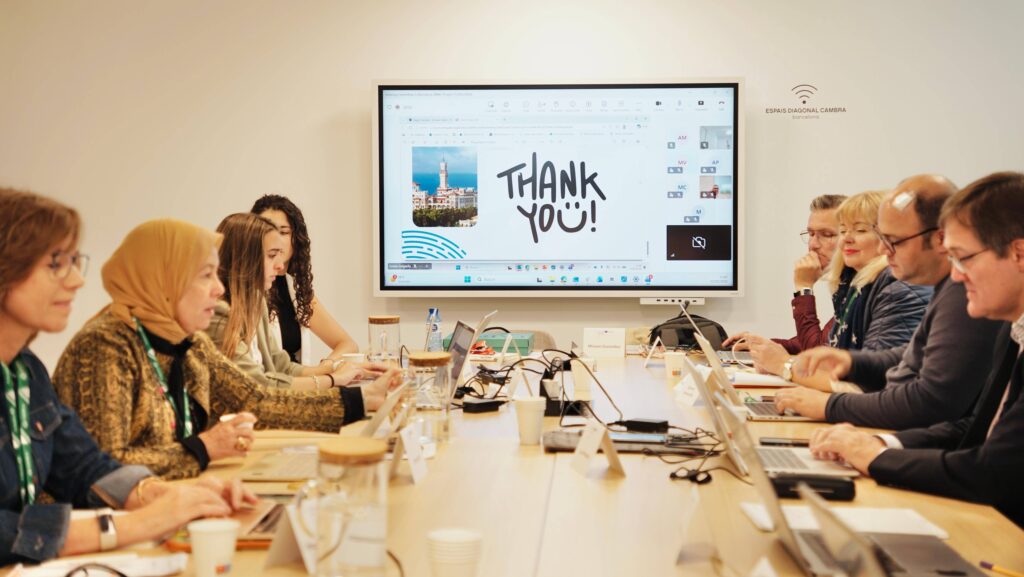
Exchanging valuable insights on sustainable tourism
On the second day of the SMAC Steering Committee, partners shared updates on completed and upcoming activities. They exchanged valuable insights on how the project will support the urgent transition of micro and small accommodation enterprises toward sustainable practices. All of them stressed that a sustainable tourism model is essential for accommodation SMEs in the Mediterranean, a region facing a unique combination of environmental pressures – including water scarcity, coastal erosion, and seasonal peaks in waste generation – together with a strong economic dependence on tourism, which makes it highly vulnerable to seasonality, climate shocks, and sudden drops in demand.
They also highlighted that today travellers increasingly choose accommodation that demonstrates environmental responsibility, offers authentic local experiences, and respects social and cultural values. In this context, sustainable tourism practices not only help SMEs attract visitors, improve their online reputation, and access new market segments such as eco tourism, but also contribute to national economies by supporting GDP growth and generating new jobs.
Partners further emphasised the key role that Mediterranean institutions play in fostering sustainable tourism. Two of them were present at the meeting. One of them was the Barcelona Chamber of Commerce, which has a Tourism & Sustainable Department to advance sustainable tourism in Barcelona through training programmes, business diagnostics, technical support, and participation in city initiatives aligned with the SDGs, helping companies adopt responsible social and environmental practices.
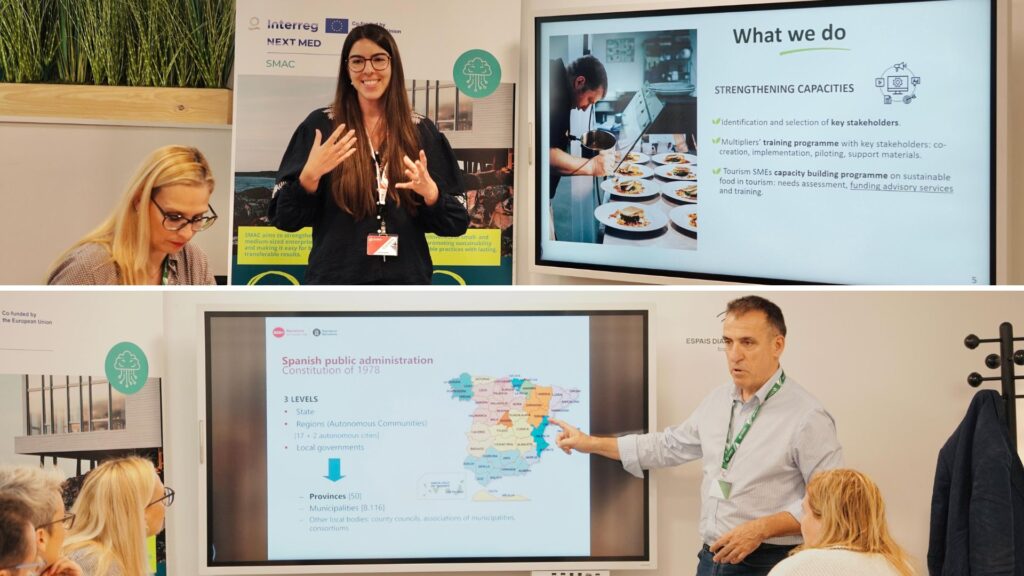
Ms. Cristina Martín, Project Manager at the Chamber of Commerce of Barcelona, highlighted the joint commitment between public institutions and the private sector in Barcelona to implement a sustainable tourism model that can serve as an international reference. A clear example of this is the European TASTE Project, coordinated by the institution and bringing together a wide range of public and private stakeholders from both the tourism and food sectors. The project equips tourism companies with innovative solutions and strategies for sustainable food practices in the realm of food management and food tourism, enabling them to effectively navigate the green and digital transitions.
In addition, Mr. Josep Rodríguez, Head of the Strategic Projects and Cross-Sectional Action Section at the Barcelona Provincial Council, presented the institution’s programme designed to promote environmental, cultural, and socioeconomic best practices among tourism companies and services across its destination brands, providing training, technical support, management tools, and increased visibility for businesses committed to sustainability.