
Events Ascame/ January 15, 2026/ Featured
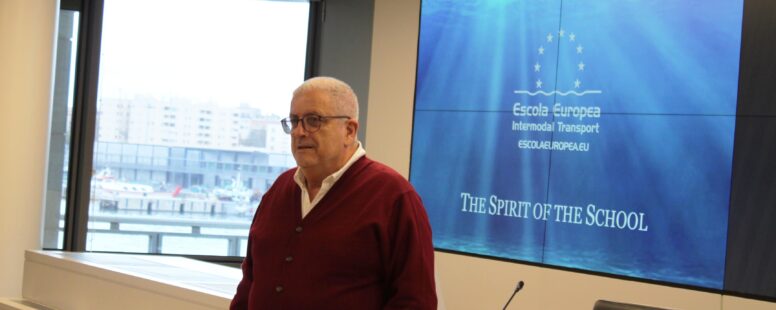
At the end of 2025, ASCAME welcomed the Escola Europea – Intermodal Transport as a new associate member. The centre is a leading reference in intermodal transport and logistics, offering a wide range of innovative training programmes that combine simulation with real operational scenarios. It is firmly committed to promoting intermodality as a cornerstone for developing sustainable logistics within European transport systems.
We interviewed its Founder and Director, Mr. Eduard Rodés, to explore the benefits of this partnership and the impact of developing talent with a truly intermodal perspective – enabling Mediterranean countries to unlock the value of their infrastructure, ensure more efficient operations, and strengthen cooperation and competitiveness across the region. According to him, both institutions share the same commitment to promoting Mediterranean integration, competitiveness and sustainable development. In addition, Mr. Rodés notes that logistics communities across the Mediterranean share common priorities – efficiency, sustainability, digitalisation and skilled human resources – despite diverse local contexts. He emphasises that logistics is a key driver of Euro-Mediterranean integration, connecting markets, cultures and people.
In what ways does the mission of Escola Europea – Intermodal Transport align with ASCAME’s strategic objectives for the Mediterranean region?
Our mission is fully aligned with ASCAME’s strategic objectives for the Mediterranean, particularly in terms of strengthening regional integration, competitiveness and sustainable economic development. Our core mission is to support people and develop professional skills within port, logistics and international trade communities, ensuring that well-prepared professionals align with economic strategies and infrastructure investments. For many years, our collaboration with ASCAME, through initiatives such as MedaLogistics and projects like OPTIMED, has reflected a shared conviction that logistics and trade are essential pillars of Mediterranean connectivity.
From your perspective, what are the main contributions that both institutions can offer to foster a more sustainable, prosperous, and competitive Mediterranean?
ASCAME brings a strong institutional and business-oriented perspective, connecting companies, chambers of commerce and economic actors throughout the Mediterranean, whereas the Escola Europea contributes its expertise in applied training, simulation-based learning and capacity building for logistics and transport professionals. By combining these strengths, we can promote sustainable logistics practices, support the green and digital transition, and ensure that economic growth is underpinned by qualified professionals capable of operating in complex international environments. Sustainability, competitiveness and prosperity can only be achieved when infrastructure, business strategy and human capital evolve together.
Which forms of collaboration and potential synergies do you envision between ASCAME and Escola Europea to strengthen Mediterranean cooperation?
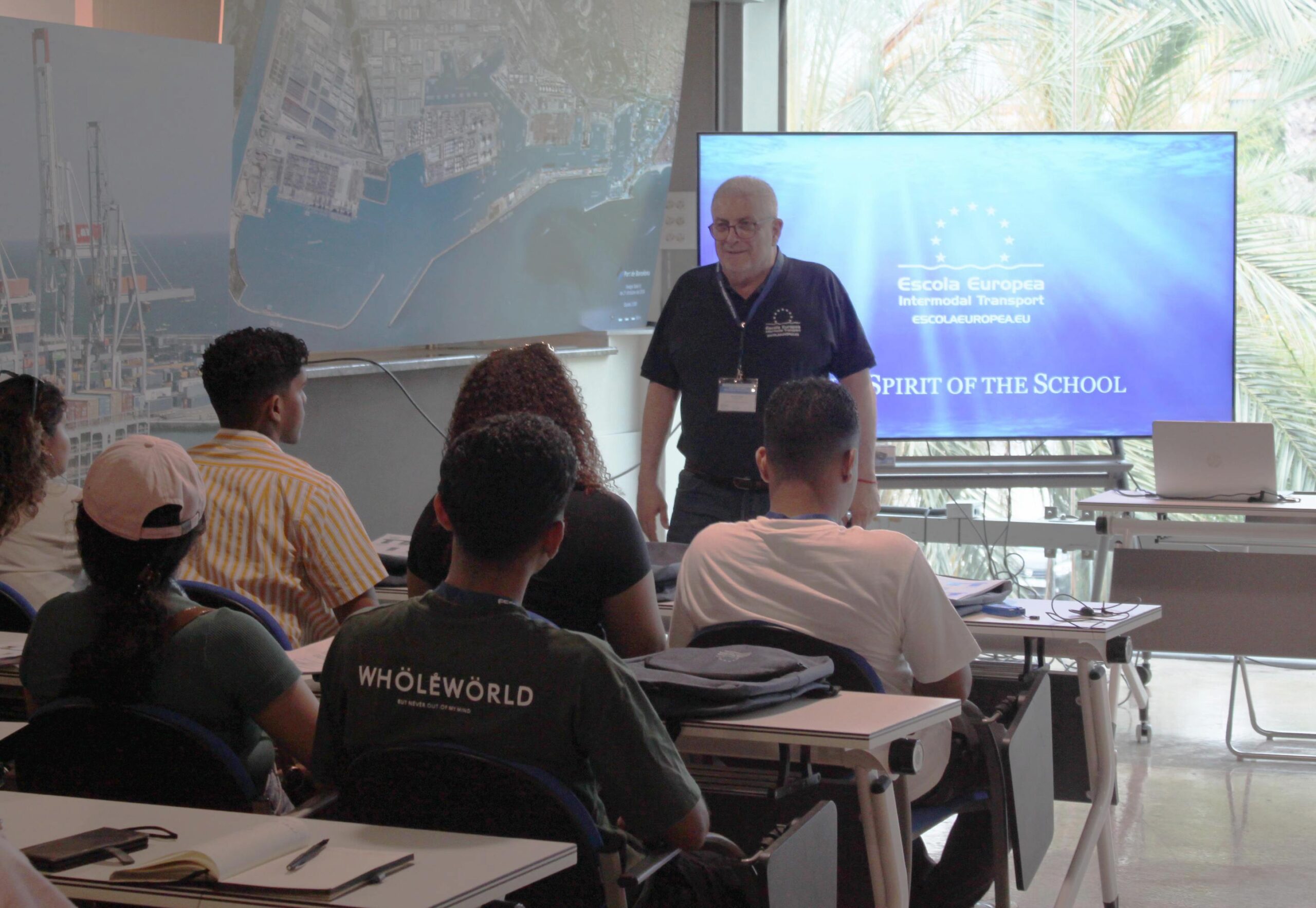
We see strong potential for collaboration through joint capacity-building initiatives that actively involve companies, education and training centres, and the training activities promoted by Chambers of Commerce themselves. ASCAME’s extensive network of Chambers and businesses can benefit from tailored training solutions developed by the Escola Europea, supported by a range of practical digital and experiential tools designed to respond to concrete operational needs. At the same time, training centres can act as natural hubs to transfer these solutions to students, professionals and educators, ensuring continuity between initial education, upskilling and reskilling. We also envision deeper cooperation in EU and international projects, especially those focused on youth employment, sustainable transport, trade facilitation and South–South cooperation.
ASCAME and the Escola Europea can promote sustainable logistics practices, support the green and digital transition, and ensure that economic growth is underpinned by qualified professionals capable of operating in complex international environments
How will the Open Trade Med project, with the participation of ASCAME, contribute to strengthening logistics cooperation in the Mediterranean while enhancing the skills of professionals in the sector?
Open Trade Med has been conceived mainly as a training-of-trainers project, with the clear objective of creating a multiplier effect across Mediterranean port and logistics communities. By equipping trainers and educators with updated knowledge, methodologies and digital tools, the project ensures that high-quality, practice-oriented training reaches a much larger number of students and future professionals. ASCAME’s participation is essential in this process, as it provides a direct connection with companies, Chambers of Commerce and business networks across the Mediterranean. This link allows the project not only to align training content with real market needs, but also to raise awareness among companies of the value that these newly trained profiles can bring to their organisations. By working together with ASCAME, the Port of Barcelona and SERPORT, Open Trade Med creates a framework in which companies are encouraged to integrate this talent into their teams, recognising training as a strategic investment to improve competitiveness, innovation and Mediterranean cooperation in the long term.
At Escola Europea you work closely with the logistics communities on both shores of the Mediterranean. In your opinion, what are the main differences between them and the main needs they share with you?
Logistics communities across the Mediterranean are characterised by diversity rather than by a simple geographical divide. Ports across the region face different operational and institutional contexts, yet they increasingly share similar priorities, such as improving efficiency, sustainability, digitalisation and coordination among stakeholders. These shared challenges highlight the importance of cooperation and skills development across the Mediterranean. However, the needs they share are remarkably similar: qualified human resources, better coordination between public and private actors, digital skills, and a strong ethical and sustainability-oriented approach to logistics operations. Across both shores, there is a growing recognition that investing in people is as critical as investing in infrastructure.
What role does the logistics sector play in advancing deeper Euro-Mediterranean integration?
Logistics is a cornerstone of Euro-Mediterranean integration. Efficient transport corridors, interoperable systems and harmonised procedures enable trade, reduce costs and create trust between economies. Beyond the movement of goods, logistics connects markets, cultures and people. A well-functioning logistics sector supports regional value chains, strengthens economic resilience and facilitates cooperation between Europe, North Africa and the Middle East. It is a practical and tangible driver of integration that translates political dialogue into real economic opportunities.
Your training programmes combine simulation with real-world scenarios. What specific skills do participants acquire, and how do these competencies contribute to enhancing cooperation and competitiveness across the Mediterranean economy?
Our training programmes combine digital simulation with immersive, real-world learning experiences. Participants acquire solid technical skills in international trade operations, intermodal transport, port operations and supply chain management through realistic simulations using advanced tools such as the Port Virtual Lab. At the same time, our face-to-face courses allow partners of Escola to place their infrastructures and equipment at the service of training. This includes hands-on learning in ports and on-board vessels, where participants are exposed directly to operational realities, constraints and decision-making environments. This combination of digital tools and immersive on-site training creates a virtuous circle: simulations prepare participants to understand complex processes, while real environments give context, depth and meaning to what they have learned. The result is a significant increase in training effectiveness. Beyond technical skills, participants also develop transversal competencies such as decision-making, critical thinking, teamwork, ethical judgement and awareness of sustainability challenges.
During the MedaLogistics session “Seizing Africa’s Logistics Infrastructure Potential,” you stated that “the advancement of logistics infrastructure must be matched by a parallel investment in developing human talent.” How is this principle applicable to all Mediterranean countries, beyond the African context?
This principle is universal. Infrastructure alone does not generate value unless it is operated by skilled professionals capable of managing growing levels of complexity, adapting to change and making responsible decisions. This applies equally to ports and logistics platforms in Europe, North Africa and the wider Mediterranean. In recent years, logistics infrastructure has evolved significantly. If in the past it was often sufficient to understand maritime transport in isolation, today infrastructure is increasingly shaped by the integration of multiple transport modes. Professionals are now required to have a solid understanding not only of maritime operations, but also of rail, road and air transport, and even inland waterway navigation where available.
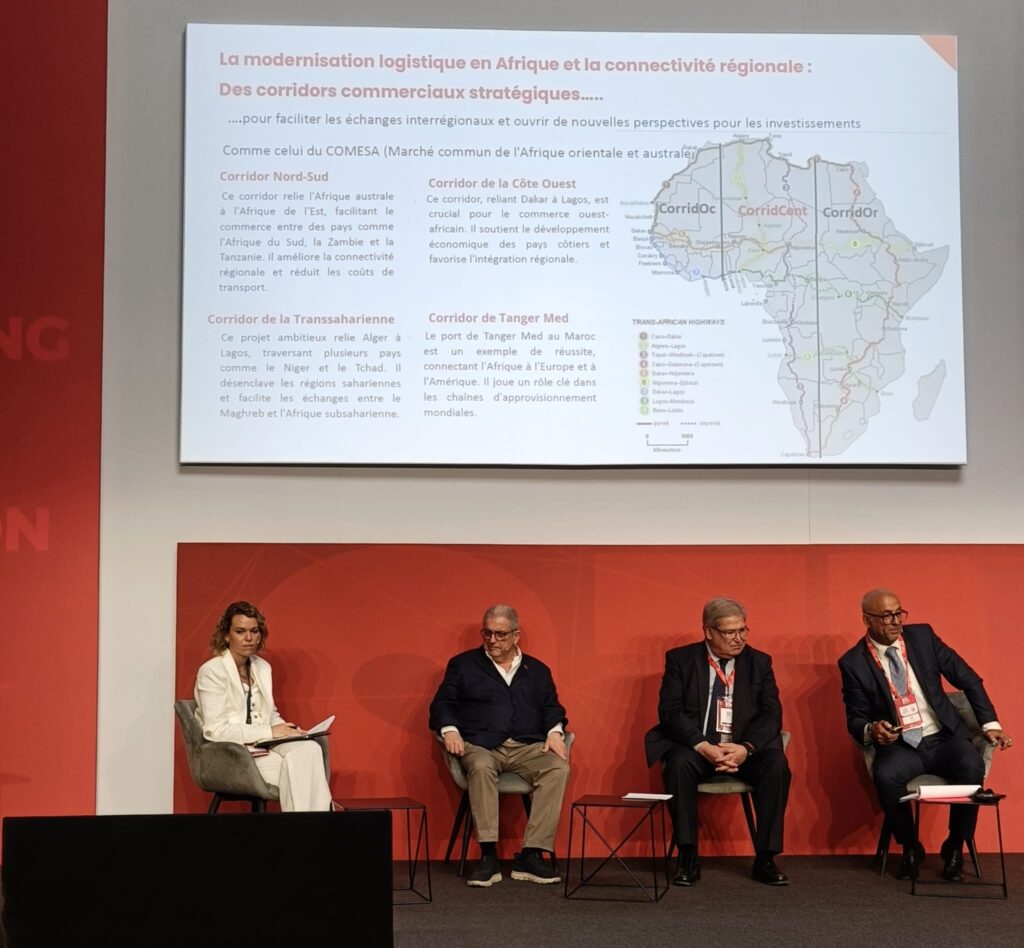
Across the Mediterranean region, major investments in ports, terminals, intermodal platforms, digital tools and sustainability solutions must therefore be matched by a parallel investment in training, education and lifelong learning. Only by developing human talent with a truly multimodal perspective can countries fully unlock the value of their infrastructure, ensure efficient operations and strengthen cooperation and competitiveness across the region.
Major investments in ports, terminals, intermodal platforms, digital tools and sustainability solutions must be matched by a parallel investment in training, education and lifelong learning. Only by developing human talent with a truly multimodal perspective can countries fully unlock the value of their infrastructure, ensure efficient operations and strengthen cooperation and competitiveness across the region
In the same session, you said that “logistics is not just about moving goods; it is about connecting people, enabling trade, and building the backbone of economic growth.” Could you expand on this idea and share some concrete examples?
Logistics creates connections at many levels: between producers and consumers, companies and markets, regions and cultures. At its core, it is a system of relationships, where trust, coordination and shared understanding are as important as physical assets. Chambers of Commerce are probably among the actors that best understand how to connect with people. Through their long-standing networks, they create solid ties and a web of institutional and business relationships that facilitate cooperation and trade. Alongside them, there are parallel and complementary networks such as MEDPorts, freight forwarders’ associations, and the associations representing the different operators active in ports and airports. All these organisations work, each from its own perspective, to make the global logistics network more efficient and competitive.
In your view, what does it truly mean to unlock Africa’s logistics potential, and which conditions are essential to achieve it?
Unlocking Africa’s logistics potential means creating efficient, transparent and sustainable logistics systems that genuinely support trade, industrial development and job creation. This requires not only investment in infrastructure, but also regulatory reform, institutional cooperation and strong capacity-building efforts. A key condition is to actively strengthen South–South relations and exchanges, enabling African countries and regions to cooperate more closely, share experiences and build solutions adapted to their own contexts. At the same time, transparency and reliability in logistics operations are essential to generate trust among operators, institutions and international partners, and to ensure that supply chains function smoothly and fairly. Education and training play a central role in this process. Developing local talent helps build resilient and inclusive logistics systems, while promoting gender equality and ensuring that women have real access to skills, responsibilities and leadership positions across the sector.
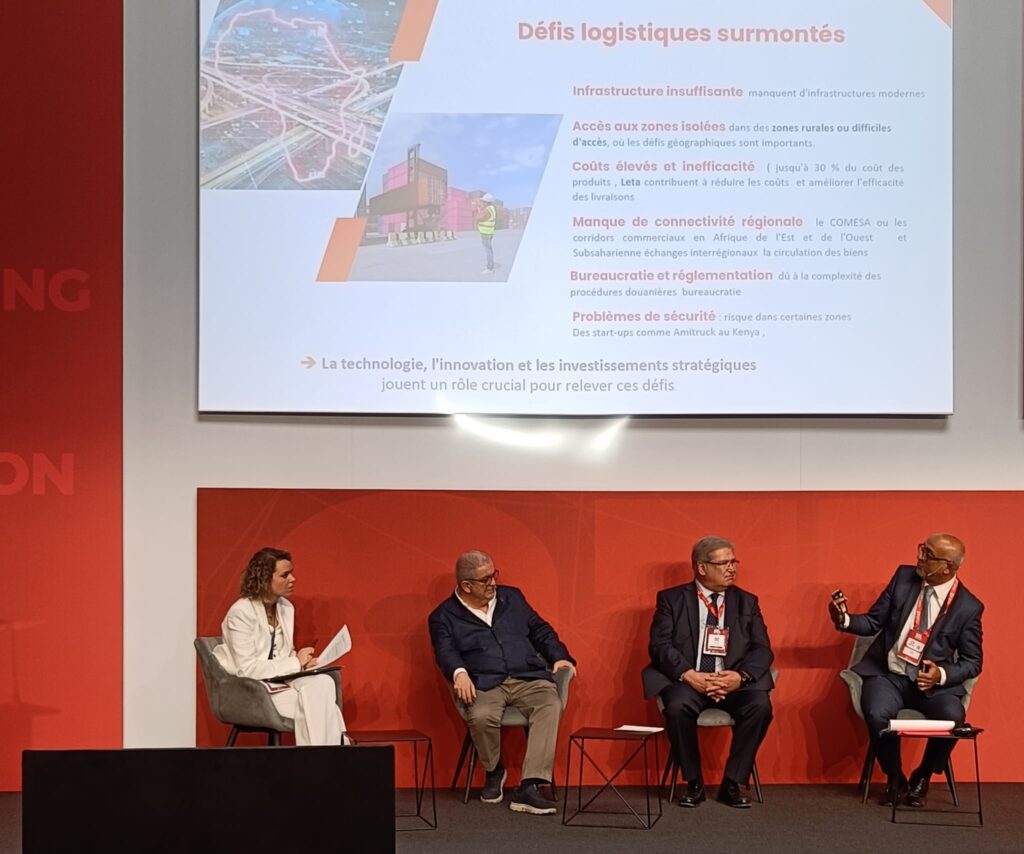
Another MedaLogistics session in which your institution participated addressed the future of the Mediterranean supply chain. From your perspective, how will digitalisation and the green transition reshape the region’s logistics ecosystem in the coming years?
Digitalisation and green transition will fundamentally reshape Mediterranean logistics. Digital tools will improve transparency, efficiency and coordination across supply chains, while sustainability requirements will accelerate the shift towards intermodal transport, short sea shipping and lower-emission solutions. These transformations will demand new skills and mindsets. Training centres like Escola Europea, working alongside networks such as ASCAME, play a crucial role in preparing professionals and organisations to lead this transition rather than simply adapt to it.
Finally, what role do logistics clusters play in fostering collaboration between ports, companies, training centres, and institutions across the Mediterranean?
Logistics clusters are essential platforms for collaboration. They bring together ports, companies, training centres and public authorities, facilitating dialogue, innovation and coordinated action. Through this shared space, clusters help align training with real market needs, support innovation and strengthen regional competitiveness. In this context, logistics clusters also play a key role in the development of green corridors, one of the most promising movements in today’s logistics landscape. Green corridors require the coordinated participation of all actors involved in door-to-door operations, from ports and terminals to shipping lines, rail and road operators, logistics service providers, cargo owners and technology partners. No single actor can deliver decarbonisation on its own. In the Mediterranean context, clusters also act as bridges between countries and cultures. By fostering cooperation at local, regional and cross-border levels, they contribute directly to a more integrated, resilient and sustainable Mediterranean logistics economy.