
Events Ascame/ May 16, 2025/ Ascame members, Featured
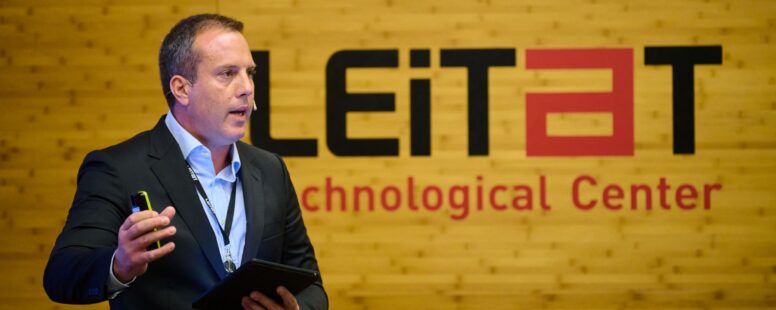
A few months ago, ASCAME signed a collaboration agreement with Leitat, a European reference technological center with expertise in applied chemistry, circular economy, digital industry and health & biomedicine. The main objective of the agreement was to work together for the digitalisation of the Mediterranean Chambers of Commerce by improving their efficiency and the relationship with their local businesses. In the following interview, Mr. Dirk Saseta, Director of Business and Operations at Leitat, talks about the appropriate digital tools and solutions that will be given to the Mediterranean Chambers to meet the evolving needs of their business communities. Mr. Saseta also refers to the gap between Chambers in terms of digitalisation and how Leitat will address this challenge by categorizing digital improvements according to each Chamber’s level of digital maturity.
From what need did the recent partnership between ASCAME and Leitat come up?
The recent partnership between ASCAME and Leitat was born out of a shared need to leverage their combined strengths. ASCAME, representing over 300 chambers of commerce across more than 23 Mediterranean countries, aims to strengthen regional business connections and development. Meanwhile, Leitat is the oldest and leading research and technological organization in the Mediterranean. Their collaboration is a natural fit, driven by strong motivation to innovate, support business growth, and make the most of their expertise and resources. It’s an exciting partnership with great potential!
One of the key objectives of the agreement is promoting the digitalisation of the Mediterranean Chambers of Commerce. What is Leitat proposal to achieve this objective?
There is a clear need to standardize the digital tools and platforms used by the various Chambers of Commerce across the region. Our analysis revealed a persistent digital gap between Chambers, often influenced by their geographic location and access to resources. This disparity not only affects the efficiency of individual Chambers but also hampers collaboration and knowledge-sharing across the broader network. To address this, we have developed a framework to categorize digital improvements according to each Chamber’s level of digital maturity. This framework enables us to identify specific areas where support is needed, ranging from basic digital infrastructure upgrades to the implementation of advanced tools for member engagement, data management, and inter-chamber communication.
What is your mid-term objective?
Our mid-term objective is to secure adequate funding to launch a series of pilot projects aimed at bridging these gaps. These initiatives will serve as testbeds for scalable digital solutions that can be tailored to the needs of different chambers, regardless of their size or location. Through these pilot projects, we aim to demonstrate the impact of digital transformation on operational efficiency and member satisfaction, laying the groundwork for broader adoption across the ASCAME network. By moving toward a more harmonized digital ecosystem, we can ensure that all Chambers -regardless of their current capabilities- are equipped to thrive in a connected, technology-driven business environment.

Our analysis revealed a persistent digital gap between Chambers, often influenced by their geographic location and access to resources. This disparity not only affects the efficiency of individual Chambers but also hampers collaboration and knowledge-sharing across the broader network. To address this, we have developed a framework to categorize digital improvements according to each Chamber’s level of digital maturity
In your opinion, what are the main differences between the Northern and Southern Mediterranean Chambers of Commerce in terms of digitalization?
Although we have not identified a clear or consistent pattern that correlates directly with latitude, our analysis has revealed noticeable disparities in terms of digital presence, operational capacity, and service delivery. These differences are particularly apparent when examining the content, structure, and user experience of their respective websites. One key factor influencing these variations sometimes appears to be the size of the city in which each Chamber operates. Larger cities typically host Chambers with greater resources, broader membership bases, and more advanced digital infrastructures. In contrast, Chambers located in smaller municipalities often face limitations in both capacity and technological investment, which can impact their visibility and the quality of services they provide to members.
Given these observations, how will you assist ASCAME in conducting a comprehensive assessment of its member Chambers?
We will evaluate their current digital capabilities and identify opportunities for improvement through the strategic adoption of modern technologies. By doing so, we aim to enhance both internal operations and external engagement by enabling Chambers to strengthen their relationship with local businesses, improve service delivery to members, and foster more effective collaboration across the network of Mediterranean chambers. Ultimately, by leveraging appropriate digital tools and solutions, ASCAME can support its member Chambers in building more resilient, inclusive, and future-ready institutions that are better positioned to meet the evolving needs of their business communities.
In what sense will this agreement transform the Mediterranean Chambers of Commerce into technological hubs for companies in the region?
Achieving a level of digitalization that enables Mediterranean Chambers to function as innovation hubs for the region is an ambitious yet achievable objective, outlined in the final phase of our strategic plan. While this goal is feasible, it requires a long-term commitment to significant digital transformation across the network. In the medium term, however, our focus will be on more immediate, impactful improvements in the digital tools used by the Chambers. These enhancements aim to streamline operations and facilitate better interactions between chambers and their members. Specifically, we will prioritize the development of interactive databases that allow for easier access to key information, such as company profiles, member directories, and other relevant data.
Additionally, we will work on refining invoicing systems, ensuring they are more efficient, user-friendly, and integrated with other chambers processes. By targeting these key areas, we aim to address some of the most pressing challenges faced by Chambers today, enabling them to better serve their members, improve internal efficiency, and enhance overall engagement. These digital improvements will lay the foundation for the more comprehensive innovation-focused transformation that will be pursued in the later stages of our plan. In the long run, as these digital tools evolve and mature, Mediterranean Chambers will be better positioned to serve as leading drivers of innovation, foster collaboration, and promote economic growth in the region.
By implementing short-term measures and targeted improvements, Chambers can achieve quick wins in terms of operational efficiency and consistency. These immediate enhancements will help streamline day-to-day processes, reduce administrative burdens, and ensure more reliable service delivery, ultimately fostering smoother interactions with members and reinforcing the chambers' credibility and effectiveness
In what sense will the companies represented by the Chambers of Commerce improve their efficiency, productivity and competitiveness thanks to this agreement between Leitat and ASCAME?
By implementing short-term measures and targeted improvements, Chambers can achieve quick wins in terms of operational efficiency and consistency. These immediate enhancements will help streamline day-to-day processes, reduce administrative burdens, and ensure more reliable service delivery, ultimately fostering smoother interactions with members and reinforcing the chambers’ credibility and effectiveness. In addition, both parties agreed to promote joint initiatives aligned with the digital transformation, sustainable development and innovation of companies in the region.
Finally, Leitat pursues to have greater visibility as a strategic partner in the region by replicating the public-private models that it has promoted both in Spain and in the EU. Could you explain to us what kind of public-private models are you thinking about?
Leitat, established in 1906, is the oldest research and technological organization in Europe. With a long-standing history of scientific and industrial collaboration, Leitat manages over 250 projects annually at both the European and national levels, leveraging public-private partnership models to drive innovation and impact. In addition to its strong project management capabilities, Leitat has extensive experience in fostering and managing innovation ecosystems, including incubators, accelerators, and innovation hubs. This expertise allows Leitat to support the entire innovation value chain—from early-stage research and development to market-ready solutions. In the Mediterranean region, Leitat’s objective is to continue expanding its proven business model, contributing to regional development by transferring its technological know-how and innovative practices. By doing so, Leitat aims to empower local ecosystems, enhance competitiveness, and support sustainable economic growth through technology and innovation.