
Events Ascame/ May 27, 2025/ Ascame members, Featured
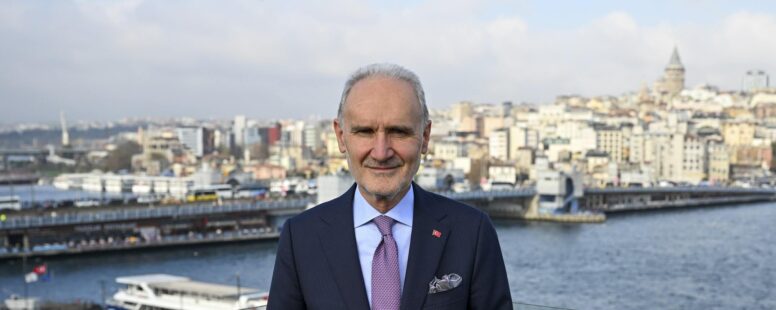
The Istanbul Chamber of Commerce (ICOC), founded in 1882, is one of the oldest Chambers in the world. In addition, with a total of 825,000 members, it is the second-largest Chamber in the world. Its services, ranging from local companies’ participation in around 50 international fairs to B2B meetings, trade and procurement missions, commercial diplomacy and support to local entrepreneurs, impact not only the competitiveness and economic growth of Istanbul but also that of the whole of Türkiye. In the following interview, Mr. Şekib Avdagiç, President of ICOC, provides an in-depth analysis of the Chamber’s mission and objectives and shares insights on challenges faced by local companies, Türkiye’s investment opportunities, the key role of Chambers of Commerce, the advantages to being a member of ASCAME and the future of the Mediterranean considering the geopolitical context.
What is the Chamber’s main mission and objectives?
Our Chamber has had a single mission for 143 years: To prepare its members and the Turkish business world to meet the requirements of modern trade, to enhance their global competitiveness and to contribute positively to world commerce. We implement comprehensive projects to make Istanbul a global hub for trade, finance, logistics, and tourism to achieve these objectives. With the aim of expanding the markets and cooperation opportunities for our members, we organize the participation of Turkish companies in 47 international trade fairs and exhibitions every year. We also host over 100 foreign delegations at our Chamber annually and arrange numerous outbound procurement missions to various countries.
Does your operational scope include only Istanbul, or is it nationwide?
We don’t just work for Istanbul. We carry out activities that create added value for the Turkish economy. Through Istanbul Commerce University, we are active in education as well. In addition, the Istanbul Expo Centre offers state-of-the-art exhibition halls, where approximately 80 fairs are organized yearly. On the other hand, we established Teknopark Istanbul, being Türkiye’s largest Teknopark- in order to promote technological advancement and innovation in the defense industry. We also launched the Start-Up Foundation BTM to nurture entrepreneurship, and to ensure that they receive the highest amount of investment possible. Every activity carried out in Istanbul holds great significance for all of Türkiye. Istanbul generates 30.4% of the country’s GDP, accounts for 48.1% of exports, 20.3% of employment and 35.3% of inbound tourism. In this sense, Istanbul, the locomotive of Turkish economy, must move forward swiftly and efficiently. That’s why we operate under this motto: “ICOC is the strength of Türkiye; the pioneer of the Turkish economy”.
What companies and economic sectors does your Chamber represent?
I can confidently say that every single sector is represented at the ICOC. We currently represent 81 different professions. Each sector is represented both in our professional committees and in ICOC Assembly. These representatives advocate for their industries, voice their challenges and work on solutions. With 143 years of history, the ICOC is one of the oldest Chambers in the world. With a total of 825,000 members, we are the second-largest Chamber in the world.
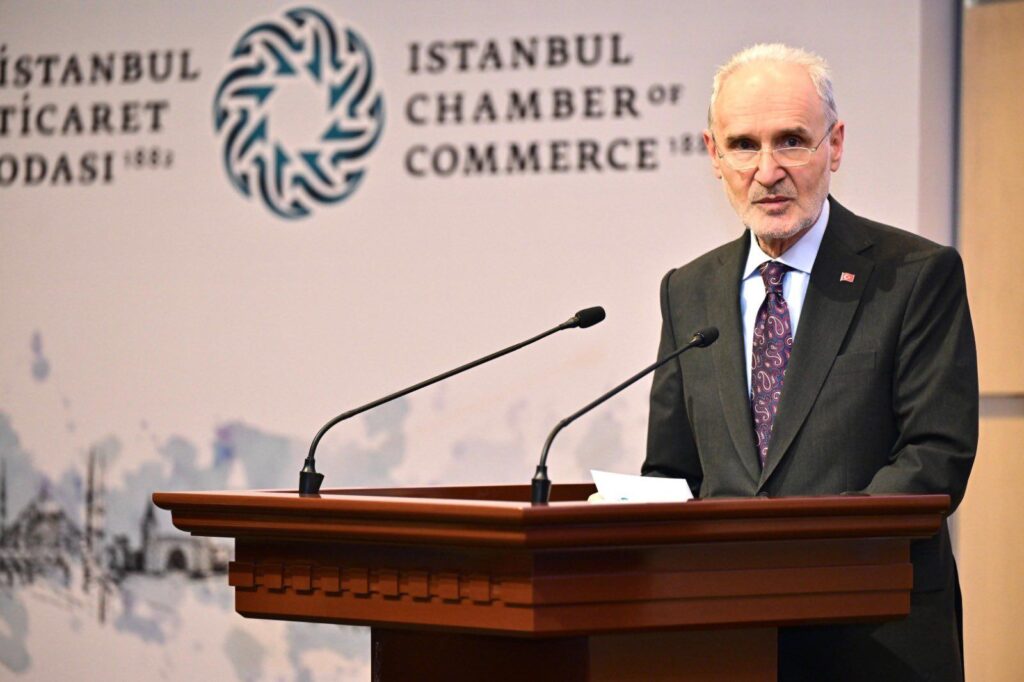
We don’t just work for Istanbul. We carry out activities that create added value for the Turkish economy. That’s why we operate under this motto: “ICOC is the strength of Türkiye; the pioneer of the Turkish economy
What range of services do you offer to local companies to improve their competitiveness and the growth of the Turkish economy?
We organize an average of 50 international fair participations across four continents and around 20 countries every year, covering all sectors. We also maintain strong engagement with the global business world through events beyond trade fairs. We host dozens of foreign delegations from every continent and region at our Chamber. This provides our members with valuable networking and B2B meeting opportunities. We also organize trade and procurement missions. Our guiding principle in global trade is this: wherever there is a Turkish trader, ICOC is there. We stand with Turkish businesses across the globe. By expanding commercial diplomacy across a wide geography, we contribute to our search for new markets. We play an active and utmost role in the ASCAME and the Danube Chambers of Commerce Federation. We believe dynamic and innovative production is only possible through vocational education. That’s why we are adapting vocational training to the requirements of the digital age and implementing projects that align the workforce, education and business sectors. Finally, through our Sub-Contracting Exchange mechanism, we continue to enhance the competitiveness of our members both locally and internationally. We connect suppliers with major manufacturers, boosting both their production and exports.
What are the main challenges that local companies face nowadays? What are the main demands and queries you receive and how do you respond to them?
Transformations in the global economy are reshaping countries’ development strategies. New trends such as digitalization, Artificial Intelligence, automation and green transformation are redefining business models. Countries looking to increase their share of the global market are exploring ways to optimize production processes. This transformation goes beyond technological advancement; it also includes the ecological aspect of production and trade. Digital and green transformations are moving forward hand in hand. Our member companies are facing these shifts head-on and are seeking ways to adapt. We try to guide them through this transition. We are aware that these changes present significant opportunities for companies in Türkiye.
What are the main investment opportunities in Türkiye? Why is now the best moment to invest in your country?
Türkiye is a country oriented toward Europe and given its geographical location, it cannot be viewed separately from Europe. We see ourselves as a bridge between East and West, facilitating cooperation in all areas from tourism to energy. We connect the Bosphorus to the Black Sea and the Mediterranean; we link Asia to Europe through our bridges. Türkiye is not just a vital transit route—it is an energy, logistics, and trade hub. It offers the opportunity to build strong ties not only with the EU, but also with the Middle East, Caucasus and Central Asia. Türkiye ranks at the top of the list of countries where foreign companies consider investing. Türkiye is a country which bridges both shores of the Mediterranean. With its strong economy, regional leadership, young and skilled population and its unmatched position offering access to diverse markets and resources via land and air, Türkiye provides significant advantages for investors.
In your opinion, what are the main benefits of being a member of ASCAME?
Being a member of ASCAME provides significant value to both our Chamber and the wider Turkish business community. It serves as a vital platform for Mediterranean Chambers to collaborate, exchange knowledge and develop joint economic initiatives. Through ASCAME, we strengthen regional integration, promote our views on global trade and sustainability and increase visibility and B2B opportunities for our members. For instance, we are organizing along with ASCAME an upcoming B2B session scheduled in October in Istanbul to strengthen commercial ties among Mediterranean companies and foster new partnerships across sectors. Our objective is to provide a dynamic platform for business matchmaking, where companies can explore cross-border investment opportunities, joint ventures, and new markets. As the ICOC, we place great importance on regional cooperation and see ASCAME as a valuable institution in fostering collaboration in the Mediterranean basin.
Digital and green transformations are moving forward hand in hand. Our member companies are facing these shifts head-on and are seeking ways to adapt. We try to guide them through this transition. We are fully aware that these changes present significant opportunities for companies in developing countries like Türkiye
What is the key role of Chambers of Commerce in contributing to the economic and sustainable development of their countries and of the Mediterranean region?
Chambers serve as vital connectors between the private sector and public policy, helping businesses navigate economic transitions, foster entrepreneurship and embrace innovation. As the ICOC, we take this role further by promoting digital transformation and sustainable, inclusive growth through education, technology and international collaboration. Our aim is not only to support our members globally but also to contribute meaningfully to Türkiye’s and the Mediterranean region’s long-term development. In the Mediterranean context, Chambers are essential in facilitating trade, investment, and cross-border cooperation, enhancing regional integration and economic resilience. We help companies adopt sustainable practices and we encourage inclusive business models. Through trade fairs, training programs, and advocacy, we empower businesses to grow while contributing to environmental responsibility and social stability across the region.
What challenges in the Mediterranean may become great business opportunities in the short term?
The Mediterranean region faces complex but interrelated challenges -such as climate change, energy transition, digital transformation and migration-which, with the right strategy, can become major drivers of business growth. Areas like renewable energy, sustainable tourism, and the circular economy offer significant opportunities. With its natural advantages, the region is well-positioned for investment in solar and wind energy, energy storage and green infrastructure. This momentum is creating space for innovative companies focused on clean energy and environmentally responsible construction. In parallel, critical issues such as water scarcity and waste management are encouraging the development of new technologies and entrepreneurial solutions. Businesses offering smart irrigation, water purification, recycling, or sustainable logistics services are particularly well-placed to benefit. Additionally, as traditional sectors like agriculture and tourism undergo digital transformation, there is strong demand for tech-driven, eco-friendly solutions. These emerging opportunities highlight the Mediterranean’s potential to turn its challenges into engines of sustainable innovation and regional development.
What is your outlook on the future of the Mediterranean region? Are you hopeful?
We are cautiously optimistic. While the region faces challenges such as climate change and economic disparities, the private sector has shown resilience and adaptability. If public and private actors continue to invest in sustainable development and embrace digital transformation, the Mediterranean can, without doubt, become a model for regional cooperation and sustainable economic progress. Despite current geopolitical and economic uncertainties, we believe in the power of regional cooperation and private sector leadership. With the right investments in youth, technology, green economy and entrepreneurship, the region can become a model for sustainable development and inclusive growth. Cooperation through networks like ASCAME makes us more resilient and better equipped to seize future opportunities. The future of the Mediterranean holds strong potential, especially from a business perspective. The region’s strategic location between Europe, Africa and the Middle East makes it a natural hub for trade, logistics and investment. With growing regional cooperation and the increasing involvement of the Chambers of Commerce and international institutions, there is a push towards creating a more integrated and dynamic economic area. Emerging sectors such as renewable energy, sustainable tourism, agri-tech, and digital innovation offer exciting opportunities for entrepreneurs and investors. When supported by stable governance and effective policies, these areas can drive inclusive growth and attract international partnerships.