

Events Ascame/ April 16, 2025/ Ascame members, Featured
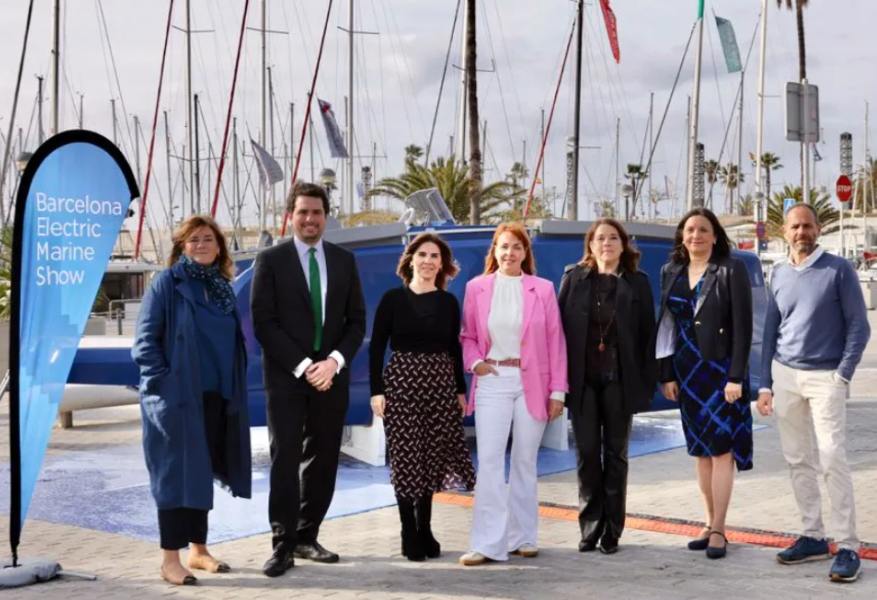
A few months ago, ASCAME signed a collaboration agreement with ANBE, the National Association of Electric Boats, to promote the use of electric boats in the Mediterranean and to boost the blue economy in the region. Both institutions committed to working together in initiatives to support decarbonization and to promote the electric mobility in the Mediterranean Sea and fostering emerging sectors linked to the blue economy. As a result of this agreement, ASCAME participated in the kick-off of the ‘Barcelona Electric Marine Show’, held from the 3rd to the 5th of April at the Barcelona Port Olimpic. Under the claim ‘Connecting Land and Sea for a Sustainable Future’, this summit featured conferences, roundtables, hands-on demonstrations, and exclusive tours whose common denominator were energy transition, decarbonization, and innovation in marine and land mobility. In the following interview, Ms. Marilena Estarellas, Manager of ANBE, shares some of the main insights of this summit and reflects on the potential of the blue economy in the Mediterranean and the advances in green shipping, digitalization & smart ports, and the regulatory and market trends.
How did the collaboration agreement between ANBE and ASCAME come up? What are the main objectives of this agreement and what is the roadmap set by both institutions?
The agreement arose from our shared commitment of fostering a real energy transition in the Mediterranean, especially in the nautical, maritime and port sectors. From ANBE, we detected an urgent need to connect all the actors of the blue economy with sustainable and tangible proposals. ASCAME, with its network of more than 300 Mediterranean Chambers of Commpuerce, is the natural ally to give visibility, voice and international reach to this common goal. Our roadmap is based on three strategic axes: sustainable nautical industry, energetically sustainable ports and sustainable nautical tourism. We are working on developing retrofit training programs, marine decarbonization forums, joint European projects and the promotion of a major Mediterranean meeting on sustainable boating.
What challenges and opportunities should we talk about when we refer to marine decarbonization in the Mediterranean? What is the current situation and what is the horizon or goal that both institutions propose?
We should talk about an unequal and fragmented scenario. There are countries and regions that are more advanced in marine sustainability, but in general, nautical decarbonization is still not a political or business priority in many areas of the Mediterranean. Our main challenge is to transform this reality, not only with technology, but also with institutional will, financing and training. The opportunity lies in leading this process from the south of Europe, turning our coasts into living laboratories of blue innovation. Our horizon is clear: we want an emission-free nautical sector, with electric, hybrid or hydrogen boats, in ports prepared with sustainable infrastructures and a responsible tourist offer.
Is sustainable boating possible? What are the most significant advances that have been achieved, and can you give some examples, both from Spain and other Mediterranean countries?
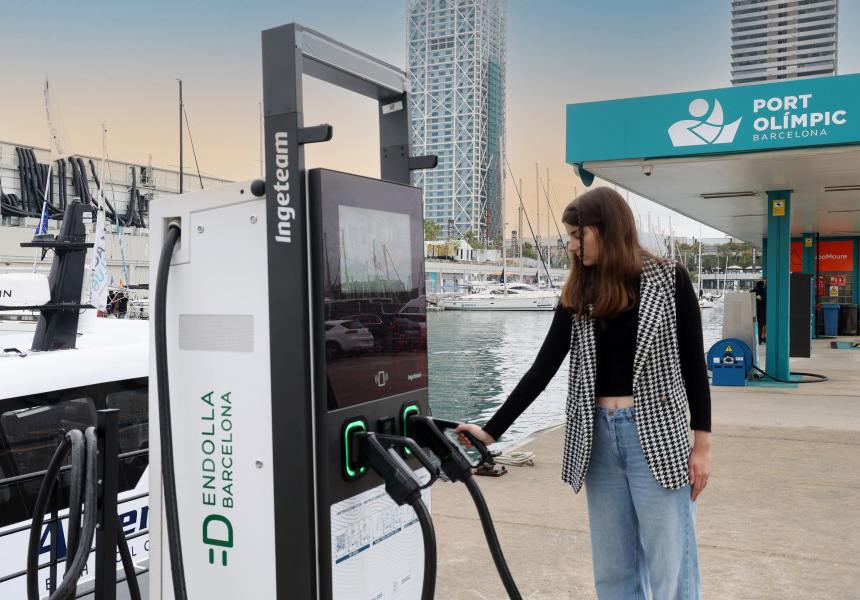
Absolutely. Sustainable boating is already a reality, although still in an emerging phase. In Spain, we already have shipyards such as LASAI, Electric in Side, Medvolt Marine, Dhamma Blue or Xouva Boats that are developing 100% electric boats. We also have innovative solutions such as Sundock’s solar pontoons, which allow autonomous charging of electric boats. In France and Italy, there are companies that are betting heavily on the electrification of charter fleets or short sea shipping. We are seeing an increasingly robust technological ecosystem, with more efficient batteries, more powerful propulsion systems and more sustainable construction materials.
Regarding the previous question, is sustainable nautical tourism also possible?
Of course it is. In fact, it is one of our big bets together with ASCAME. Remotorization of recreational and charter boats, combined with low-impact interpretative routes, offers a unique experience to the visitor and protects our marine heritage. Companies such as La Bella Verde and Medvolt Club in the Balearic Islands or WeWhale in the Strait of Gibraltar and the Canary Islands or Mundo Marino in Valencia and Malaga are demonstrating that another model of nautical tourism is possible: silent, emission-free and environmentally conscious.
Nautical decarbonization is still not a political or business priority in many areas of the Mediterranean. Our main challenge is to transform this reality, not only with technology, but also with institutional will, financing and training
One of the main challenges facing the Mediterranean countries is the blue economy, which is closely linked to the green economy. What is the potential of the blue economy in the Mediterranean region?
The potential is immense. We are talking about sectors such as nautical, sustainable fishing, marine renewable energies, blue biotechnology or smart port management. The blue economy can generate quality employment, technological innovation and territorial cohesion if it is aligned with climate objectives. The Mediterranean region has a key role to play because of its history, its marine biodiversity and its business fabric. But to unleash this potential we need alliances such as ASCAME and ANBE, which connect innovation, sustainability and business action.
What is your assessment of the recent edition of the Barcelona Electric Marine Show? Why is this event so important and in what sense has it become the main showcase for innovative solutions to sustainable boating?
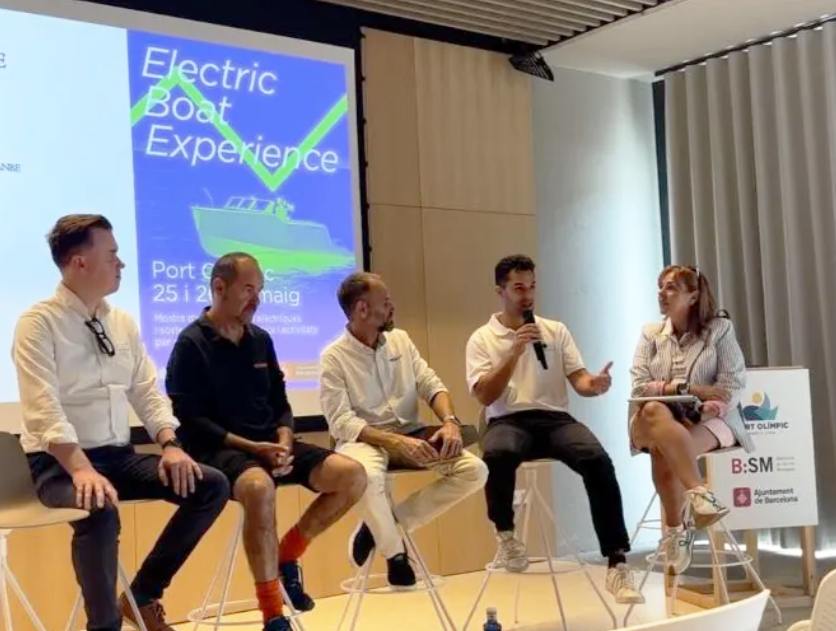
It has been a resounding success. Not only because of the number of companies and visitors, but also because of the quality of the content and solutions presented. The Barcelona Electric Marine Show has managed to consolidate itself as the meeting point for blue innovation in the Mediterranean. It is important because it highlights the value of the entire sector: from technological start-ups to large companies such as MOEVE, which has offered its expertise for energetically sustainable ports, tour operators and training centers. It is tangible proof that the nautical transition is already underway.
In what sense does this event serve to position Barcelona as a hub of innovation in sustainable sailing, attracting companies and professionals from around the world? How has the America’s Cup in Barcelona contributed to boosting new investments in technology, sustainability and green nautical tourism?
Barcelona could be the Mediterranean capital of sustainable sailing. The celebration of the America’s Cup was the perfect catalyst because it put the world focus on the city and drove investments in green mobility, new naval technologies and urban-port sustainability. Now it is time to continue in the same line and not abandon what has already been created. There should be transversal continuity in terms of Sustainable Nautical and Marine Decarbonization. It attracts emerging companies, R&D centers, universities and administrations that want to be an active part of this transformation.
Barcelona could be the Mediterranean capital of sustainable sailing. The celebration of the America's Cup was the perfect catalyst because it put the world focus on the city and drove investments in green mobility, new naval technologies and urban-port sustainability
In your opinion, is Barcelona on the right way to become the capital of the sustainable nautical sector in the Mediterranean? And to lead the green transition and the commitment to the blue economy in the Mediterranean?
Undoubtedly. But it should not rest on its laurels. To consolidate this leadership, it is necessary to continue investing in sustainable infrastructures, support local companies that are innovating, and maintain a strong political agenda in terms of marine decarbonization and energy transition for port facilities. Barcelona has the talent, the location and the institutional capacity to lead this change, but it must create the plan. ANBE and ASCAME want to be allies in this path.
Finally, can you advance the focus and objectives of the ANBE session at the next edition of MedaLogistics?
The next ANBE session at MedaLogistics will focus precisely on how to move towards zero emission shipping in the Mediterranean. We will present success stories, pioneering projects in retrofitting and electrification of ports, and give voice to emerging companies in the sector. This session takes a greater relevance for a key reason, because on May 1 the Mediterranean Sea will officially become an ECA (Emission Control Area) under the IMO’s MARPOL convention. This means that all vessels, both commercial and recreational will have to drastically reduce their emissions of sulfur oxides (SOx) and particulate pollutants. This is a historic decision that marks a turning point in the environmental regulation of maritime traffic in our region. This new regulatory framework makes the transition to clean technologies such as electrification, advanced hybrids and hydrogen a priority. And it places recreational boating before a challenge that is, at the same time, a great opportunity for leadership and innovation. Therefore, our session at MedaLogistics is not only a sectorial proposal, but a call for joint action between institutions, companies, ports and civil society. It is time to align efforts and build a Mediterranean roadmap for sustainable shipping, adapted to the new regulatory scenario and committed to the health of our seas.