

Events Ascame/ March 13, 2025/ Featured, Institutional
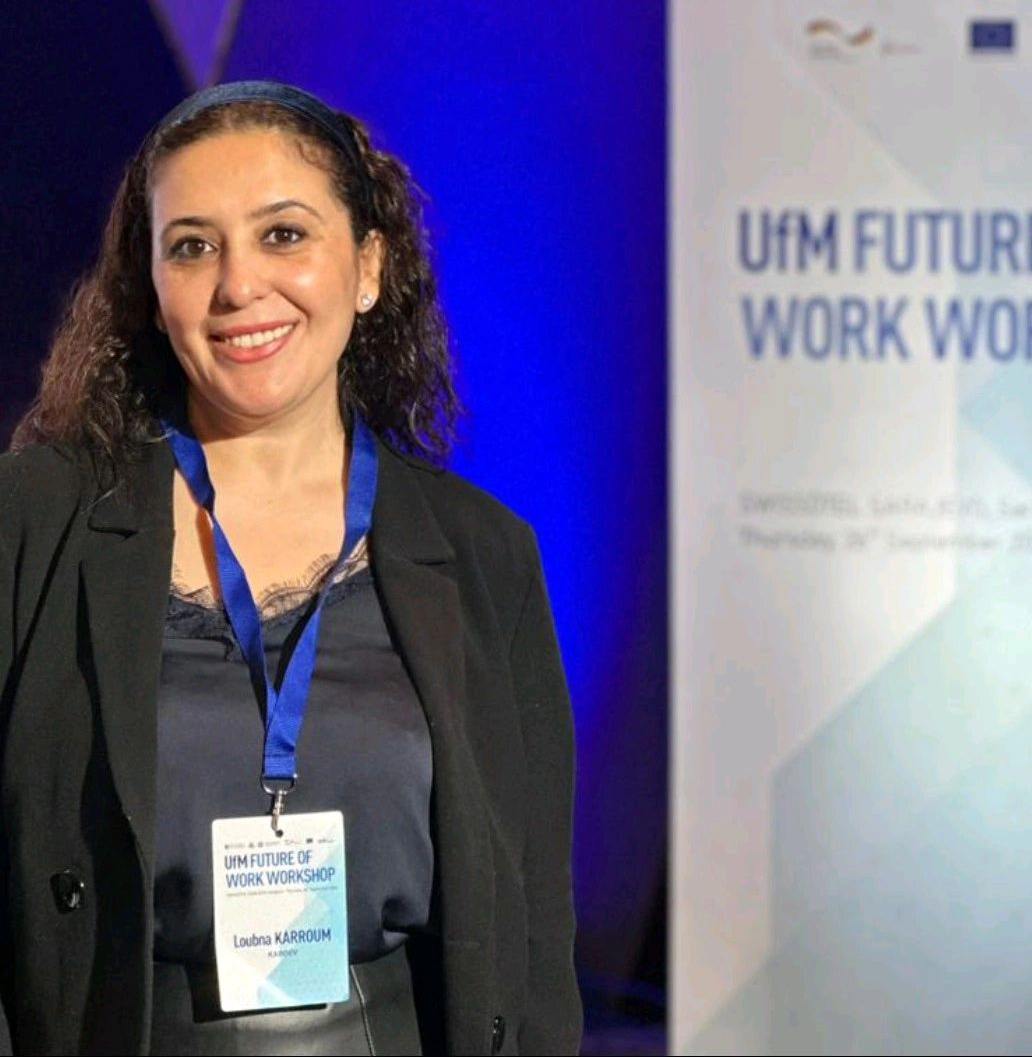
ASCAME is one of the strategic partners of AfricaMed Business Forum, which plays a crucial role in promoting the inclusion of women at all levels of business by valuing their contributions and facilitating the exchanges necessary to overcome existing barriers. This initiative was launched in 2023 by Ms. Loubna Karroum, entrepreneur and CEO of Kardev, who has become an example and an inspiration for African young women by creating a more equitable business ecosystem. Ms. Karroum is committed to enhancing women’s visibility in the entrepreneurial landscape and combating gender inequalities in Morocco and around the Mediterranean. In the following interview, this woman entrepreneur talks about women’s crucial role in the African start-up scene and reflects on the main obstacles that remain to be overcome in achieving gender equality in Africa and the Mediterranean.
How has AfricaMed Business Forum contributed to better inclusion of women at all levels of businesses in the MENA region?
AfricaMed Business Forum has become a powerful signal of change, placing women at the heart of these economic exchanges. It also demonstrates that women can act as business facilitators and leaders in sectors often dominated by men. At each edition of the AfricaMed Business Forum, a panel is always dedicated to women entrepreneurs. These sessions are designed to address the unique challenges they face, as well as the opportunities available to them. For example, during a recent edition, we gathered a diverse group of women leaders to discuss topics such as access to financing, mentorship and effective networking strategies. These exchanges not only allow for the sharing of experiences but also initiate collaborations across the continent and beyond. A concrete example of this impact is the creation of partnerships between women-led businesses and financial institutions, facilitated by the meetings and discussions held at the forum. This type of interaction helps enhance the visibility of women in the entrepreneurial landscape and encourages them to engage in economic growth initiatives.
As a woman entrepreneur, what have been the main obstacles you have had to overcome?
I have had to overcome several obstacles that reflect the common challenges faced by many women in the business world. One of the main obstacles has been gaining and maintaining confidence, both in myself and in the eyes of my partners and industry stakeholders. As a young woman, I often had to work harder to prove my skills and worth within a professional environment predisposed to underestimating women, particularly in leadership roles. Building this confidence required a constant demonstration of my ability to manage projects and achieve tangible results. Another obstacle has been managing the persistent gender stereotypes in the entrepreneurial sphere. I have faced biases that can make it challenging to engage with potential partners or investors. To combat this, I have worked on both my personal and professional image, investing in my personal and academic development to enhance my credibility. Additionally, access to financing and resources remains a challenge for women entrepreneurs. I have had to navigate biased systems to establish financial partnerships and access opportunities that are often more easily available to my male counterparts.
To what extent are women becoming a force to be reckoned with in the start-up scene in Africa?
Women are increasingly becoming an undeniable force in the start-up scene in Africa, representing a significant share of the population and entrepreneurs. According to a study conducted by the McKinsey Global Institute, women could contribute up to $28 trillion to the global economic growth by 2025 if the barriers to their economic participation were eliminated. In Africa, statistics show that women represent about 49% of the population and, in certain regions, they are responsible for a growing share of new businesses and economic development. The contributions of women to the start-up world can be observed across various sectors, including technology, agriculture, and services. For instance, in 2020, the funding platform for women entrepreneurs, She Leads Africa, revealed that women-led start-ups not only have better financial performance but also tend to have a stronger social impact by integrating sustainable and inclusive practices. It is also essential to recognize that women bring valuable emotional intelligence, which can be an asset in entrepreneurial leadership. Contrary to the belief that emotionality may be a hindrance, emotional intelligence allows women to demonstrate resilience, strengthen their networks, and adopt collaborative approaches that foster innovation and creativity.
Women could contribute up to $28 trillion to the global economic growth by 2025 if the barriers to their economic participation were eliminated. In Africa, statistics show that women represent about 49% of the population and, in certain regions, they are responsible for a growing share of new businesses and economic development
Could you provide any examples of African women entrepreneurs who have inspired younger generations?
It is essential to highlight women entrepreneurs who have not only succeeded in their fields but also inspire younger generations through their commitment and achievements. Proof of this is the contribution of Ms. RON Ousmane and Ms. Rabiatou Arzika in the successful initiative of the African Union, which aims to support African women in the transformation sector by providing assistance ranging from training to funding. Among other prominent women, we have Ms. Khadija Tamda, CEO of Groupe Maroc Force Emploi, an influential figure in the interim sector in Morocco. She represents an example of leadership in a field still largely dominated by men. Ms.Danièle Sassou Nguesso, President of the Sounga Foundation in Congo-Brazzaville, devotes her efforts to empowering women and developing children. Ms.Aissata Sidibé, a pioneer in the media field, has paved the way for the female voice in Africa, while Ms. Rebecca Enonchong, Founder of AppsTech in Cameroon, advocates for women’s rights in the technology sector, facilitating women’s access to opportunities in this growing field.
In addition, Dr. Eleni Gabre-Madhin, known for her commitment to agriculture in Ethiopia, has transformed local communities through sustainable initiatives. Finally, Ms. Fatoumata Ba, a leader in the technology sector, continues to encourage women to engage in start-ups and innovation.
In your opinion, what are the main keys to addressing gender inequality in the Mediterranean?
To combat gender inequality in the Mediterranean, it is crucial to mobilize initiatives that directly tackle the root causes of these disparities. One of the most promising networks in this area is the African Women Leader Network (AWLN), which is a joint initiative between the African Union and the United Nations. This initiative is facilitated by H.E. Ms. Bineta Diop, the African Union Special Envoy for Women, Peace, and Security, and is supported administratively by the Women’s Gender and Youth Directorate (WGYD). By bringing together various stakeholders, AWLN fosters constructive dialogue and the exchange of experiences that contribute to strengthening women’s voices in political and economic decision-making processes. During the recent Assembly of the African Union, AWLN’s efforts were crowned by the adoption of a Convention on the Elimination of Violence Against Women and Girls. By adopting this framework, African countries affirm their commitment to implement policies and programs designed to protect women’s rights and ensure their access to education, health, and economic opportunities. This is crucial for changing mindsets and establishing genuine gender equality. To maximize the impact of initiatives like AWLN, it is also important to strengthen regional cooperation.
African countries affirm their commitment to implement policies and programs designed to protect women's rights and ensure their access to education, health, and economic opportunities. This is crucial for changing mindsets and establishing genuine gender equality
What are the main differences between the North and South of the Mediterranean region in terms of gender gaps and leadership positions?
The differences between both shores of the Mediterranean in terms of gender gap are pronounced and reflect distinct socio-economic, cultural, and political contexts. According to reports from the United Nations Development Programme (UNDP), the literacy rate for women in North Mediterranean countries such as France, Spain, and Italy is around 99%, facilitating their access to education and, consequently, to opportunities in the labor market. In contrast, Southern countries like Egypt and Morocco have lower literacy rates, approximately 66% for women in Egypt and 73% in Morocco, limiting their capacity to access quality employment. In the labor market context, data show that women’s participation in the workforce is significantly higher in Northern countries. For example, in Spain, the female employment rate is nearly 60%, whereas in Tunisia, it doesn’t exceed 26%.
This can be partly attributed to supportive policies for work-life balance, such as parental leave and better access to childcare. Regarding representation in leadership positions, Northern Mediterranean countries exhibit a higher proportion of women in leadership roles. According to a report by the European Institute for Gender Equality, about 36% of leadership positions in the public sector in Sweden are held by women, whereas in countries like Morocco, this figure is much lower, reaching only 14%. Moreover, quotas have been established in countries like France, where at least 40% of seats in boards of directors must be held by women, illustrating a strong commitment to gender equality. Concerning the legislative framework, Northern countries have more robust laws promoting gender equality, while in many Southern countries, although laws exist, their enforcement is often inadequate.
What are the main demands you have towards businesswomen in your country?
Businesswomen in Morocco play an essential role in the economic dynamics of the country; however, several demands are necessary to strengthen their position and help future generations succeed. In this context, I call for a more significant involvement of women entrepreneurs through mentorship and sponsorship initiatives. Those who have succeeded must take the initiative to share their experiences, as it is crucial to inspire young women to pursue their entrepreneurial aspirations. It is imperative that we collectively recognize that entrepreneurship is not an easy journey. It is a constant battle, often accompanied by feelings of isolation, especially within a conservative socio-cultural framework like ours. Too often, women encounter stereotypes that lead them to doubt their capabilities. By valuing our efforts and demonstrating our solidarity, we can not only break these stereotypes but also create an unwavering support network that empowers everyone.
Too often, women encounter stereotypes that lead them to doubt their capabilities. By valuing our efforts and demonstrating our solidarity, we can not only break these stereotypes but also create an unwavering support network that empowers everyone
What is the key role of Chambers of Commerce in reducing discrimination and fighting against gender inequalities in the Mediterranean?
Chambers of Commerce play a crucial role in reducing discrimination and combating gender inequalities in the Mediterranean. They can promote gender equality by raising awareness among businesses about diversity issues and offering training on inclusivity. The creation of mentoring networks for women entrepreneurs would facilitate the exchange of experiences and strengthen their professional development. Additionally, they should collaborate with financial institutions to facilitate access to funding, enabling women to overcome economic obstacles. By organizing events and workshops on female leadership, they can also serve as platforms for inspiration and sharing best practices. Furthermore, by advocating for inclusive public policies and supporting research on the impact of inequalities, Chambers of Commerce can significantly contribute to establishing a more equitable and inclusive entrepreneurial environment. These combined efforts are essential for transforming the economic landscape in the Mediterranean and promoting equal opportunities for all women.