

Events Ascame/ November 19, 2024/ Ascame members, Featured
“Culture is one of the two or three most complicated words in the English language,” observed Welsh author Raymond Williams. Indeed, culture remains complex, encompassing a wide range of elements within a society, from material aspects like food, fashion, and architecture to intangible elements such as customs and traditions. It includes social norms (how people act and behave), language (how people interpret symbols, including grammar and lexicon), and institutions (such as political and educational structures). For simplicity, we will use the concise definition from cross-cultural expert Pellegrino Riccardi: “Culture is a system of behaviour that helps you act in accepted or familiar way.”
Culture impacts how consumers perceive products, make purchasing decisions, and what they expect from brands. For small businesses, understanding cultural dimensions can provide a powerful competitive edge, especially when trying to reach and retain today’s diverse and values-driven consumers. In the Mediterranean region alone, cultural dimensions vary widely across countries. By understanding these dimensions, businesses can shape their offerings to resonate authentically with their audience.
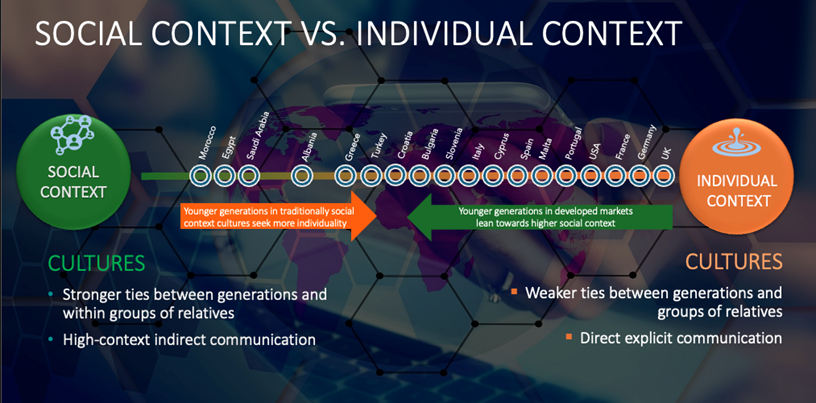
Two primary cultural dimensions -social context vs. individual context and monumentalism vs. flexibility- significantly affect consumer behaviour. Recognizing these can guide small businesses in predicting consumer expectations and effectively tailoring their approach:
- Social Context Cultures (e.g., Morocco, Egypt): Strong connections exist between generations and within groups. Family and social circles are deeply valued, and consumers want to know how products will help them fit within their social circle. They are drawn to products that convey clear visual cues over heavy text to indicate how the product aligns with their lifestyle and social values.
- Individual Context Cultures (e.g., Italy, Spain): People usually prioritize personal choice, independence, and are more receptive to options that emphasize self-expression and individuality. Consumers in these cultures rely on detailed product information, looking for solutions that feel tailored to their personal identity rather than social needs.
- Monumental Cultures (e.g., Egypt, Morocco): In these societies, people have a strong, enduring sense of identity and place high value on tradition. Consumers favour products that provide immediate, tangible benefits. Noticeable scents or textures signal effectiveness. They view brands with a focused, specialized product line as more authentic and credible. Social media platforms that quickly showcase benefits and solutions, such as TikTok and Facebook, are more effective. Long-term benefits and detailed scientific explanations tend to be less appealing.
- Flexible Cultures (e.g., France, Italy): Consumers in flexible cultures embrace change and value continuous improvement, often seeking a broader range of product options. They associate a variety of choices with quality and responsiveness to their evolving needs. High-quality ingredients and visible product evolution resonate well, allowing brands to charge premium prices for items that emphasize quality, like Fever Tree tonic water or Numi chamomile tea. Social media channels that offer learning opportunities, like YouTube, and those that allow for showcasing an ideal lifestyle, like Instagram, are particularly influential.
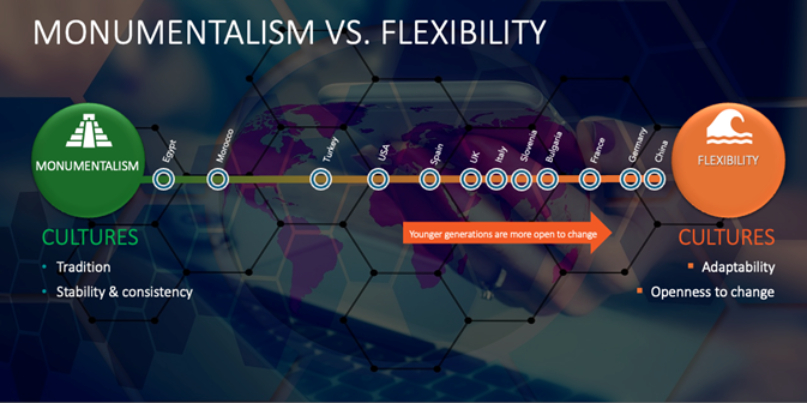
On the other hand, Generation Z -born between 1995 and 2012- is reshaping cultural values with priorities driven by economic pressures, global issues, digital experiences and heightened anxiety. Worldwide, Gen Z is leaning toward social context values, with younger generations in developed markets increasingly adopting a flexible mindset focused on continuous, incremental improvements. To stay relevant, businesses must adapt to regional differences in Gen Z’s cultural values. A one-size-fits-all approach won’t work globally. Tailoring content and brand strategies to reflect these cultural nuances is essential for engaging and connecting with Gen Z across diverse regional contexts.
Blueprint for Success: Using Cultural Insights to Attract and Retain Customers
To succeed in specific cultural contexts, small businesses in the Mediterranean should consider these strategies:
- In flexible cultures: Emphasizing product variety and continuous product evolution. Regularly introduce new variations or limited-edition products to appeal to consumers’ desire for choice and continuous change. Highlighting premium ingredients that reflect a commitment to quality, which flexible cultures value. Instagram and YouTube are valuable channels to connect with consumers who prioritize choice and improvement.

- In monumental cultures: Prioritizing a streamlined, focused product line that reflects tradition. Showcasing quick, tangible benefits of products (e.g., rich textures or effective ingredients) to meet immediate consumer expectations. Highlighting any legacy or heritage elements in your branding that reinforce your product’s credibility.
- In social context cultures: Using visual storytelling in product marketing to show how the product fits into their social world. Packaging should be visually engaging. Focus on the product’s social relevance rather than detailed, text-heavy explanations.
- In individual context cultures: Emphasizing product personalization and self-expression. Offering product details that speak to how it fulfills personal needs or aspirations.
Post provided by ASCAME’s partner BÉCÉ Consulting & Language Services S.L., a consulting company specialized in delivering comprehensive support tailored to individuals aiming to adeptly navigate the complexities of leadership in multicultural environments. The authors of the article are: Dr. Steffi Necheva, Intercultural Management Consultant, and Ms. Elisabet Camprubí, EMCC & Facilitator.
Article References:
- Minkov, M. (2011). Cultural Differences in a Globalizing World. Emerald Group Publishing Limited.
- De Mooij, M. (2019). Consumer Behaviour and Culture: Consequences for Global marketing and Advertising (3rd ed.). Thousand Oaks, CA: Sage.