
Events Ascame/ May 7, 2024/ Events, Featured
‘Conquering the Chinese market: Strategies and opportunities for Mediterranean SMEs’ was the title of the webinar organized by ASCAME and conducted by Mr. Ernesto Caccavale, Founder and CEO of SChina-Grow Integration, an Alibaba Group partner firm that offers European companies a comprehensive package of services to enter and position their brand in the competitive Chinese e-commerce market. Previously, Caccavale was Director of Business Development in Spain and Portugal for Alibaba Group, a stage that allowed him to experience first-hand an unprecedented digital revolution that had not yet reached Europe. Within the webinar, Mr. Caccavale shared insights on successfully entering the Chinese market and gave advice to all ASCAME’s members and Mediterranean companies interested in seeking new business opportunities in the Asian giant.
What were the key points of your webinar?
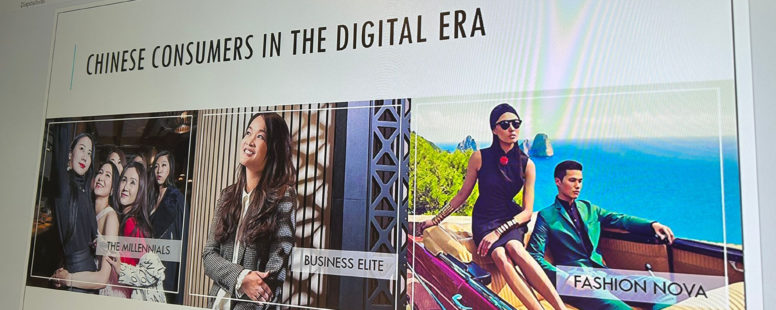
This webinar was designed to explain in detail the real weight of China and Asia in the global economy. When talking about China we do not usually refer to just a country, but to a continent, with 1.4 billion inhabitants, of which 500 billion belong to the middle class. In addition, most of the transactions are online and 11 million international brands already have stores in China. Any company with a future projection and international vocation must be in Asia: if you are not in this continent, you are not in the most important market in the world. In China, for example, there are many growth opportunities for European companies, especially because Chinese consumers prefer European products because of their quality. These business opportunities extend beyond China’s borders, as the middle class in Southeast Asian countries are increasingly buying European products because they consider them to be more reliable and attractive, safer, and more controlled.
Which professionals were targeted by this webinar?
The webinar was focused on the B2C market. It was mainly addressed to companies that have a brand positioning in Europe and want to sell their products and services to the Chinese middle class directly, without intermediaries, through digital platforms. This was a very practical webinar where we gave all the keys to enter and position a brand in the huge Chinese e-commerce market. We addressed all the variables that must be taken into account to successfully penetrate this market, from the creation of the online store itself to billing, in addition to other issues such as marketing strategy, logistics or customer service, in order to sell directly to the consumer. Apart from this, the webinar was also addressed to all those companies that already have a presence in China through distributors but don’t have enough information about trends in the Asian market, nor their customer’s needs and the evolution of their brand. These distributors are usually very opaque about the brand’s positioning, about the strategy they follow to sell to the consumer, and about the new trends and consumer demands that companies must take into account in order to continue growing. In addition, there is a high risk that the distributor will abandon one brand for another.
And this is the reason why the advisory service offered by SChina is crucial, isn’t it?
That’s right. SChina-Grow Integration Group, which is a partner of the Alibaba Group, has an office in China to help European entrepreneurs create long-term business strategies and sell their products through e-commerce platforms in China. We take care of the entire process of opening an online store and selling directly to the end consumer. These services include the design of the store, the definition and implementation of the marketing strategy, customer service, logistics, storage, inventory, administration, invoicing… We are talking about a 360-degree service that we offer to European brands that want to open their own store and sell to the end consumer without intermediaries. This accompaniment through this comprehensive service is key in a market with its own digital platforms. Here there is no Google, no Facebook, no Instagram or WhatsApp. The Chinese market has its own communication channels, such as WeChat, Little Red Book, Douyin etc. It is important to use them intelligently and effectively. Besides, this is the most competitive market in the world, so it is essential to explain well to the Chinese consumer what the added value of their products is, what makes them different, what need it meets or what problem it solves.
Any company with a future projection and international vocation must be in Asia. If you are not in this continent, you are not in the most important market in the world
Are European companies aware of China’s real weight in the global economy?
Many companies are still not aware of the extent to which their future depends on this market. That is why this webinar helped them become aware of the real weight that China currently has. When I talk about this country, two reactions usually come up: curiosity and fear. As I said before, this is a market with its own rules which must be followed in order to sell products successfully. Today, this market is still largely unknown to many European companies. On the other hand, the development of the world is moving from the West to the East. The whole Asian world is looking to China as the main reference point for trade, especially from the point of view of e-commerce, where China has experienced a real digital revolution. At SChina we have clients that also export to other markets, European and Latin American, and they had a significant growth in exports just because they learned about their sales experience in the Chinese market. There is an intangible value in being in the most competitive market in the world. Even so, I insist on the fact that it is not easy to penetrate this market: it requires first of all innovative products, but also time, resources and marketing investments.
What business opportunities does the Asian market offer Mediterranean companies?
Selling Mediterranean products in China is a great competitive advantage for companies in the region, especially because of their quality. Chinese and, in general, Asian consumers look for quality European products. Therefore, there is a growing demand for Mediterranean products (representing sun, sea, health, and wellness) from Chinese consumers. European countries from the Northern Mediterranean have an even greater competitive advantage due to the trade agreement that exists between the European Union and China to sell products directly to the consumer without the need to change packaging or labels. This is an incredible opportunity, as they can sell “cross border” and enter China only following European regulations, selling the same product they sell in Europe. The countries of the southern fringe of the Mediterranean and, more specifically, North Africa, also have many business opportunities in China, as their products are very competitive, especially olive oil and fruit, but not only. In the Southern Mediterranean there are many good products, ready for the Chinese market, with high quality and more competitive price, comparing to Northern Mediterranean products. In addition, I would like to highlight the significant technological development in North Africa in last years, with an increase in technological start-ups that are developing new technologies to move towards a green economy in the Mediterranean.
Chinese consumers really appreciate the quality of the Mediterranean products. European countries from the Northern Mediterranean have an even greater competitive advantage due to the trade agreement that exists between the European Union and China to sell products directly to the consumer without the need to change packaging or labels
Are you optimistic about the future of the Mediterranean?
In my opinion, the future of the Mediterranean will depend on Europe’s ability to renew itself. In this sense, it will be essential for companies to be less dependent on subsidies and on some EU regulations that make it difficult to open to other markets such as Asia. Europe must choose between a more competitive economic system or a more protected and subsidy-dependent system. From this point of view, the Southern Mediterranean countries, which are less subject to subsidies and obligations, could have fewer barriers and more opportunities to develop their business beyond their borders.
What was the most challenging during your time as Former Director of Business Development in Spain and Portugal for Alibaba Group?
When I started working at Alibaba in 2016 I realized that in China there was a digital revolution that in Europe had not yet arrived. Undoubtedly, Alibaba was part of that digital revolution. This company revolutionized the online shopping paradigm and e-commerce platforms. In addition, Alibaba represents 50% of the online market in China, so we are talking about a giant with a great capacity for growth and innovation that is a benchmark all over the world, not only in China. My main learning during that stage was to become aware of the capacity for resilience, to take risks, to make decisions quickly and to incorporate the latest technologies to go out to win, to be the best in the world.