
Oscar Maronda/ October 22, 2026/ Featured, Institutional
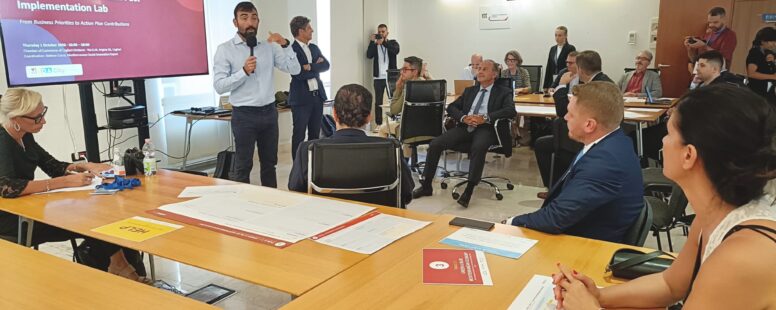
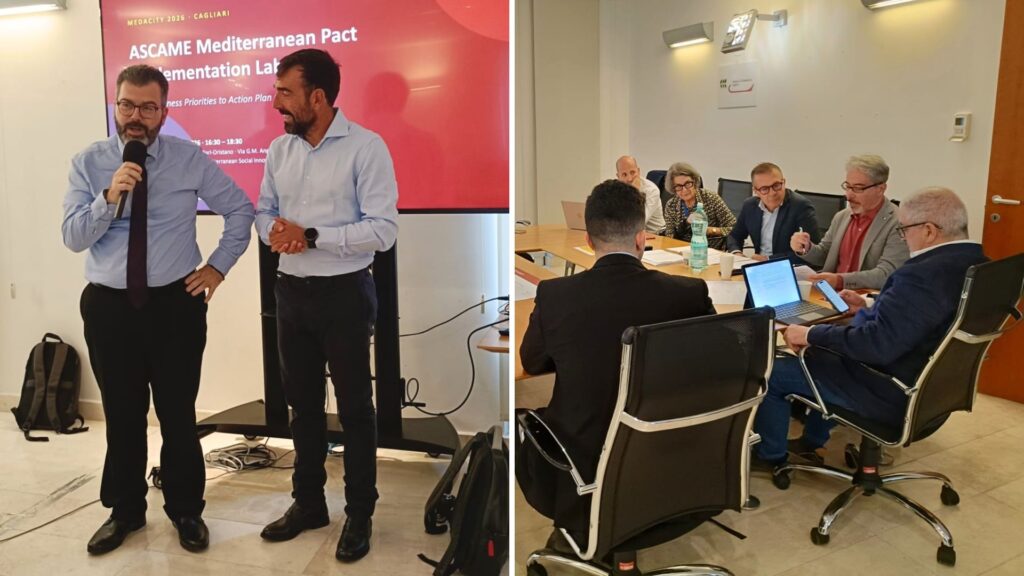
Within the framework of MedaCity Forum 2026, held in Cagliari (Sardinia, Italy) on 1-2 October, ASCAME and the Chamber of Commerce of Cagliari-Oristano jointly organised the first ASCAME Lab for the Pact. Conceived as a pilot initiative, the Lab aimed to identify the main priorities, opportunities and challenges facing the Mediterranean private sector and channel them into the implementation of the European Commission’s Pact for the Mediterranean. As Dr. Josep Santacreu, President of ASCAME, highlighted: “We need Europe to better understand what our companies need, where the opportunities lie, and which areas require greater investment”.
In fact, DG MENA, the European Commission’s Directorate-General for the Middle East, North Africa and the Gulf, responsible for strengthening EU cooperation and partnerships across the Mediterranean and neighbouring regions, has shown strong interest in this initiative. For DG MENA, the Lab for the Pact is a key part of its dialogue with ASCAME on implementing the Pact for the Mediterranean.
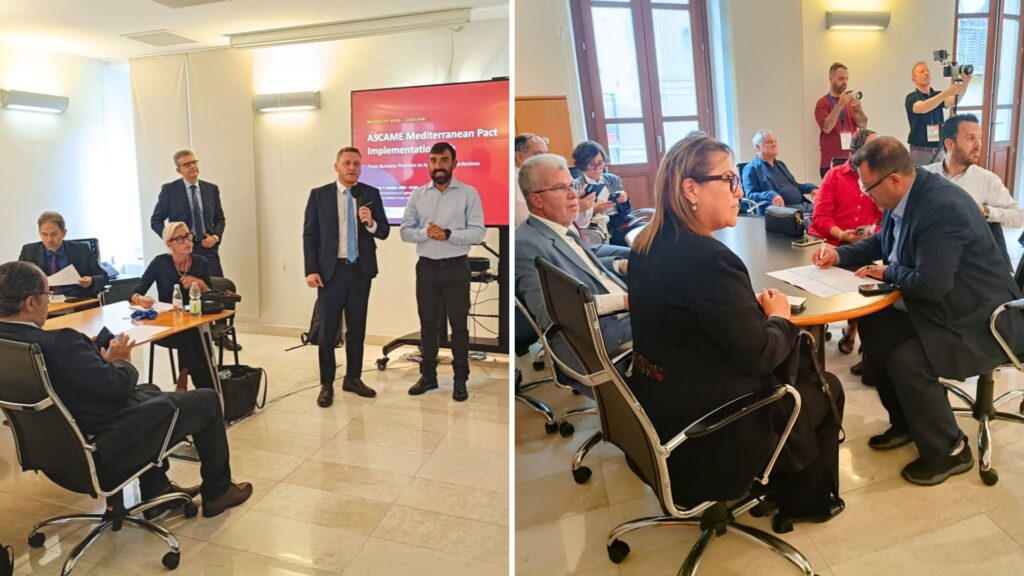
This pilot exercise brought together 23 companies and organisations from 11 sectors across seven Mediterranean countries on both shores of the region: Lebanon, Türkiye, Tunisia, Morocco, Greece, Spain and Italy. Coordinated by Mr. Stefano Cucca, the session gathered Chambers of Commerce, economic stakeholders and business leaders representing a diverse range of industries, including olive oil production, logistics, aeronautics, events, the green & blue economy and transport.
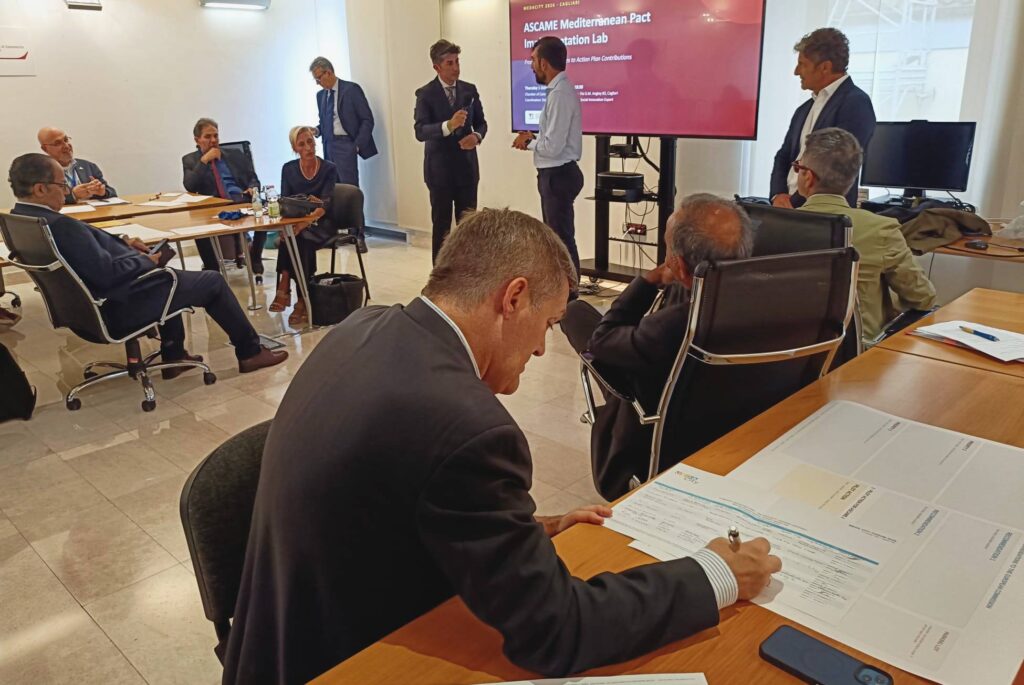
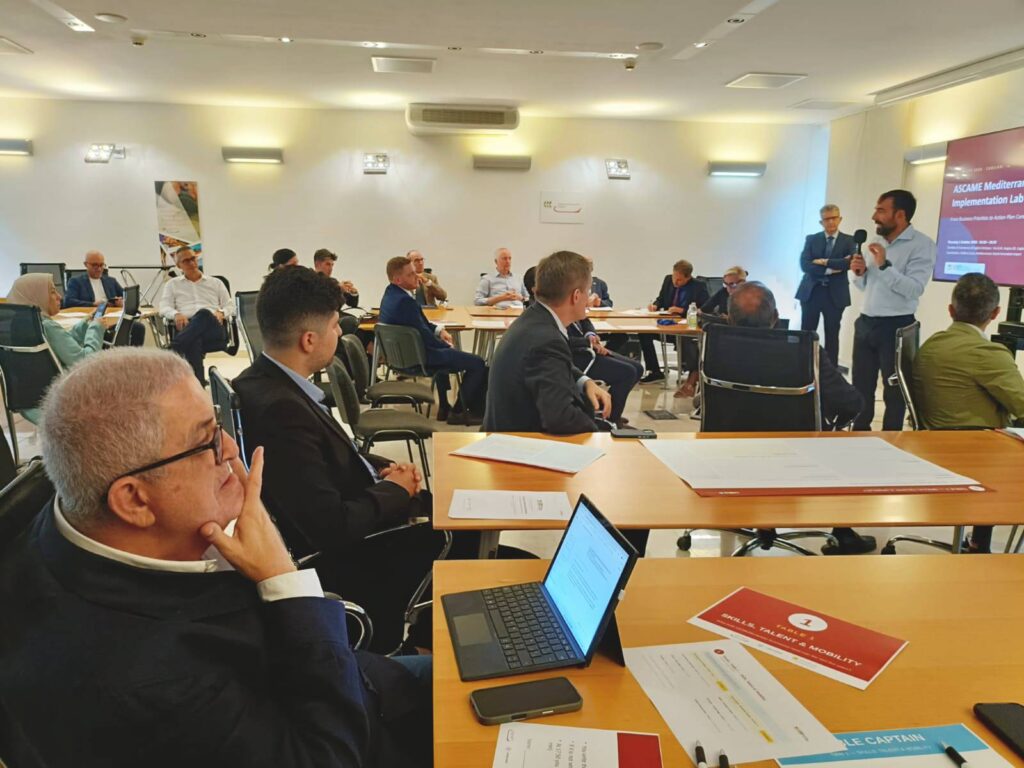
To foster focused discussions and generate concrete recommendations, participants were divided into three thematic working groups:
1️⃣ Skills, Talent and Mobility: Skills needs, vocational training, apprenticeships and talent mobility.
2️⃣ Investment and SME Growth: Access to finance, investment barriers, business scaling and internationalisation.
3️⃣ The Green and Blue Mediterranean Economy: Renewable energies, clean technologies, the blue economy and sustainable innovation
The inputs given by all the participants were key to understanding:
✅ The main challenges affecting Mediterranean companies’ growth or cooperation.
✅ The opportunities they see for Euro-Mediterranean cooperation
Concrete projects or initiatives they could develop with support from the Pact
✅ The type of support they would need to make it happen
✅ What could their companies or organizations contribute to the implementation of the Pact.
✅ Their key recommendations to the European Commission.
The Lab for the Pact: Priorities, recommendations and pilot actions
All the inputs collected during this session were presented the following day at the session “Financial Instruments and Investments: The New Pact for the Mediterranean”, which brought together representatives from DG MENA and other Euro-Mediterranean institutions. All of them had the opportunity to hear firsthand the recommendations and perspectives shared by private sector stakeholders from across the Mediterranean during the workshop held the previous day, ensuring that the voice of the business community was reflected in the discussion.
The main inputs were presented by Mr. Emanuele Cabras, EuroMed Cooperation Advisor of the Chamber of Commerce of Cagliari-Oristano, who revealed a remarkable convergence of views among companies from both shores of the Mediterranean. Despite representing different countries, sectors and business sizes, participants identified a common set of challenges and opportunities:
- EU funds, the greatest opportunity and the main source of frustration due to bureaucracy, little knowledge of programmes, and limited access to finance.
- A human capital emergency on both shores: From hospitality in Sardinia to industrial technicians in Tangier to transport workers across the basin.
- The urgent need to develop shared rules for recycled materials, certification, digital mobility, port management and compliance.
- Not only asking but committing. Eleven organisations offered co-investment, pilot sites, traineeships or consortia.
- Mobility and connections between the shores: Visas, slow payments, unpredictable customs and fragmented maritime rules. The two shores do not yet reach each other easily enough.
Skills, talent and mobility
The three working groups translated these concerns into concrete priorities and recommendations. The Skills, Talent and Mobility table identified the shortage of qualified workers as one of the main barriers to growth across sectors such as tourism, logistics, industry and agri-food. Participants called for stronger vocational training programmes, apprenticeships and dual education schemes, as well as mutual recognition of qualifications and greater mobility opportunities for trainees and professionals throughout the Mediterranean.
The group proposed a pilot action for 2027 to expand an existing Euro-Mediterranean training programme for maritime trade and logistics, currently being tested with EU and Mediterranean institutions. The initiative would include a technical training track, enabling SMEs from the Southern Mediterranean to host trainees in their workshops, while also promoting the mutual recognition and mobility of qualifications across the region. This responds to a pressing challenge: around 30% of young people in the Southern Mediterranean are not in employment, education, or training, while businesses on both shores face growing skills shortages.
Investment and SME growth
This group focused on the need to improve business connectivity across Mediterranean countries, strengthen the role of Chambers of Commerce as facilitators and simplify access to European funding opportunities. Participants argued that regulatory fragmentation and administrative burdens continue to hinder investment and internationalisation, and proposed a more agile framework capable of helping SMEs grow, innovate and access new markets across the region. For instance, the group called for simplifying SMEs’ access to EU funding by designing more accessible and business-oriented calls that better align with companies’ needs and growth strategies. As a pilot action, they proposed the creation of a hub to facilitate trade and cooperation corridors between partners from the Northern and Southern Mediterranean.
Developed in collaboration with port authorities, maritime administrations, and Chambers of Commerce, the initiative aims to streamline operations and establish a scalable and replicable model across the region.
Green and blue Mediterranean economy
Meanwhile, the Green and Blue Mediterranean Economy table highlighted the importance of accelerating the twin ecological and economic transition through practical and scalable projects. Discussions focused on the decarbonisation of Euro-Mediterranean logistics, the use of data and digital tools to foster greener tourism and transport systems, and the need to equip workers with new skills linked to sustainability, logistics and green technologies. Participants also called for a stronger public-private partnership approach and for greater support for cross-border pilot projects capable of generating measurable impact.
The group also proposed a pilot action to develop a green logistics dry port in the Euro-Mediterranean region, powered by renewable energy and equipped with energy storage systems and electric mobility solutions. Conceived as a bankable and replicable model, the initiative could serve as a regional benchmark for sustainable logistics from 2027 onwards.
Ready to act
One of the strongest messages emerging from the Lab was that Mediterranean businesses are not merely asking for support: they are ready to act. The consultation generated 20 concrete project ideas ranging from logistics corridors, maritime trade training programmes and sustainable tourism initiatives to circular economy solutions, renewable energy projects and green logistics hubs. Nearly half of the participating organisations expressed their willingness to contribute through co-investment, pilot sites, traineeships or international consortia, demonstrating a clear commitment to transforming the objectives of the Pact for the Mediterranean into tangible projects and opportunities for the region.
Participants in the Lab sent a clear message to European institutions: Mediterranean companies are eager to play an active role in shaping the future of the region. Their priorities are straightforward: simplify access to funding, invest in people and skills, strengthen connections between the two shores, and accelerate the green and blue transition through practical, business-driven solutions.
Following the success of this first edition, discussions will continue at the upcoming Euro-Mediterranean Economic & Business Forum – The Piraeus Summit, organised by the Piraeus Chamber of Commerce and Industry in Athens on 18-19 November 2026.