
Events Ascame/ July 17, 2026/ Events, Featured
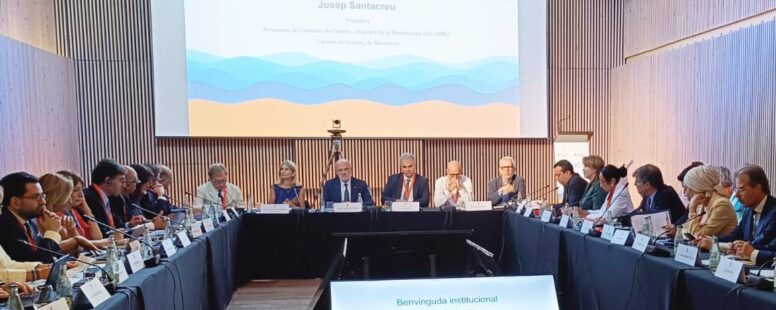
On 10 July, ASCAME President Dr. Josep Santacreu took part in the official opening of the second day of the MedCat Days 2026 in Barcelona, an edition fully centred on the opportunity that the Pact for the Mediterranean represents for building a Mediterranean that is stronger, more connected and better prepared for the challenges ahead. He was accompanied by Mr. Jaume Duch, Minister for European and Foreign Action at Generalitat de Catalunya; Mr. Francisco Joaquín Gaztelu, Director at the Directorate-General for the Middle East, North Africa, and the Gulf (DG MENA ), Ms. Marie-Antoinette Maupertuis, Representative on behalf of the President of the European Committee of the Regions, and Mr. Fadi Hajali, Acting Secretary-General at the Union for the Mediterranean.
All of them highlighted essential priorities for the road ahead: multilevel governance, deeper cooperation between institutions, citizens and the business community, a commitment to shared challenges and shared responsibility, and strong regional leadership to ensure the effective implementation of the Pact.
Dr. Santacreu emphasised that “Catalonia has always looked to the Mediterranean as a space of connection, a bridge between Europe, North Africa and the Middle East”. He stressed that this is exactly the ambition of the Pact: “A renewed relationship between Europe and its closest neighbourhood, based on co-responsibility, co-creation and mutual benefit”. For this reason, he insisted that “Europe must look more towards the Mediterranean”.
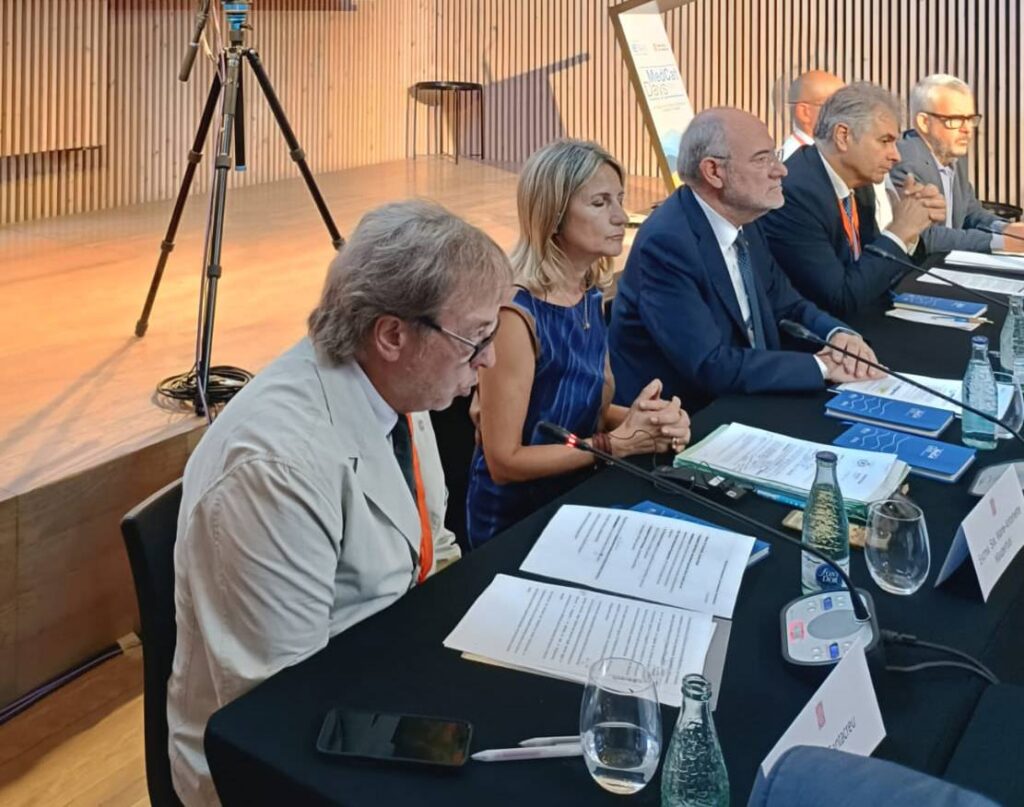
The President of ASCAME underlined that “the Pact will only succeed if it is built collectively, including institutions, companies, universities, civil society and international organisations”. He added: “From the very beginning, the private sector must have a voice in the design and implementation of the Pact, because the Mediterranean SMEs are the backbone of our economy by creating jobs, driving innovation and connecting both shores of the region”. He also recalled that ASCAME was founded in Barcelona more than forty years ago with the same mission: “To build bridges, generate trust and contribute to a more integrated and prosperous Mediterranean”.
From ideas to action: Territorial leadership to drive a connected, people-centered Mediterranean
The second day of MedCat Days in Barcelona delivered a clear message: the Mediterranean already has the solutions; what we need now is territorial leadership and integrated governance (multilevel governance) to turn them into shared action. Across the three roundtables, speakers converged on the following priorities:
- Territorial leadership: Cities, regions and islands must be at the centre of the Pact. Several speakers focused on Mediterranean Islands, which are “living laboratories”, places where water management, waste, migration, social cohesion and climate resilience are confronted daily, generating innovation that can be scaled across the region.
- Multilevel governance: Connecting local, regional, national, and EU levels is essential. Existing networks must be integrated into public platforms, with financing that is accessible to territorial actors.
- A true South-North vision: Southern Mediterranean partners must co-design the Pact’s action plans, transforming the region into a bridge between continents and Europe’s gateway to Africa.
- Investing in people: Youth, talent retention, universities, cultural dialogue, and entrepreneurship are essential for creating quality jobs and reinforcing mutual understanding.
- Scaling what works: Proven solutions in water management, desalination, crisis response, research–industry collaboration and youth mobility already exist across the Mediterranean. The Pact must connect, replicate, and scale these successful models so territories can benefit from shared innovation.
Interreg NEXT MED: Strengthening multilevel coordination across the Mediterranean
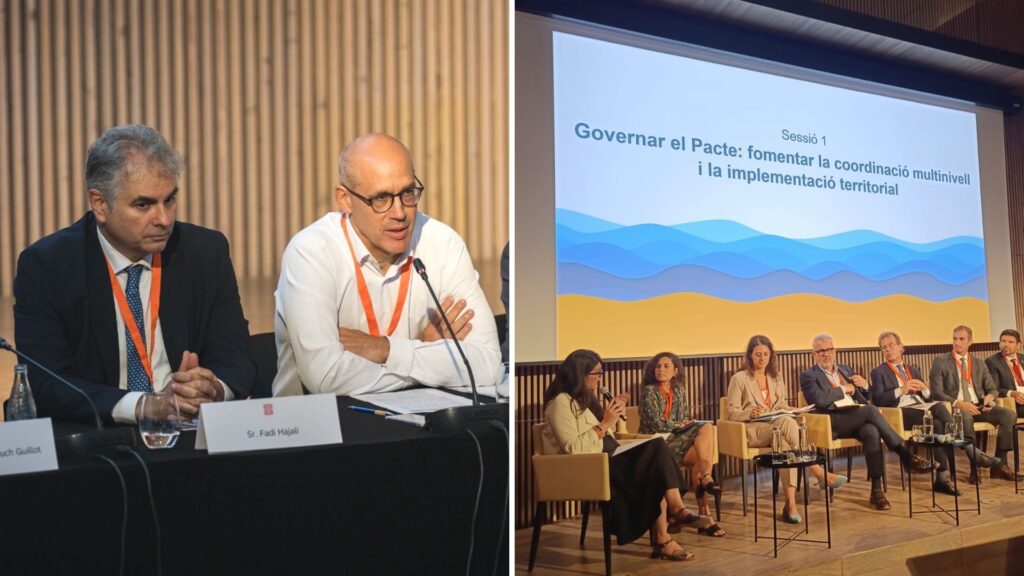
The day before, the Interreg NEXT MED Programme, to which ASCAME actively contributes as a project partner, was represented in the session “Governing the Pact: Fostering multilevel coordination and territorial implementation”. Mr. Vincent Ernoux, Coordinator of the Western Mediterranean Branch Office, underlined the importance of territorial ownership, real cooperation across both shores, and greater involvement of regional actors and the private sector to turn the Pact into concrete impact. Mr. Ernoux emphasised that:
- The Pact will only succeed if territories and citizens own it.
- The NEXT MED Programme focuses on cooperation rather than isolated projects, ensuring initiatives are built jointly by actors from both shores.
- Stronger local and regional involvement and private-sector participation are essential to scale up impact.
- Synergies across Interreg programmes and regional institutions are key to avoiding fragmentation and reinforcing coherence.
This session’s discussions also highlighted the need for:
- Stronger decentralised cooperation and visibility of local initiatives.
- More integrated approaches to urban development, tourism, education, and youth mobility.
- A Mediterranean scientific ecosystem capable of informing policies on climate resilience, water scarcity and environmental diplomacy.
- Empowering existing youth councils and associations to ensure their voice shapes regional policies.