
- June 22nd, 2026
From June 18 to 20, the Moroccan city of Agadir hosted a new edition of Meditour, the Euro-Mediterranean Tourism Forum, organized this year by the Chamber of Commerce, Industry and Services of Agadir-Souss Massa (CCIS Agadir Souss-Massa) in collaboration with ASCAME as the main partner. Under the theme “Sustainable and Innovative Mediterranean Destinations”, the event aimed to strengthen tourism cooperation across the Mediterranean and accelerate the sustainable transformation of destinations.
Over two days, representatives from public and private institutions, international organizations, local governments, Chambers of Commerce, investors and tourism professionals from across the Mediterranean explored five core themes: the sustainable and innovative transition of tourism destinations; public–private partnerships; investment and territorial attractiveness; Euro Mediterranean cooperation for balanced development; and positioning Agadir as a regional hub for sustainable and innovative tourism by 2030.
Opening Address by CCIS Agadir–Souss Massa
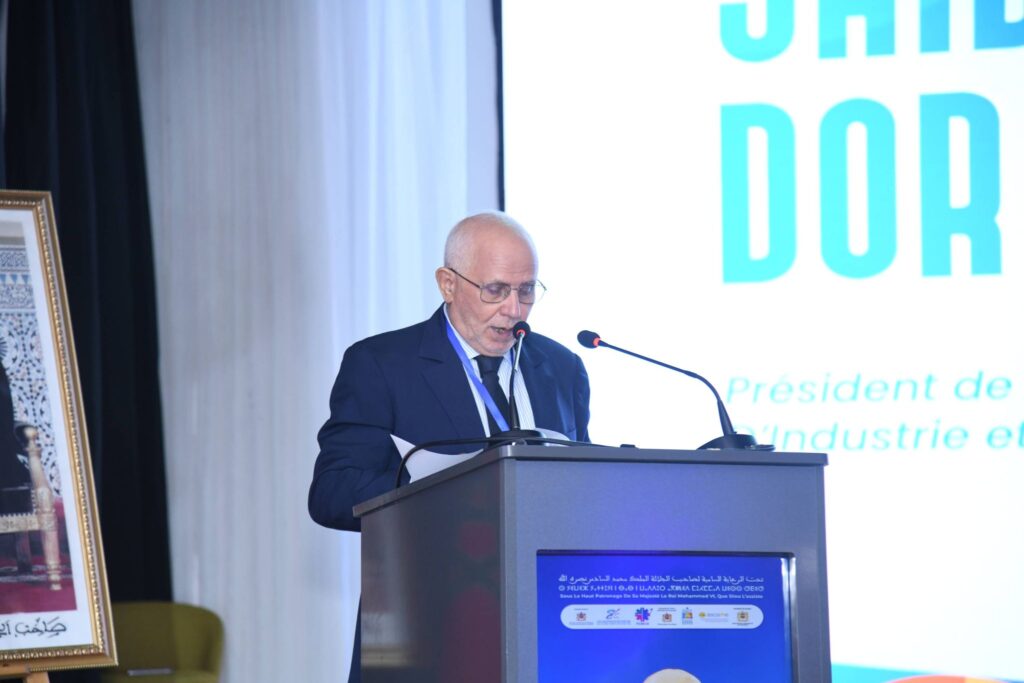
The inaugural session of Meditour 2026 featured a keynote address by Mr. Said DOR, President of the CCIS Agadir–Souss Massa, who emphasized that the choice of Agadir as the forum’s host city is far from coincidental. He explained that “it is the result of a long process of work that, over the past two decades, has transformed the Souss Massa region – and Agadir in particular – into a leading tourist destination”. Among its main attractions, he highlighted “the vast maritime coastline, an exceptional ecological diversity represented by the argan green belt and the Argan Biosphere Reserve, as well as the modernization of infrastructures capable of hosting top-tier international events such as the 2030 FIFA World Cup”.
DOR added that “this forum is a genuine platform for joint reflection and collective action between the two shores of the Mediterranean, at a time when climate challenges, sustainability and competitiveness intersect with new opportunities for investment, innovation and destination transformation”.
D4T and RECIRCLE MED: Two Models of Governance and Blue–Circular Economy in the Tourism Sector
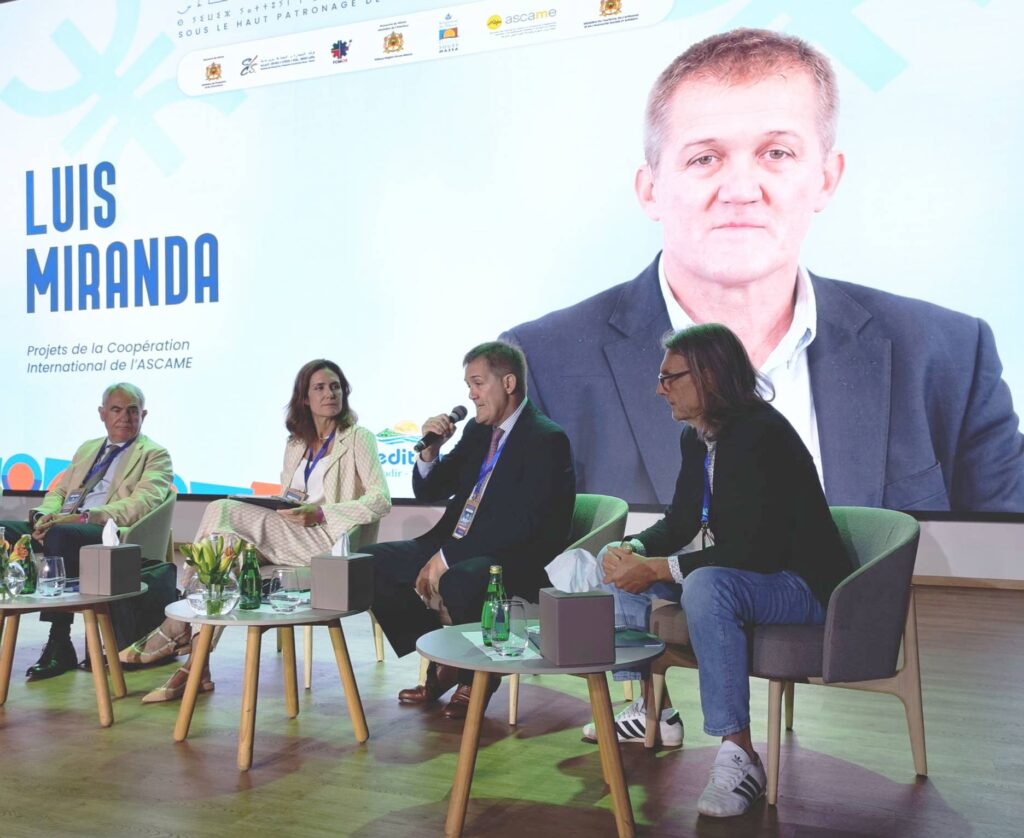
On the first day of the forum, ASCAME was represented by Mr. Luis Miranda, Project Manager, in the session “Investment and attractiveness of Mediterranean destinations”. In his address, he emphasized that tourism governance is essential to building a more sustainable and resilient Mediterranean model. He presented two flagship projects from the Interreg Euro-MED Programme, in which ASCAME participates as a partner:
- Dialogue for Tourism (D4T): A governance project aimed at strengthening coordination and institutional capacities among public authorities and tourism stakeholders, contributing to a smarter, greener and more sustainable Mediterranean.
- RECIRCLE MED: A project promoting sustainable tourism in Mediterranean coastal areas by integrating blue economy and circular economy principles through strong local engagement.
Both initiatives promote:
- Tourism governance as a pillar of sustainability (D4T).
- Circular and blue tourism to strengthen the resilience of coastal territories (RECIRCLE MED).
- Decarbonization and the energy transition.
- Sustainable water management and the protection of natural resources.
During the session, speakers discussed several key challenges for the future of Mediterranean tourism, including:
- Diversifying tourism offerings beyond the traditional sun-and-beach model, highlighting the growing demand for sports, cultural and gastronomic tourism.
- Assessing the economic impact of tourism on cities.
- Preventing overcrowding and fostering harmonious coexistence with local communities.
- Developing sustainable and innovative solutions to address climate change, such as the decarbonization efforts undertaken by cruise companies.
Blue Economy and Sustainable Tourism
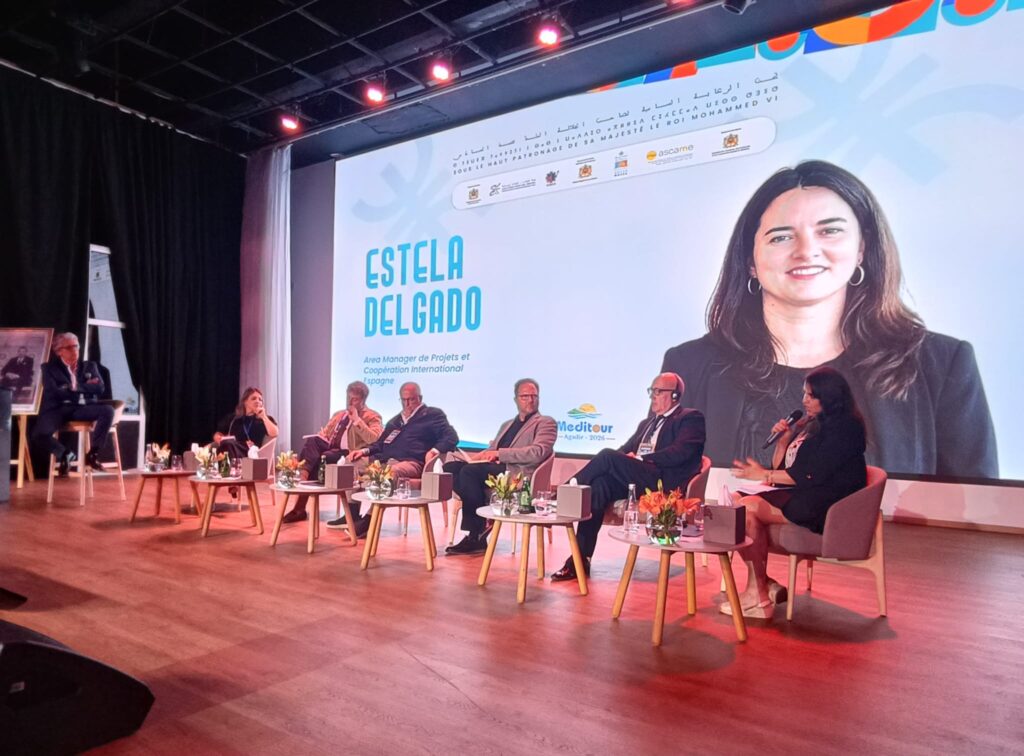
During the session “Blue Economy and Sustainable Tourism: a Competitiveness Driver for the Mediterranean”, ASCAME’s Projects Area Manager, Ms. Estela Delgado, highlighted the crucial role of European initiatives, especially in the Interreg programmes, in advancing the blue economy through cross‑border cooperation, innovation and practical tools for territorial resilience.
Ms. Delgado presented the SMAC project (Interreg NEXT MED), which supports accommodation SMEs in their sustainability transition through a simplified SSMA model and an AI‑based recommendation tool (AIRET). The project involves 35 pilot SMEs, 56 trained cross‑border mentors and policy recommendations for 14 public authorities, to reduce environmental impact by 30% and strengthen competitiveness. This initiative illustrates how Mediterranean cooperation and innovation can transform tourism into a driver of sustainability and resilience.
Opportunities and challenges in the Mediterranean tourism sector
Several figures closely connected to ASCAME also took part in the panel “Investment and attractiveness of Mediterranean destinations”, where they explored both the opportunities and challenges shaping the future of tourism in the region. Among them was Mr. Maurizio Battelli, an entrepreneur linked to the Cagliari–Oristano Chamber of Commerce and an active ASCAME member, who emphasized the need to establish shared standards for Mediterranean destinations that integrate local architecture, artisanal value chains, and the engagement of youth and women.
On the other hand, Mr. Thanasis Koukounaris, an expert associated with the Ministry of Transport, Communications and Works of Cyprus – a partner country in the D4T governance project under the Interreg Euro-MED Programme – highlighted public–private partnerships as a key driver for attracting investment, stressing that the Mediterranean should be positioned as a year-round destination, not only a summer one.
Mr Lucio Tambuzzo, Director of the Network of Medieval Castles and Towns in Italy and a partner in the i-Heritage project – with ASCAME as lead partner- presented the creation of the register of Mediterranean intangible cultural heritage and demonstrated how new technologies (VR/AR/MR) can showcase this heritage. He also shared the inspiring example of festivals organised in small towns in Sicily, which were watched by over 70 million people online.
Second Day Highlights: Cruise Tourism, Mobility and Connectivity in the Mediterranean
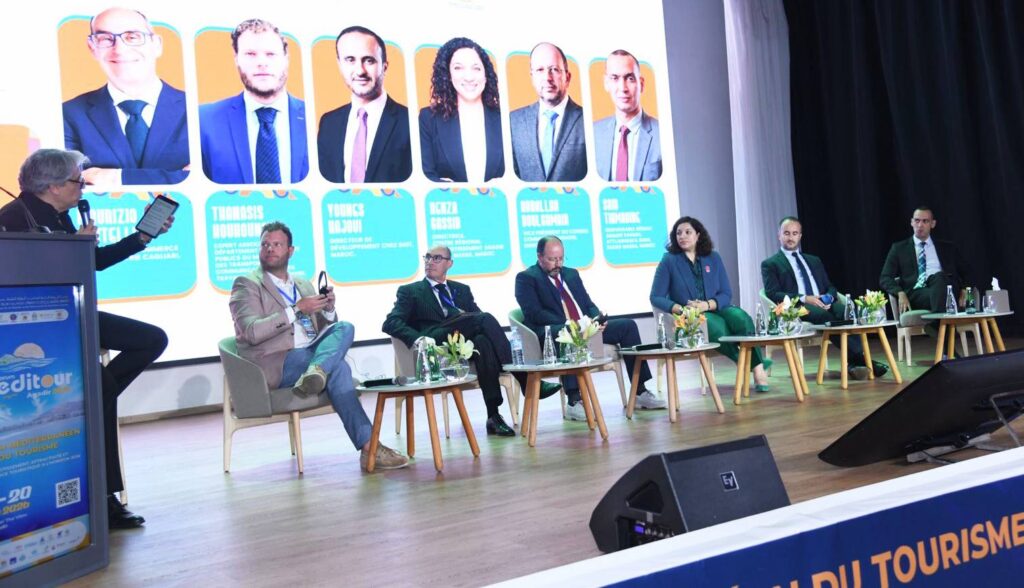
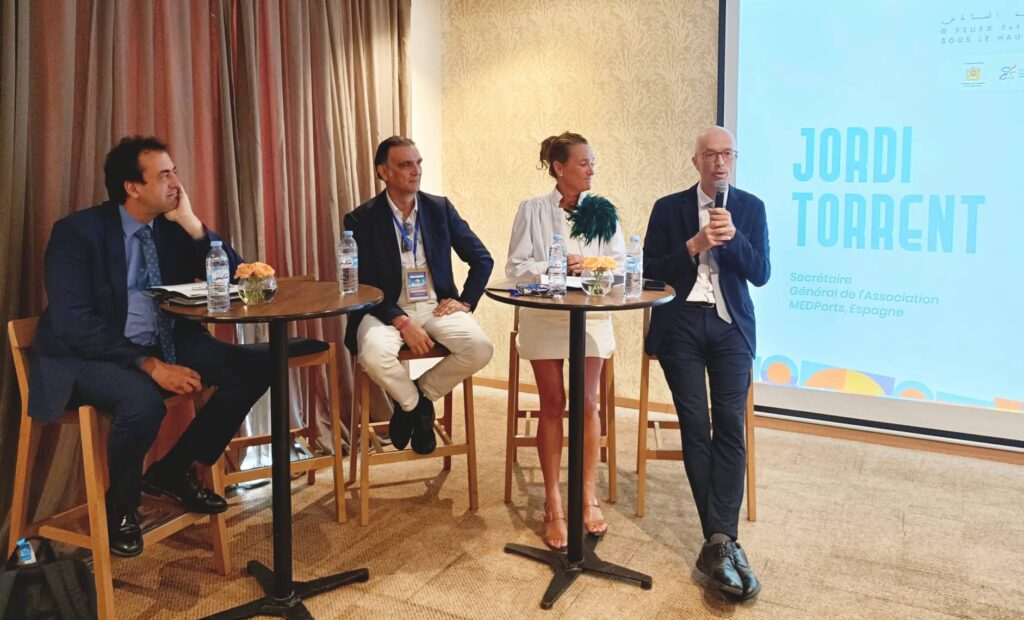
During the second day of Meditour, ASCAME was also represented in the session “Cruise Tourism, Mobility and Connectivity in the Mediterranean”, where speakers examined how cruise activity, port infrastructure and intermodal transport are reshaping the region’s tourism landscape. The discussion highlighted both the opportunities and the sustainability challenges linked to the rapid growth of cruise tourism.
Mr. Jordi Torrent, Secretary General of the MEDPorts Association -partner of ASCAME-, stressed that cruise tourism now attracts nearly 40 million passengers annually and represents a significant opportunity for Mediterranean destinations, while also requiring strong commitments to coastal sustainability and port decarbonization.
From the perspective of emerging hubs, Mr. Jamil Ouazzani, Marketing and Strategic Intelligence Director of the Tangier City Port, with whom we participated in European projects, highlighted the transformation of Tangier Ville Port into a Mediterranean reference point, noting the need for improved airport connectivity and adherence to European sustainability standards. Mr. Pol Fages, President of the Palamós Chamber of Commerce – member of ASCAME -, underlined the substantial economic impact of cruise tourism in Catalonia and called for better data-sharing and coordination with cruise lines to optimize visitor experiences.
Together, these contributions underscored a shared message: connectivity, sustainability and coordinated governance are essential to ensuring that cruise tourism becomes a driver of balanced and responsible development across the Mediterranean.
Closing remarks by ASCAME President
As Meditour 2026 came to a close, ASCAME President Dr. Josep Santacreu congratulated the CCIS Agadir–Souss Massa for the excellent organisation of this edition and thanked all participants for their valuable contributions to the debate on sustainable tourism. He highlighted Morocco’s key role as a founding member of ASCAME, host of previous Meditour editions and a central actor in Mediterranean economic cooperation, before sharing three reflections on the future of tourism in the region:
- Tourism remains one of the Mediterranean’s major industries and a powerful driver of shared identity.
- The region must continue investing in quality, sustainability, innovation and skills to remain a global leader.
- Building a truly Mediterranean tourism product is essential to promoting dialogue, cooperation and shared development.
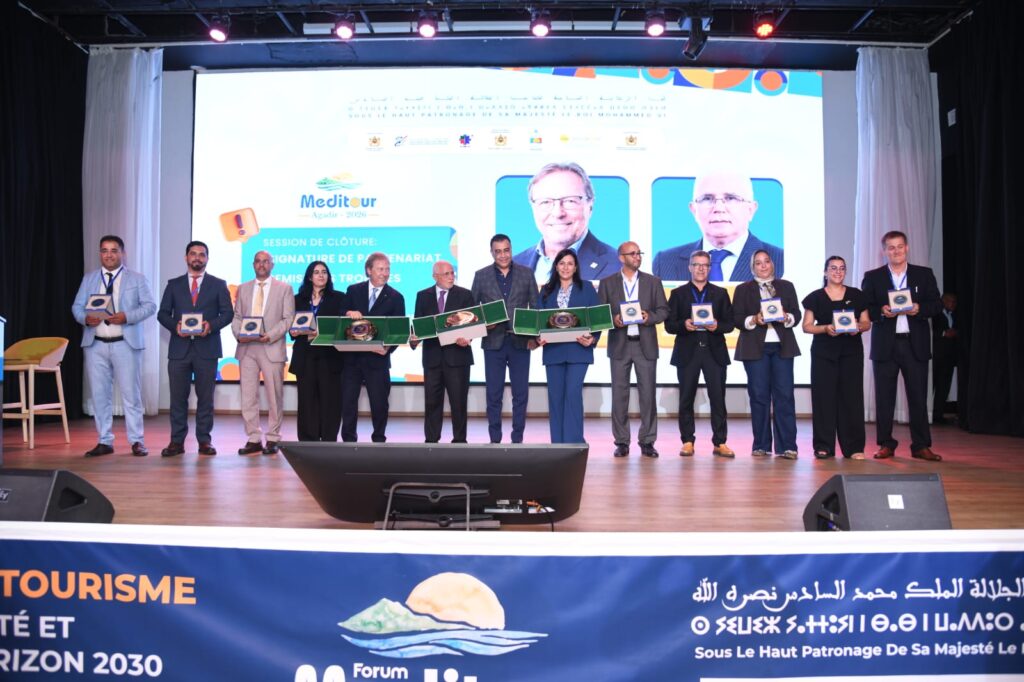
The event concluded with the signing of a cooperation agreement between Mr. Said DOR, President of CCIS Souss-Massa, and Dr. Santacreu, as President of the Barcelona Chamber of Commerce, to strengthen sustainable and cruise tourism and foster joint initiatives between both regions. Finally, Mr. Gaetano Attilio, on behalf of the Cagliari–Oristano Chamber of Commerce, announced that the next edition of MedaCity will take place in October in Cagliari, reaffirming its role as a key summit for urban innovation, economic cooperation and sustainable development in Mediterranean cities.