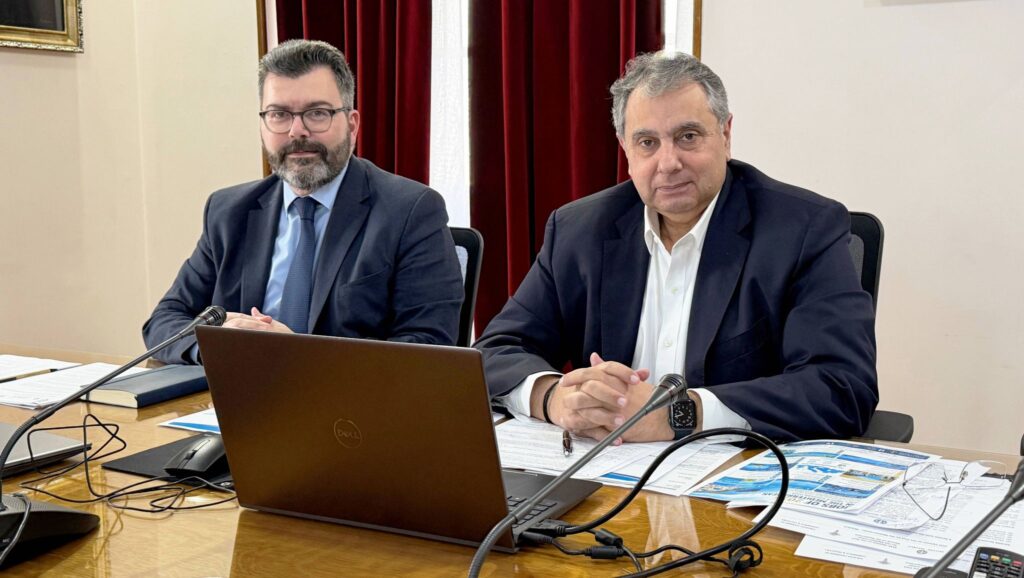
On 13 May, Mr. Thomas Wagnsonner, Member of the European Economic and Social Committee (EESC) and Rapporteur of the recently adopted Opinion of the Pact for the Mediterranean on “The Role of the Private Sector and Civil Society in Strengthening Economic Cooperation within the Pact”, met with the ASCAME community to discuss the Opinion and its implications for the private sector.
Mr. Vassilis Korkidis, President of the Piraeus Chamber of Commerce and Vice-President of ASCAME, speaking on behalf of Dr. Josep Santacreu, President of ASCAME, thanked the EESC for the opportunity to engage in this dialogue with the ASCAME community. He highlighted the importance of the inclusion of ASCAME in the design and implementation of the Pact, as a natural interlocutor for the private sector, with the capacity to connect the European Union with the real economic actors on the ground.
The meeting brought together representatives from the Piraeus Chamber of Commerce, Barcelona Chamber of Commerce and Industry, CCI Aix-Marseille-Provence, Camera di Commercio di Cagliari-Oristano, Istanbul Chamber of Commerce, CCI de Tunis, and the Chamber of Commerce, Industry and Agriculture of Beirut & Mount Lebanon, who engaged in a fruitful exchange of views with the Rapporteur.