
Events Ascame/ August 1, 2025/ Ascame projects, Featured
The Interreg MED programmes have established a robust capitalisation strategy designed to enhance coherence and impact across projects and stakeholders throughout the Mediterranean region. The key practices and methodologies focus on:
- Transfer and integration into policies, promoting the adoption of successful project outcomes into regional and national policies.
- Enhancing collaboration among Mediterranean stakeholders to improve governance and sustainability.
- Facilitating inter-program exchanges and policy networks focused on EU policy objectives —a greener, more inclusive, smarter Europe, and better cooperation governance.
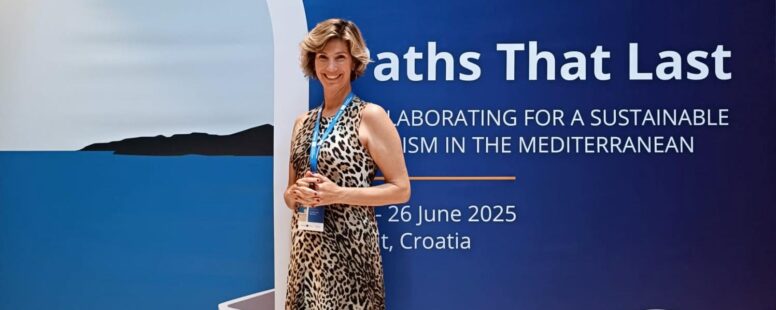
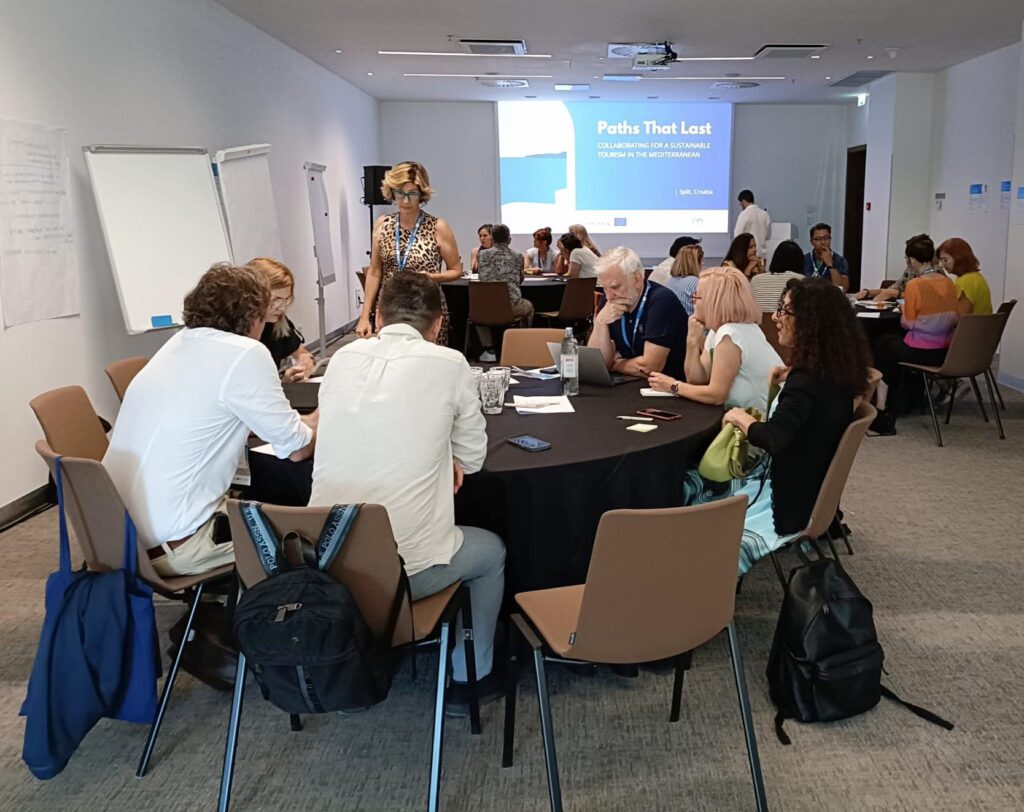
Capitalisation took center stage at the recent Interreg MED event, “Paths That Last – Collaborating for a Sustainable Tourism in the Mediterranean”, organised in Split (Croatia) by the Mediterranean Multi-Programme Mechanism (MMM). Panelists emphasized that capitalisation serves as a crucial bridge between the conclusion of one project and the inception of new initiatives that carry its objectives forward. They highlighted its role in building upon existing results, amplifying their impact, and broadening the visibility and influence of Interreg programme achievements.
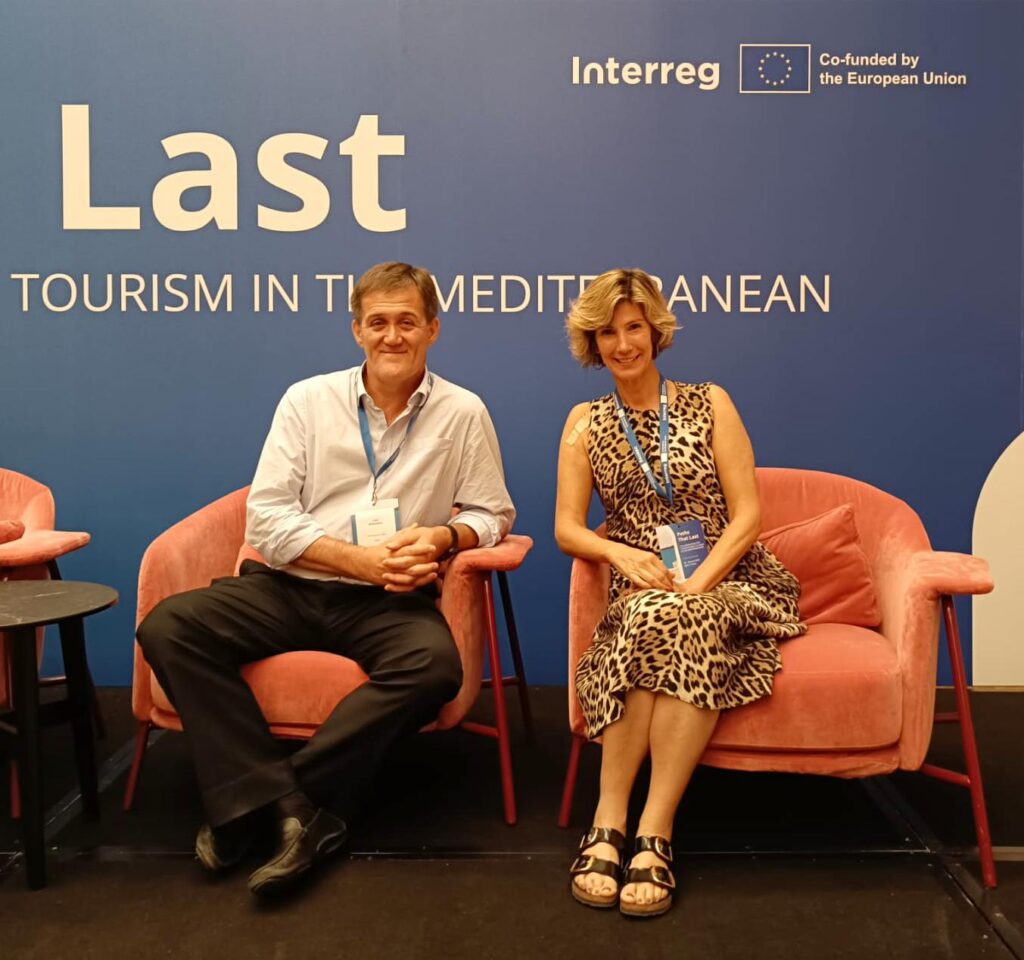
During the session “Powering Synergies: Capitalisation & Mainstreaming”, Ms. Mercedes Acitores, Senior Project Manager at INTERACT European Cooperation, highlighted the importance of transferring best practices, knowledge, and outcomes from Interreg’s sustainable tourism projects to the private sector. She also emphasized that companies, clusters, Chambers of Commerce, and business associations can directly participate as project partners, particularly in the field of sustainable tourism.
Ms. Acitores’ expertise is focused on advancing synergies across the Interreg programmes. Her work is primarily focused on two key areas: governance and coordination within the Mediterranean region through MedLab, and Interreg’s contributions to a more socially inclusive Europe. She collaborates with other partners on capitalisation and transferring Interreg results into public policies and transnational programmes. Currently, she is part of Interact’s team working on the Post-2027 Initiative.
We interviewed her to delve further into the discussion and explore her perspective on strengthening synergies between Interreg programmes.
Why is knowledge transfer and capitalization so challenging?
One major obstacle emerges at the very beginning of project design: local, regional, and national strategies are often disregarded. Existing needs tend to be overlooked, and initiatives are crafted from the vantage point of partnerships —rarely through the lens of the end user. Once a project concludes, the search begins for who might adopt and build upon its outcomes. However, clear and direct communication among organizations is frequently absent. It’s not a given that professionals within one regional institution have access to another regional department or organization. This reflects broader governance and coordination challenges. Moreover, just as it’s crucial to incorporate the end user when shaping a project, it’s equally essential to identify partners capable of bridging the transfer of knowledge at local, regional, and national levels.
From my experience, transferring results to local actors tends to be more successful, often supported by multiparty involvement or effective pilot actions. Real complexity emerges higher up, were regional and national integration face greater barriers.
What mechanisms can facilitate the integration of these projects into the private sector, and what strategic value might they offer to businesses?
The private sector plays a vital role in advancing sustainable tourism and territorial cohesion. Yet historically, programmes such as Interreg —particularly those under the Interreg Med umbrella— have operated largely within the public domain, with the involvement of private actors seen as exceptional rather than essential. Chambers of commerce have often represented the furthest reach of private-sector engagement. However, we’ve reached a turning point. There is now a clear and urgent need to embed private-sector participation across all stages of these programmes. The four strategic target groups of Interreg programmes—public institutions, private enterprises, NGOs, and civil society—must be treated as equally vital actors in shaping impact. The core mission of Interreg Med is to strengthen the social and economic fabric of Mediterranean territories. Traditionally, this has centered on public-sector beneficiaries. But today, improving cohesion is not solely a governmental task. Businesses and civil society hold crucial potential, and public-private partnerships are no longer optional; they’re foundational. To unlock this potential, greater project flexibility is essential. Many initiatives are highly technical and rely on specialized providers, yet they leave out SMEs, foundations, start-ups, and grassroots organizations. Additionally, procedural barriers, such as burdensome paperwork, unclear financing schedules, and slow reimbursement mechanisms, discourage companies from participating. These challenges are especially acute for small and medium-sized businesses.
There is now a clear and urgent need to embed private-sector participation across all stages of these programmes. The four strategic target groups of the Interreg programmes—public institutions, private enterprises, NGOs, and civil society—must be treated as equally vital actors in shaping impact
Do you think the path is being paved for this change to be possible in the short term?
The ones who make decisions about the implementation of a programme are the states. I know that there are programmes in Northern Europe that are about to start a series of working groups on the participation of private actors. This confirms that there has been a paradigm shift: this network did not exist and now it does. These programmes in Northern Europe are working because there is no issue with state aid like there is in Spain or Italy, for example. Therefore, national bureaucracy plays a significant role, as well as the different public-private mechanisms, especially alternative financing mechanisms.
For example, there was a project in Interreg in Slovenia about blue crowdfunding. This experience was brought from Northern Europe. In those countries, there is a tradition of crowdfunding, especially in the Netherlands and England. In contrast, in the southern Mediterranean, people do not trust social capital: either you go to a bank or you have no funding. It is not part of the financial culture in southern countries. In the Mediterranean, emphasis must be placed on trust. There are many regulations to comply with and too much bureaucracy to take any step.