
Events Ascame/ June 17, 2025/ Events, Featured
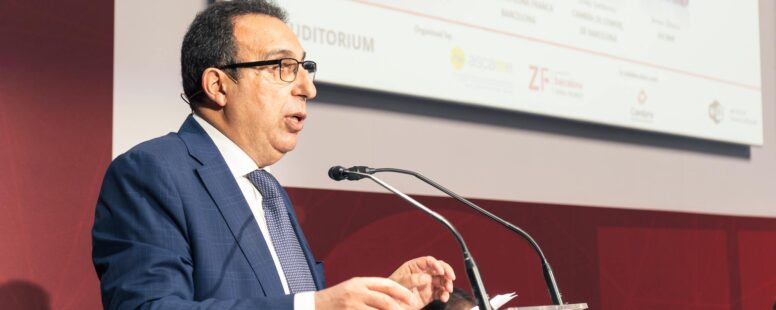
The celebration of the 21st edition of MedaLogistics at Fira Barcelona, within the framework of SIL 2025, takes place amid a period of profound transformation in global trade. Geopolitical dynamics are increasingly shaping economic decisions, with escalating tensions between the United States and China, mounting challenges to multilateral agreements, and ongoing conflicts in Ukraine, Gaza, and the Red Sea. These are now further compounded by the outbreak of war between Israel and Iran. Despite the challenging global landscape, trade flows continue to expand. We are witnessing a strategic shift in international commerce, marked by a growing trend toward regionalization and the restructuring of supply chains. In this interview, Mr. Anwar Zibaoui, General Coordinator of ASCAME, shares his insights on these developments. Mr. Zibaoui analyzes the factors that make logistics an increasingly strategic sector in the Mediterranean, the main challenges facing the industry in a context of maximum uncertainty, and intercontinental cooperation -Europe, Africa, and the Middle East- in this sector.
What are the aspects that make logistics a key strategic sector for the Mediterranean today?
Logistics is a strategic sector in any business because it optimizes costs -in transport, storage, inventory and distribution-, improves customer service -logistics ensures that products arrive at the right place, at the right time and in the right conditions-, provides a competitive advantage for companies -companies that have agile and efficient logistics respond faster to market demands, adapt better to changes and offer better conditions than their competitors-, and favors sustainable practices -more efficient transport routes and environmentally friendly packaging-. In the current context, globalisation is wounded. Regionalization is the best alternative, with a focus on sectors that benefit from geographic proximity and economic complementarity.
What factors explain why this region is gaining prominence as a global logistics platform and what role can it play in the new map of international trade?
Logistics is an increasingly strategic sector in the Mediterranean for several reasons that combine its privileged geographical position, changes in global trade and emerging trends in sustainability and digitalisation. First, the Mediterranean connects Europe, Asia and Africa, making it a hub for international trade. Our region has become a major logistics hub that channels goods from the three continents, especially given the growing need to diversify routes and reduce dependence on channels such as the Suez Canal. Supply chain diversification and resilience must be added: the region is adapting to global challenges, such as trade wars or logistics crises, through increased investment in infrastructure, regional cooperation, digitalisation and sustainable transition. On this last point, sustainability is one of the central axes. Mediterranean companies are already adopting clean technologies, route optimisation, reusable packaging, and low-emission vehicles to reduce their carbon footprint and comply with environmental regulations.
How can the region position itself to compete with or complement major Northern European logistics hubs such as Rotterdam and Hamburg?
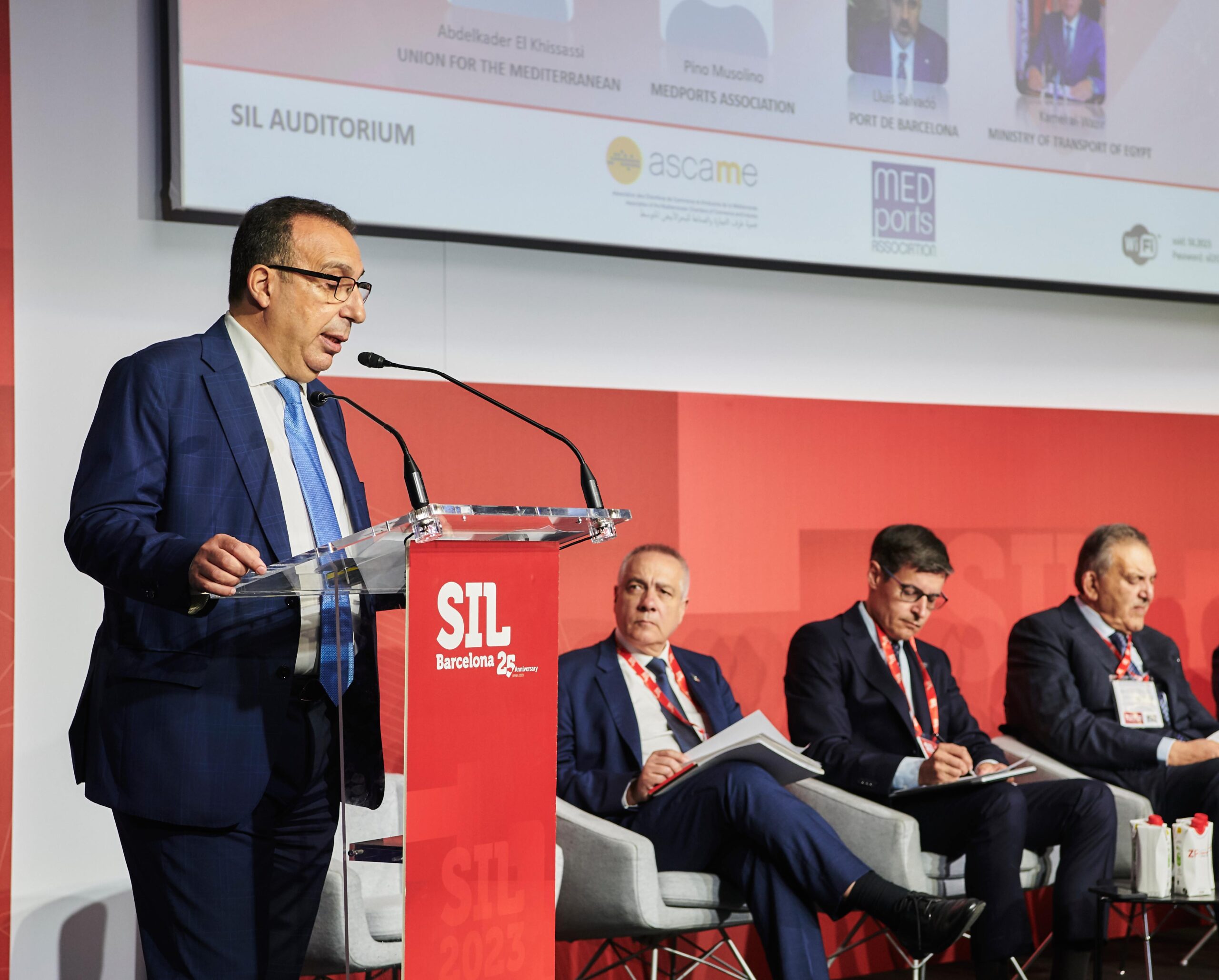
Europe and the Mediterranean are facing new geographical power structures, almost all of which are beyond their political-economic and military reach. The Mediterranean countries must work to make this sea a major platform capable of competing with other regions. To this end, cooperation between countries on both sides of the region is more necessary than ever. Events such as MedaLogistics 2025 promote collaboration between Mediterranean countries to create a more integrated, resilient and future-proof logistics network. It is time to act and turn the Mediterranean back into the great logistics platform for East-West flows. This objective will only be achieved if we build together a unified strategy that encourages public-private investments, accelerates the great Mediterranean corridor and connects it to Africa.
The Mediterranean connects Europe, Asia and Africa, making it a hub for international trade. The region is also adapting to global challenges through increased investment in infrastructure, regional cooperation, digitization and sustainable transition. In addition, Mediterranean companies are already adopting clean technologies, route optimisation, reusable packaging, and low-emission vehicles to reduce their carbon footprint and comply with environmental regulations
How is the current geopolitical instability impacting Mediterranean logistic flows?
Logistics works best when trade is fluid, without wars or disruptions. The wars in Ukraine and Gaza, as well as the global trade crisis and the tariff war initiated by the United States, pose a clear threat to the international economy. The logistics sector is one of the hardest hits by this situation. One of its main effects is the disruption of key trade routes. For example, the war in Ukraine has affected shipping routes in the Black Sea, forcing shipments of grain, oil and gas to be diverted to longer and more costly routes. In Gaza, the conflict has intensified instability in the Middle East, affecting maritime traffic in the Suez Canal, a critical route for trade between Asia and Europe. To this should be added the increase in maritime fuel due to the shortage of Russian oil and the need to resort to more distant sources. Other effects of this situation include shortages and higher prices of raw materials, congestion in Mediterranean ports -which now must absorb part of the traffic diverted from the Black Sea and Suez Canal – and new tariff barriers and export restrictions- which have forced many companies to reconfigure their supply chains and take greater financial risks. All these challenges require greater flexibility and adaptability to navigate these complexities, maintain continuity, optimize efficiency and build resilience in an ever-changing global landscape.

What are the main challenges facing logistics development in the Mediterranean? What should Europe do to avoid missing the opportunity to strengthen the Mediterranean logistics hub vis-à-vis other regions?
Both the Mediterranean and Europe currently have a unique opportunity to become one of the most important logistics hubs in the world. To achieve this, it is essential to focus on integration and to promote a strategic vision shared by public and private stakeholders. It also requires a sustainable organizational approach and territorial logistics planning, articulated with a new industrial policy refocused on European, Mediterranean and African exchanges. In an era marked by climate change and successive crises, the role of the private sector in logistics is becoming increasingly important.
Public-private partnerships are crucial to creating favorable investment environments and promoting sustainable growth. Only in this way will we successfully address challenges such as infrastructure modernization -improving rail and port connectivity, developing efficient intermodal terminals, and investing in smart ports-; regional integration and cross-border cooperation -creating common regulatory frameworks and promoting regional free trade agreements-; digitisation of the sector -for example, by implementing digital logistics management systems or ensuring real-time traceability of goods-; and green transition- using renewable energies in ports and transportation, as well as developing low-emission green logistics corridors-.
Public-private partnerships are crucial to creating favorable investment environments and promoting sustainable growth. Only in this way will we successfully address challenges such as infrastructure modernization, regional integration and cross-border cooperation, digitalisation, and green transition
What examples would you highlight of successful projects in digitalization, green transition or intercontinental collaboration in the Mediterranean logistics sector?
The logistics industry is evolving at an unprecedented pace, driven by the critical need to adapt if it is to thrive in a rapidly changing world. The transport and logistics sector, driven by technology and innovation, can position itself as the key to uniting the region’s countries and supporting its economy. This presents unprecedented potential for investment, allowing the Mediterranean to be promoted as a global logistics brand. Successful examples include the Port of Barcelona and the Port of Valencia, which are implementing intelligent digital platforms for port operations management, enabling real-time traceability, automation of customs processes and integration with logistics operators and shipping companies. From the point of view of the green transition, the initiatives promoted by the Port of Barcelona stand out, such as the electrification of the docks -which allows ships to connect to the electricity grid and turn off their engines during their stay, thus reducing their emissions-, the development of green logistics corridors or the use of alternative fuels such as LNG or hydrogen. The Port of Tarragona, with which ASCAME collaborates in different initiatives, has also become a logistics hub of reference in the Mediterranean, with the capacity to unite the territory and project itself internationally. It actively participates in cooperation networks such as ‘MedPorts’ and seeks alliances with ports in North Africa and Southern Europe to strengthen its role as a strategic node in the east-west axis of the region. Undoubtedly, Tarragona is betting on a smart, green and connected port model, which can serve as a reference for other logistics enclaves in the Mediterranean.
What investment opportunities are you detecting in the Mediterranean logistics sphere in the medium term?
In the Mediterranean logistics area, significant investment opportunities are being detected in the medium term, driven by digital transformation, sustainability, and the reconfiguration of global supply chains. This involves the modernisation of logistics and port infrastructures, a commitment to green logistics and clean energy, digitisation and automation, nearshoring and industrial relocation, increased demand for logistics space in Southern Europe and North Africa by companies seeking to bring their production closer to Europe, and intra-regional cooperation. From Southern Europe via North Africa to the Eastern Mediterranean and the Gulf, the next decade will see major changes. Investments of 690 billion euros are planned in the maritime sector, in airports, and the rail sector.