
Events Ascame/ February 17, 2025/ Ascame members, Featured
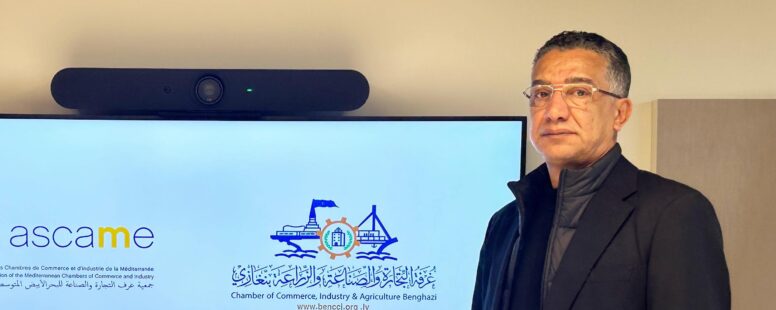
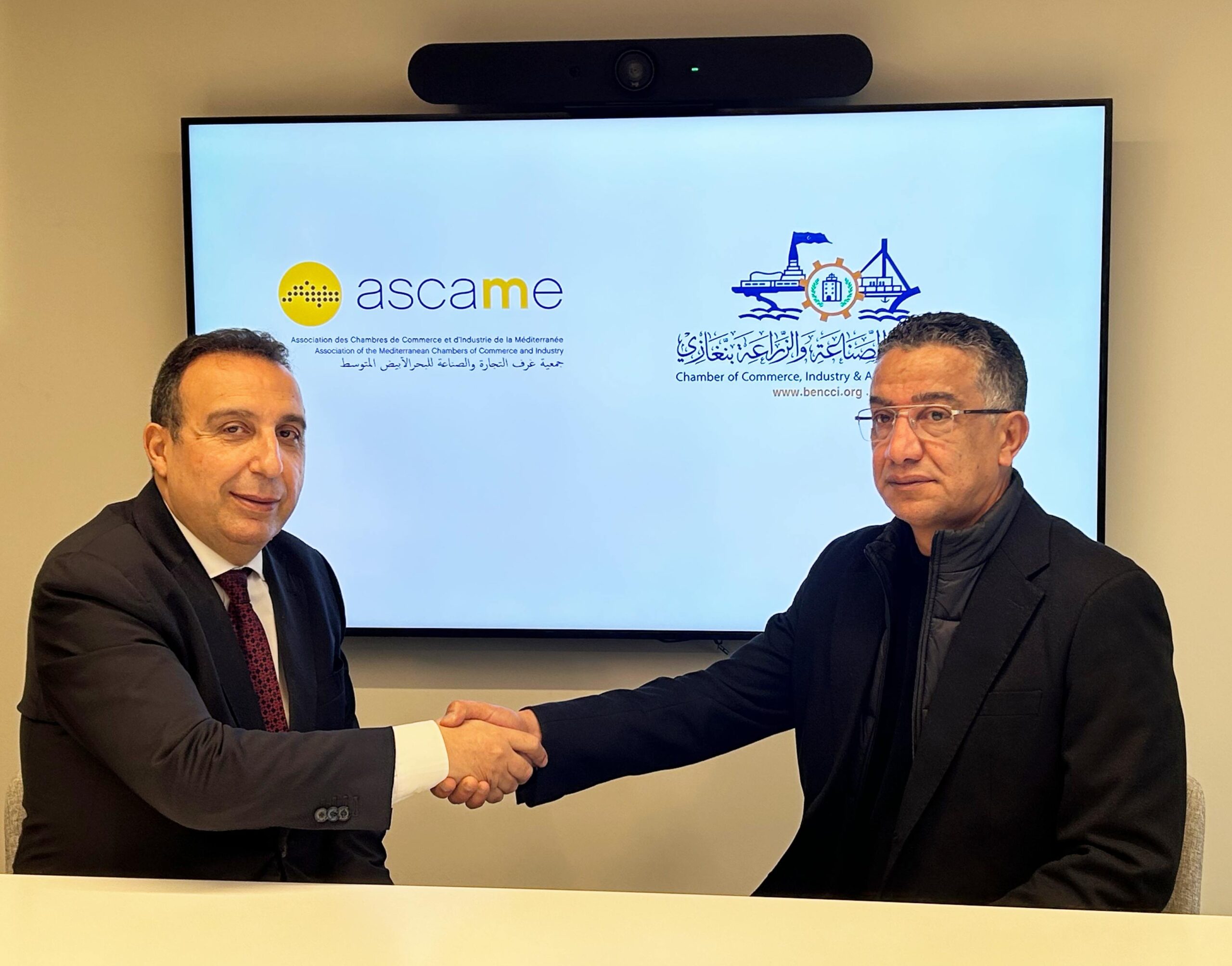
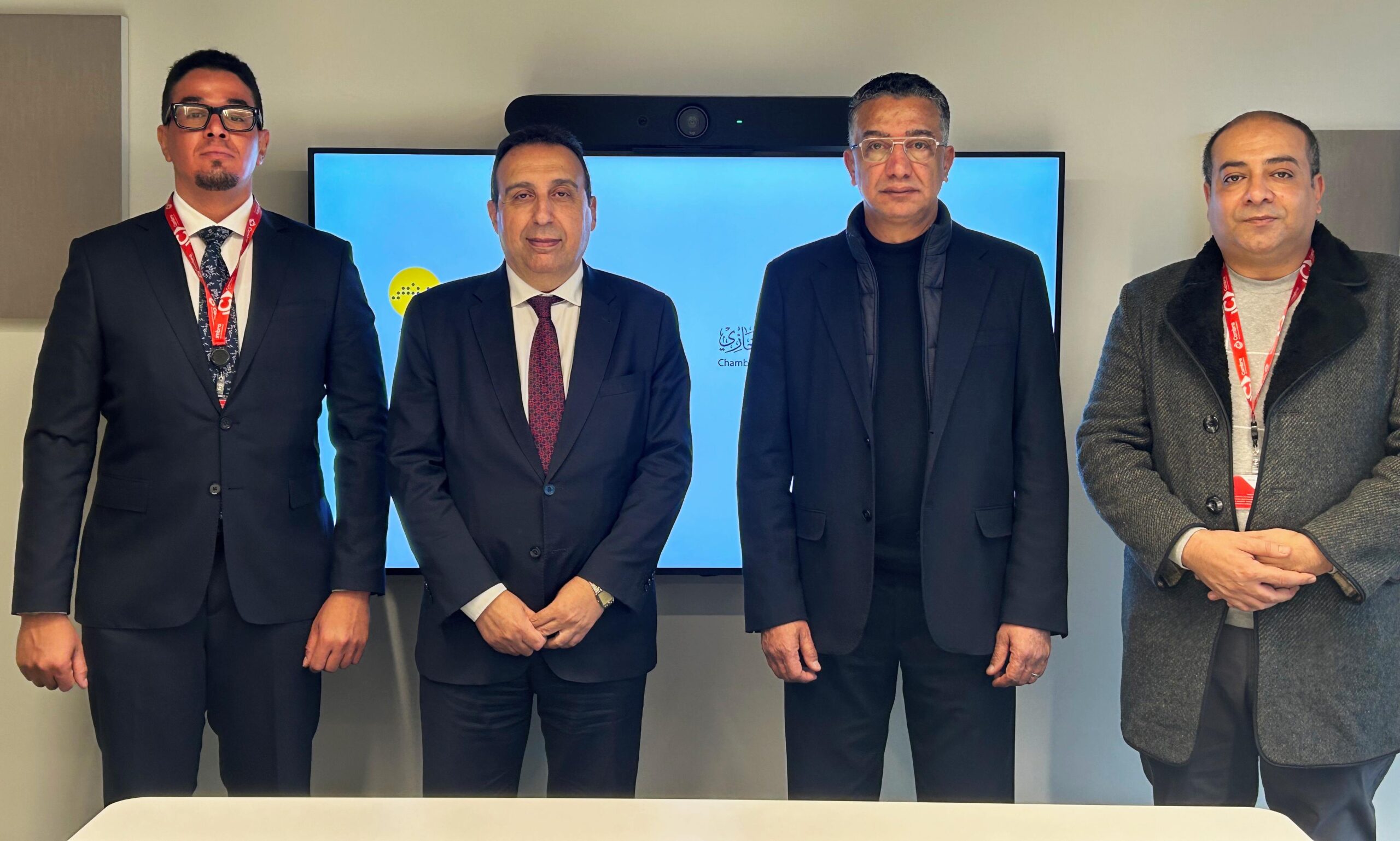
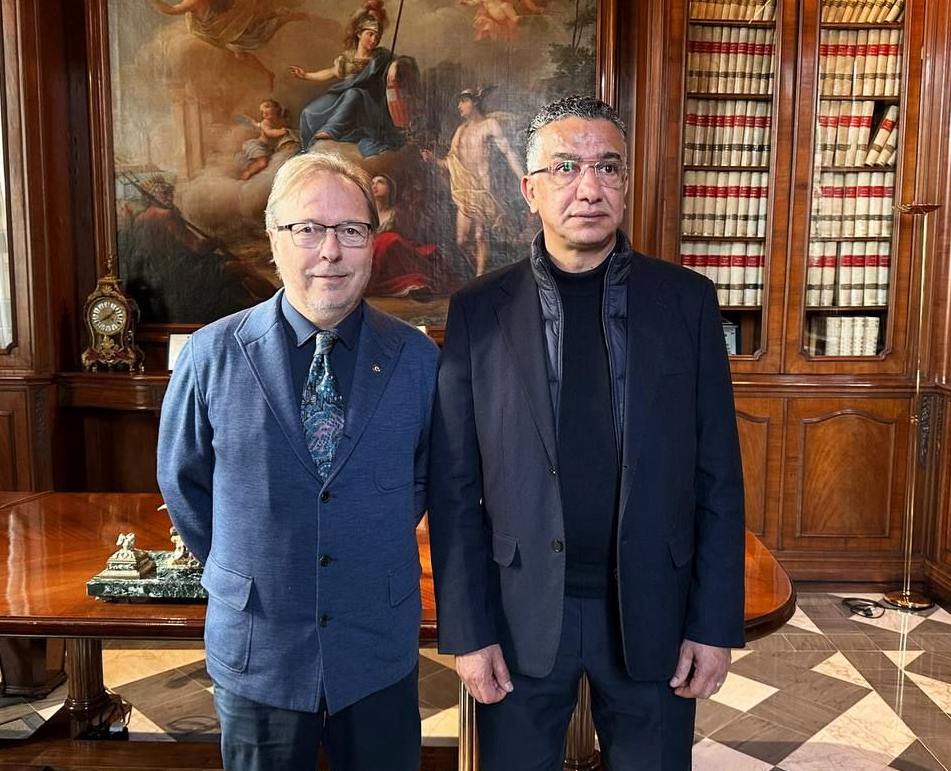
Last January we welcomed the Chamber of Commerce, Industry, and Agriculture of Benghazi as a new member of ASCAME’s network. The agreement was formalized in Barcelona in an institutional meeting which counted on Mr. Muneim Elsaeti, President of the Chamber of Benghazi, Mr. Anwar Zibaoui, ASCAME’s General Coordinator, and Mr. Josep Santacreu, President of the Barcelona Chamber of Commerce. The meeting provided an opportunity to reinforce ties between member chambers and explore collaborative initiatives to drive economic growth and innovation across the Mediterranean region. In the following interview, Mr. Elsaeti refers to the new ways of cooperation among the three institutions, apart from reflecting on the key role of the Chamber of Benghazi in attracting international investment, supporting local companies in expanding their businesses, and contributing to the economic development of the region.
What kind of cooperation can ASCAME and the Benghazi Chamber of Commerce explore from now on?
ASCAME will help us in attracting Mediterranean companies to invest in Libya and to visit local companies working in the reconstruction sector. In addition, both institutions will jointly participate in specialized exhibitions, forums, and conferences to strengthen ties between Mediterranean and Libya companies and to explore the main business and investment opportunities in our country. For instance, we recommend creating a specific delegation to host a forum in Benghazi under the name of “Libyan-Spanish Trade forum” with this aim, in addition to organizing reciprocal events in Barcelona focused on the economic sectors with the greatest potential.
Within the meeting in Barcelona to formalize the incorporation of the Benghazi Chamber into the ASCAME network you had also the chance to talk to Mr. Josep Santacreu, President of the Barcelona Chamber of Commerce. What were the main takeaways from this meeting?
The gathering provided an excellent opportunity to reinforce ties between member chambers and explore collaborative initiatives to drive economic growth and innovation across the Mediterranean region. From our perspective, the cooperative policy among the three institutions -ASCAME, Barcelona Chamber of Commerce and the Chamber of Commerce of Benghazi- should involve the exchange of delegations and economic and commercial information to establish direct links between our members.
What are the most important lessons learned from your history as one of the oldest chambers in the region?
The most important lessons learned are self-reliance in development, adapting to internal and external conditions, and quick adaptability. Over the years, Libya has undergone several changes that have created a flexible environment for the private sector, enabling it to adapt and evolve with circumstances. The institution has been updated by collaborating with academic, scientific institutions, training centers to keep pace with global technological advancements, benefiting members across commercial, industrial, and service sectors.
What kind of services do you provide to companies in your region?
The most demanded are advisory and consultancy services, and information about local, regional, and international exhibitions and forums relevant to their fields. Other services include certificates of origin, attestations, introductory letters for members, opening foreign accounts for companies, registering branches of foreign and joint companies, business identification cards, coordinating businessmen and businesswomen participation in international exhibitions, and sponsoring local exhibitions, seminars, and lectures.
How do you assess the current economic and political situation in Benghazi? Why is it the right time to invest and attract foreign investors?
The current economic and political situation in Benghazi is marked by a strong political will to establish Benghazi as Libya’s commercial hub, given its historical and geographical significance. Historically, Benghazi has been the main transit trade center to landlocked countries south of Libya, such as Sudan, Chad, and Niger. Benghazi is currently witnessing significant economic developments, with large developmental projects aimed at enhancing infrastructure and stimulating economic growth. In this regard, the Mareesa Free Zone Project is one of the largest projects in Libya and North Africa, spanning 1,200 hectares southwest of Benghazi. It includes a main port, industrial, tourist, and financial zones, aiming to transform Benghazi into a commercial gateway linking European, African, and Middle Eastern markets. I would also highlight the infrastructure development, including the project of the new airport in the Tika area, which will improve transportation and boost economic activity in the city, making it one of the largest airports in North Africa in terms of air freight. I would add the reactivation of previous contracts to build 20,000 housing units in Benghazi to meet housing needs and promote urban development.
ASCAME and the Chamber of Commerce of Benghazi will jointly participate in specialized exhibitions, forums, and conferences to strengthen ties between Mediterranean and Libya companies and to explore the main business and investment opportunities in our country
Is the construction sector the most promising in Libya?
Absolutely, above all in Benghazi where reconstruction is a priority for the government and the private sector. For instance, the Mareesa Free Zone Project requires massive infrastructure, including ports, industrial zones, and hotels. In addition, there is significant interest from foreign investors in our country and an increasing demand for housing and infrastructure due to population growth. While construction is currently the most dynamic sector, other emerging sectors include energy and oil -with plans to develop oil infrastructure in Eastern Libya-, trade and logistics -supported by port and free zone projects-, and tourism -with an increasing interest in developing coastal resorts-.
The agricultural sector has a significant potential in Libya but faces numerous challenges that have limited its contribution to the economy compared to other sectors like oil and construction. How are you addressing this issue?
This sector has remarkable strengths, such as availability of arable land, diverse climate, groundwater and livestock production. However, as you said, there are several challenges to face. The most urgent to solve are the weak agricultural infrastructure -the lack of investment in modern irrigation technologies and agricultural equipment reduces the production efficiency-, the lack of major investments -the sector relies mostly on traditional production, with few large-scale commercial agricultural projects-, a great dependence on imports -over 75% of Libya’s food is imported, making the country non self-sufficient in basic food products-, and the climate change and desertification impact on the agricultural production. Despite these challenges, there are significant investment opportunities that could make agriculture a promising sector in the future. In this regard, I would like to highlight investments in agricultural technology -such as protected agriculture and drip irrigation to improve productivity-, cultivation of strategic crops -such as wheat and barley to reduce the dependence on imports-, the development of agricultural and food industries -such as date packaging factories, olive oil production, and dairy products-, and the exploitation of promising areas -such as the Green Mountain, which has a fertile soil and a significant agricultural potential-.
What about the main opportunities for green growth and renewable energy development in your region? What is your assessment of cooperation with the European Union in developing the energy sector?
Libya possesses vast natural resources that enable it to become a leader in renewable energy, especially in solar, wind, and geothermal energy. In fact, there are great investment opportunities in renewable energy, such as in large-scale solar power plants -Libya can establish massive solar projects to export electricity to Europe and support the local grid-, in integrating renewable energy into the oil sector -which will reduce emissions-, and in green hydrogen production -Libya could become a hub for green hydrogen production, a sector o great interest to the European Union-. Cooperation with the European Union is essential to develop energy infrastructure and benefit from European funding and modern technology. Libya must diversify its economy and invest in green energy to reduce dependence on oil and ensure sustainable economic growth.
Libya must diversify its economy and invest in green energy to reduce dependence on oil and ensure sustainable economic growth
What is the impact of commercial partnerships between Arab, African, and European countries on Benghazi?
Benghazi, as Libya’s second-largest city and a significant economic center, directly benefits from commercial partnerships between Arab, African, and European countries. The main impacts include: transforming Libya into a major commercial and logistics hub -thanks to its geographical location and the undergoing new developments of the Port of Benghazi as a strategic transit point for goods between Europe and North Africa-, attracting foreign investments -with trade agreements with European and African companies to enhance trade in sectors like energy, agriculture, and logistics-, and stimulating the services and transport sector -due to the infrastructures development, the improvement of transportation and logistics networks, and the Free Zones-.
What are the main goals your institution aims to achieve in the coming years?
The Chamber of Commerce of Benghazi aims to achieve a set of strategic goals in the coming years to promote economic development and support the private sector in the region. One of the key goals is to enhance international economic relations. Our Chamber is working to expand its network of relations with international organizations and institutions. The recent agreement with ASCAME is essential to strengthen economic relations with Mediterranean countries. Another key point regards organizing and hosting economic events aimed at attracting investments and fostering networking, such as the Benghazi International Construction Exhibition held last July, which aimed to support the construction sector in the region. Thirdly, I would like to highlight our efforts to improve the investment environment in Benghazi by organizing conferences to discuss ways to enhance the business environment and attract local and international investors. Finally, it is essential to support reconstruction efforts by encouraging partnerships between public and private sectors and contributing to infrastructure and development projects.