
Events Ascame/ February 5, 2025/ Ascame members, Featured
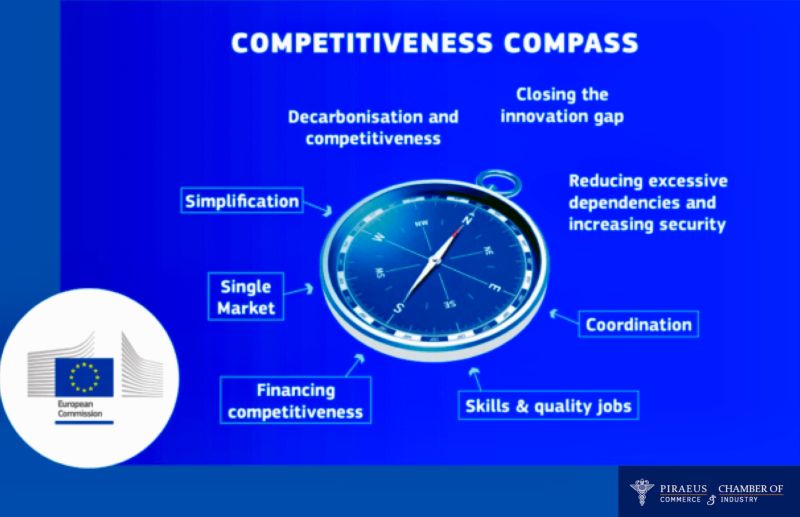
In January 2025, the European Commission presented the ‘Competitiveness Compass’, a new roadmap to restore Europe’s dynamism and boost its economic growth. The Compass builds on the analysis of Mario Draghi’s report on the future of European competitiveness and provides a strategic framework to drive the Commission’ work during this mandate. The Draghi report originally identified three imperatives for the EU to boost its competitiveness: the strengthening of innovation, the promotion of decarbonization and the security of energy supplies.
European SMEs welcomed the ‘Competitiveness Compass’, which sets out an approach and measures to translate these imperatives into reality. However, action is required to achieve this goal. In this sense, it is necessary to simplify and modernize the regulatory environment and improve policy coordination between different levels of government. SMEs insisted that they should be addressed in a special chapter, such as the ‘Clean Industry Agreement’ and the ’Circular Economy’. The journey to the green transition, decarbonisation and energy bills must be on a level playing field between smaller and larger industrial companies to face the rise in energy costs more fairly. Energy is a key point of reference, and particularly the reduction of its prices.
European Commission’s President, Ms. Ursula von der Leyen, promised a “simplification shock” of regulatory rules as part of the long-awaited “economic doctrine” of the new Commission for the next five years, to avoid Europe risking remaining on the path of low growth and lagging in competition with the US and China. But she admitted that Commission’s commitments to strengthening economic growth and reducing bureaucracy are not enough. Relevant moves are required from the governments, which have already agreed to adopt the ‘Budapest Declaration’. Ms. Von der Leyen explained that the plan, the roadmap and the political will have no real meaning if there is no speed and unity, in addition to coordination of national reforms for competitiveness.
The ‘Competitiveness Compass’ rightly announces extensive simplification, but SMEs expect a careful assessment of the unintended consequences of the legislation and action to correct them. The European Commission should work with market players to develop specific measures to achieve a 25% reduction in reporting obligations for all private companies and 35% for SMEs. Indeed, in sustainable finance reporting, the upcoming Omnibus proposal should change “SME standard” for maximum sustainability reporting and any other information requests from large companies and financial institutions, from mandatory to voluntary.
The European Commission should work with market players to develop specific measures to achieve a 25% reduction in reporting obligations for all private companies and 35% for SMEs
Furthermore, the Savings and Investments Association should unlock the necessary private finance to serve all businesses. The access to finance is what allows SMEs to innovate, grow and invest in their green and digital transition. A functioning European capital market and accessible basic banking services are therefore required. This means developing policy and legislation based on the capacity of smaller companies and adding requirements for larger companies, depending on their size and impact. In this way, a scale is created, rather than excluding many companies. Additional support should be given to companies with smaller capacities, but with a lot of growth potential. The “Clean Industrial Deal” plan does not currently mention a clear path for European SMEs, which nevertheless makes up over 99% of all industrial ecosystems, including energy-intensive industries and renewable energy production.
It is not enough to explain how Europe’s main problem in attracting investment will be addressed, especially when the largest economies in the Eurozone, Germany and France are in fiscal weakness. At the same time, EU is threatened with the imposition of tariffs by the US and China. To make Europe more attractive for investment, it must become simpler and faster to encourage entrepreneurs to test and develop ideas for creating sustainable businesses. Political ambitions only become reality if SMEs can be profitable to invest in the requested changes. Despite that Europe uses a compass instead of a satellite map, let’s make sure to “calibrate” it correctly, so that it supports the circular business models of SMEs and provides incentives for resource efficiency.
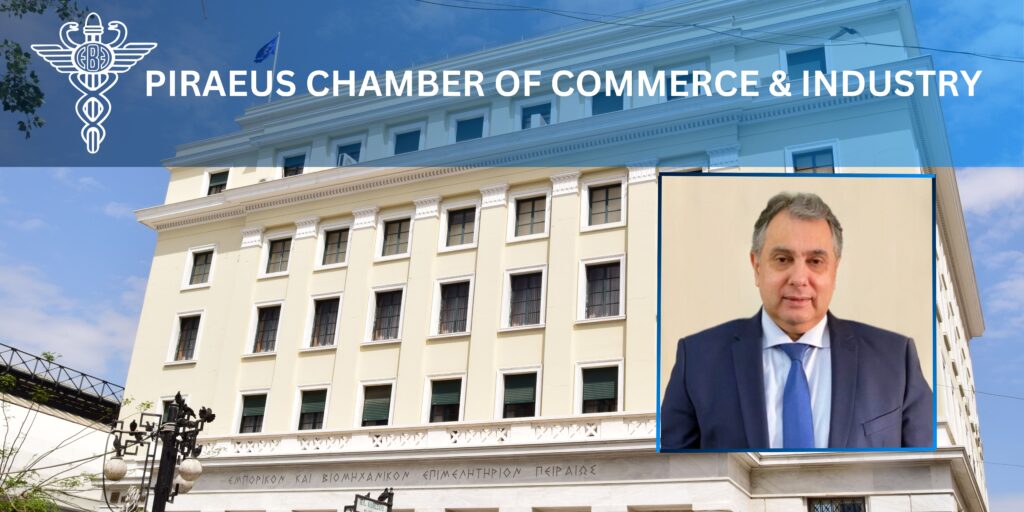
Article written by Mr. Vassilis Korkidis, President of the Piraeus Chamber of Commerce and Industry.