

Events Ascame/ December 3, 2025/ Featured
In a shifting geopolitical and economic landscape, the Mediterranean region is once again at the crossroads of continents, cultures, and markets. The region faces three interlinked challenges – competitiveness, migration, and climate vulnerability – that call for a renewed partnership between Europe and its Southern neighbors. Against this backdrop, Algeria emerges as a key partner for a new era of industrial co-production and sustainable growth, aligned with the EU’s strategic priorities in energy transition, decarbonization, and industrial resilience.
Strategic convergence: A shared industrial vision
A recent study on Foreign Direct Investment (FDI) and nearshoring opportunities in Algeria, conducted within the framework of the EU–Algeria Partnership, highlights an unprecedented convergence between Europe’s reshoring strategy and Algeria’s national industrial ambitions.
Europe is working to relocate segments of its value chains closer to home to reduce dependency, secure supply routes, and lower carbon emissions – a transformation guided by the Net Zero Industry Act (NZIA) and the Carbon Border Adjustment Mechanism (CBAM). In this context, Algeria is positioning itself as a natural partner and regional production hub, strategically located at the crossroads of Europe, Africa, and the Middle East. This convergence paves the way for a co-investment model founded on sustainable industrial ecosystems, green energy, and technological innovation.
Tangible competitive advantages: A strong case for nearshoring
At the heart of Algeria’s attractiveness lies a combination of structural competitiveness and strategic assets that position the country among the most promising destinations for Euro-Med industrial partnerships. The following factors illustrate this potential:
- Energy competitiveness: Algeria offers one of the most competitive energy mixes in the region. For instance, electricity costs up to nine times lower, and natural gas prices up to 27 times lower than those in Europe’s top four economies.
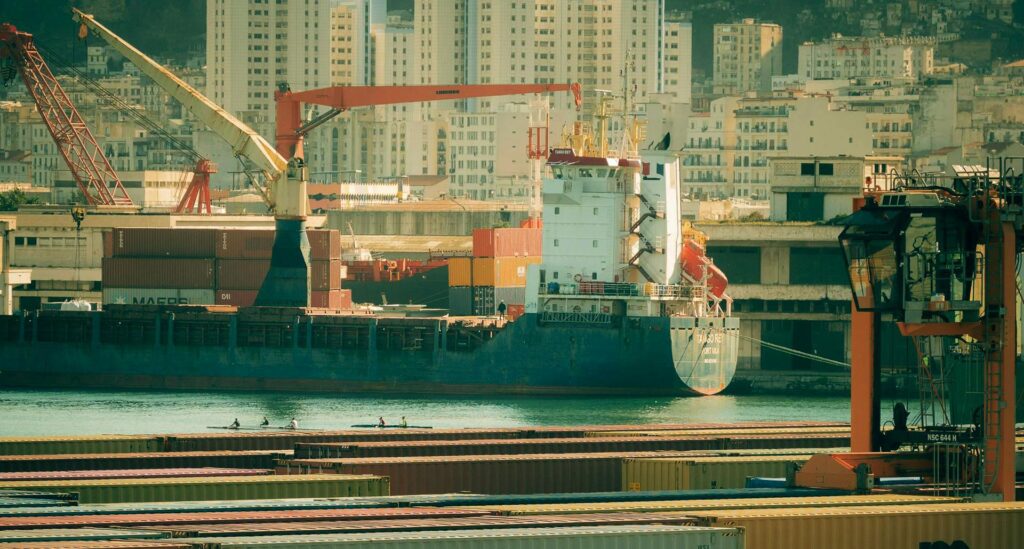
- Strategic location and logistics: With a Mediterranean coastline exceeding 1,200 km and modernised ports, products manufactured in Algeria can reach European ports in less than 48 hours, enabling agile supply chains and reducing carbon footprints.
- Human Capital: Over 200,000 engineers and technicians graduate annually from industrial and technological programs, forming a skilled labour base for advanced manufacturing industries.
- Domestic market and regional cccess: With 45 million consumers and preferential access to the African Continental Free Trade Area (AfCFTA), Algeria serves as both a domestic growth market and a gateway to Africa.

Algeria is positioning itself as a natural partner and regional production hub, strategically located at the crossroads of Europe, Africa, and the Middle East. This convergence paves the way for a co-investment model founded on sustainable industrial ecosystems, green energy, and technological innovation
Sectors with high nearshoring potential
Building on Algeria’s strategic assets and competitiveness, several sectors stand out as particularly well-suited for nearshoring opportunities. These industries not only align with Europe’s drive for resilience and sustainability but also highlight Algeria’s potential to serve as a regional hub for innovation and co-investment. The following areas illustrate where the greatest synergies can be achieved:
- Electrical and Electronic Industries: Encompassing cabling systems, batteries, semiconductors, and advanced components that underpin modern manufacturing.
- Renewables and Cleantech: Focused on the production of photovoltaic modules, storage systems, balance-of-system (BOS) components, and energy efficiency equipment.
- Energy Intensive Industries: Including steel, aluminum, glass, and industrial chemicals, where proximity and secure supply chains are critical.
- Agro-industry and Pharmaceuticals: Driving the development of value-added production chains and fostering resilience in essential sectors.
- Digital Economy and AI Ecosystems: Emerging as a transformative lever for productivity, competitiveness, and innovation across industries.
A call for shared prosperity
Algeria stands at the center of a renewed Euro-Mediterranean partnership, one that transcends traditional frameworks to encompass sustainable industrial transformation, digital innovation, and green connectivity. Today, Europe’s Global Gateway, the Mediterranean Pact, and Italy’s Mattei Plan for Africa open a new strategic window to align investment, infrastructure, and innovation in pursuit of shared prosperity. Leveraging its geographic position, energy advantage, and industrial base, Algeria is poised to act as a catalyst for a new generation of Euro-Mediterranean projects that connect value chains, accelerate decarbonization, and foster inclusive growth. To translate this vision into action, three strategic priorities stand out:
- Develop Euro-Mediterranean Special Economic Zones (ZES): Purpose-built areas designed to host joint industrial, digital, and cleantech ventures between European and North African partners.
- Establish a Dedicated Euro Med Investment Fund: Mobilising public and private capital to finance green infrastructure, technology transfer, and industrial co-production.
- Leverage the global gateway framework: Scaling renewable energy corridors, digital interconnectivity, and resilient transport systems across the region.
These EU initiatives, aligned with Algeria’s economic transformation strategy, have the potential to unlock the country’s full capacities and foster a model of sustainable prosperity shared with the Northern neighborhood. On these foundations, Algeria can emerge as an industrial and digital backbone of a new Euro-Mediterranean value chain, linking Europe, Africa, and the Middle East through energy, innovation, and co-production.
Ultimately, as global dynamics shift toward sustainability and regionalization, the Mediterranean can evolve from a space of fragmentation into a platform of shared prosperity and green competitiveness – where sustainability meets sovereignty, and cooperation becomes the cornerstone of a resilient and inclusive future.
Article written by Mr. Abderrahmane HADEF, International Consultant & Senior Advisor in Economic Development, Digital Transformation, and Sustainable Investment Promotion.