
Events Ascame/ July 30, 2025/ Featured, Ascame projects
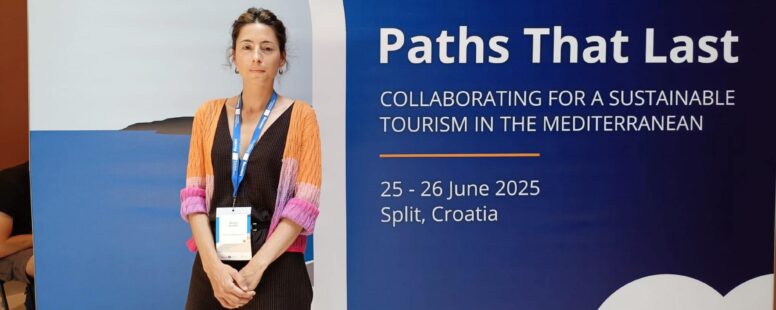
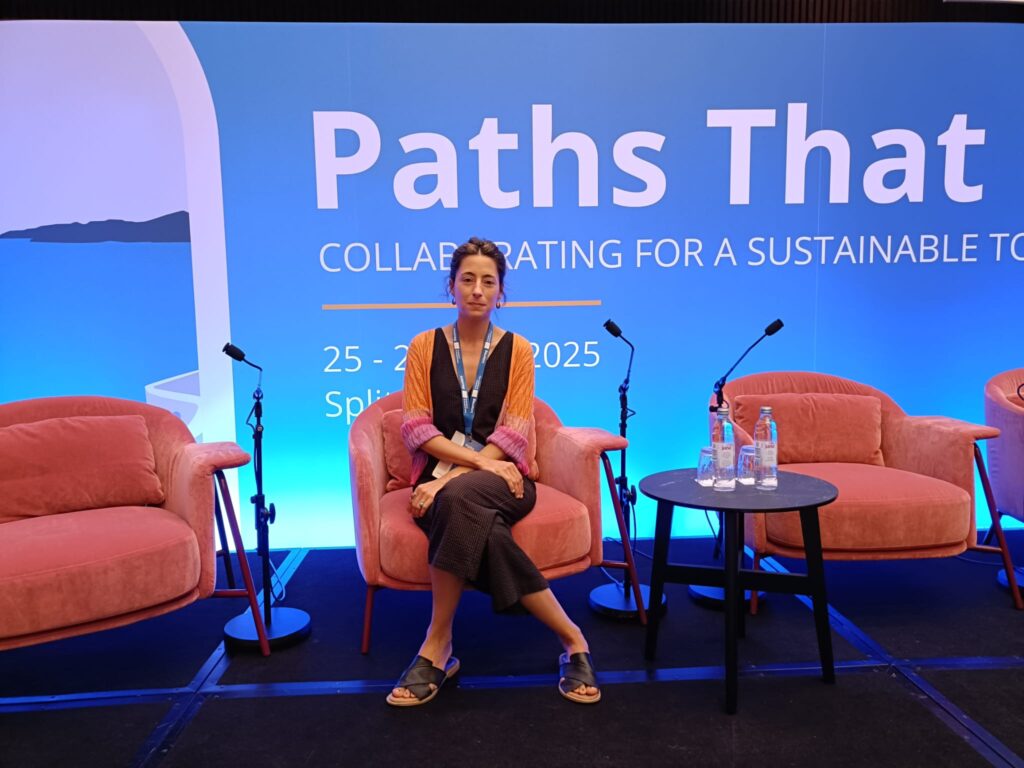
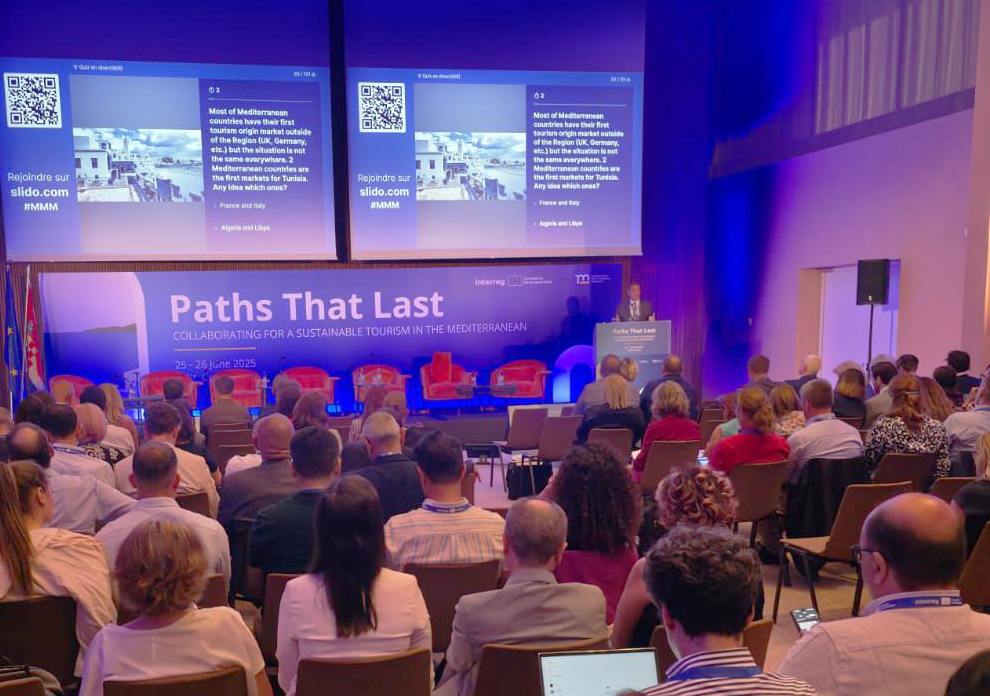
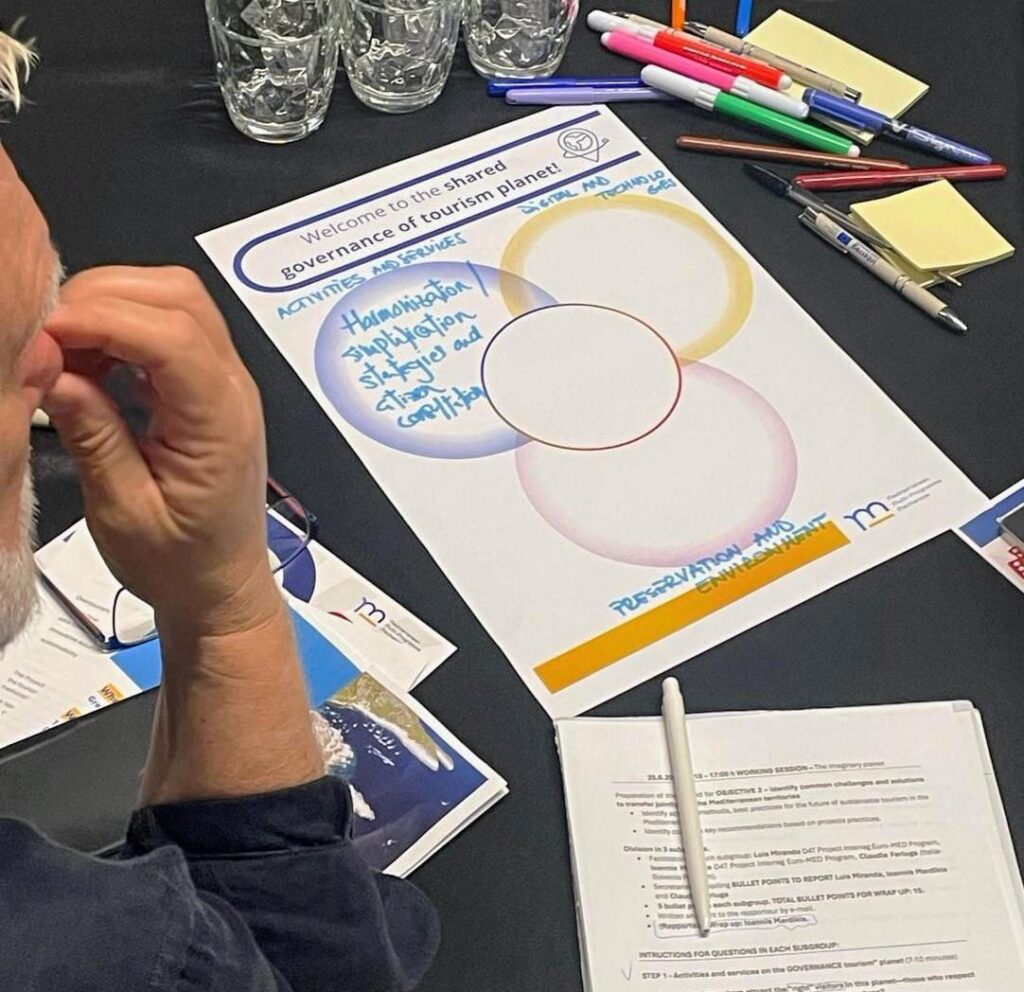
Strengthening synergies and governance for sustainable tourism in the Mediterranean —aimed at improving policy coordination and maximizing impact— was a central theme at the “Paths That Last – Collaborating for a Sustainable Tourism in the Mediterranean” event, organised by the Mediterranean Multi-Programme Mechanism (MMM) in Split, Croatia, in June. Together with DG MARE, ASCAME’s partner Union for the Mediterranean (UfM) took part in the panel on ‘Mediterranean strategic and sectoral initiatives: How do they deal with Sustainable Tourism?’ aiming to put the spotlight on initiatives, strategies, and approaches beyond Interreg that enhance synergies and governance for sustainable tourism in the Mediterranean for better policy coordination and impact. During the session, Ms. Adriana Salazar, Sustainable Blue Economy Expert at the UfM, emphasized the importance of integrating the Mediterranean private sector into broader blue economy strategies. She highlighted the need to better foresee the role of the MED private sector in integrating sustainable tourism into broader blue economy strategies. In the following interview, Ms. Salazar shares her insights on the pivotal role of the private sector in leading the region’s green and blue transition. She also underlines successful initiatives led by the UfM and other Mediterranean institutions that are tackling the challenges of sustainable tourism head-on.
To begin, we’d like to ask you about the session you participated in, titled ‘Mediterranean Strategic and Sectorial Initiatives’. How are these initiatives addressing the challenges of sustainable tourism?
The discussion presented a valuable opportunity to recall the relevant framework under the Union for the Mediterranean (UfM) Ministerial Declaration on Sustainable Blue Economy, adopted in 2021, which included for the first time a priority entirely dedicated to ‘Sustainable maritime and coastal tourism’. This declaration featured 10 priorities regarding with decarbonization of maritime transport and ports, maritime spatial planning, sustainable fisheries and aquaculture, blue skills/careers/employment, and blue finance, research & innovation, among others. The UfM participation in this session represented a unique opportunity to explore and institutionalize new ways of working towards enhanced coordination and convergence across Interreg Programmes, with the potential to extend to other Med priority areas in the future. We stressed the vital need to continue strengthening the focus on the regional/Med basin-wide cooperation, partnership, and dialogue on sustainable tourism. In addition, we recalled the role of the Sustainable Blue Economy (SBE) as a key regional integrated, holistic, multi-sectorial, and multi-stakeholder approach that can and does strongly support and boost sustainable tourism transition pathways across the Mediterranean basin (as regards sustainable maritime and coastal tourism and beyond, linking also to the hinterland). Indeed, over time, SBE has become a powerful vector and lever for sustainable development across the region, and a pillar of the Euro-Mediterranean cooperation itself.
Given the current context, isn’t now the ideal time to strengthen the participation of non-EU Mediterranean partners and stakeholders in the Interreg ecosystem?
Now, it is crucial to continue enhancing the access of non-EU Med partners and stakeholders to the Interreg ecosystem (as direct project beneficiaries; through the Associate Partner status under Euro-Med strongly advocated for by the UfM, etc.). Despite the complex historical phase in the region, there is strong momentum across several key pillars of the Euro-Med cooperation, including SBE and Sustainable Tourism. In the framework of the Interreg event, UfM and DG MARE recalled the recently released Ocean Pact, the Med Pact in the making, the upcoming new EU Strategy on Tourism, and the first package of investment projects under the Blue Mediterranean Partnership (BMP) launched at the UfM Segment on SBE organized during the Med Day at UNOC-3.
The UfM also stressed the consistent and sustained strategic coordination with key partners to expand the reach of relevant and successful sub-regional initiatives to the wider basin (i.e. under WestMED, with Interreg, etc.), to align the regional policy dimension with the on-the-ground project dimension (indeed, projects are part of wider processes), and to ensure overall strategic convergence and alignment (i.e. in close coordination with DG MARE – as UfM Co- Presidency on SBE – Interreg Euro-MED, Interreg Next-MED, Eusair, EMFAF, etc.).
In Split, we recalled the role of the Sustainable Blue Economy (SBE) as a key regional integrated, holistic, multi-sectorial, and multi-stakeholder approach that can and does strongly support and boost sustainable tourism transition pathways across the Mediterranean basin
Could you share some Interreg projects that serve as strong examples for Mediterranean countries?
There are numerous powerful examples, both within Interreg and beyond. The 8 Interreg Programmes, specifically associated with the Interreg Mediterranean Multi-Programme Mechanism (MMM) coordination, focusing on sustainable tourism in its pilot exercise, represent approximately 1 billion EUR, or 1/8th of the whole Interreg budget (8 billion EUR for the programming period 2021-2027, spanning 86 programmes). As mentioned, it’s essential to consider that projects are part of broader processes. Overall, the UfM-labelled Plastic Busters Initiative can be highlighted as a flagship example at the Med level. Plastic Busters is by now a Euro-Mediterranean process and a model of cross-border, N-S, cooperation to tackle the marine litter crisis in the Med, addressing the entire management cycle of marine litter. Indeed, the Mediterranean Sea is one of the most affected areas in the world by marine litter (ML). With most ML entering the Sea from land-based sources (40-50%), sea-based sources also contribute significant litter inputs. Plastics, mostly single-use (SUP), make up 80% of all marine litter collected. The UfM-labelled ToUMaLi project on Marine Litter from the Tourism Industry can also be highlighted, led by the University of Rostock and funded by the German BMZ in this case. The project focuses on reducing marine litter from the tourism industry in Northern Africa (Tunisia, Morocco, and Egypt) through the contribution of sustainable waste management systems.
In your view, what are the key challenges and opportunities for sustainable tourism in the Mediterranean region? Additionally, what are the main trends and future outlooks shaping its development?
It will be vital to consider ecosystems, biodiversity, and nature as crucial assets to promote more sustainable tourism models, providing a wide range of ecosystem services (regulating, provisioning, cultural and aesthetic, etc); and to fully embrace the principles of Sustainable Development by (inter alia) devising solutions that prioritize ecosystem-based approaches. In this regard, ecosystem-based MSP / Maritime Spatial Planning and ICZM (Integrated Coastal Zone Management) can play a vital role in ensuring a more balanced use of coastal and marine areas, preventing conflicts between tourism and other sectors (Marine Renewable Energies, fisheries and aquaculture, etc.), protecting fragile marine and coastal ecosystems, and overall supporting long-term economic growth for coastal communities with responsible and sustainable tourism development at the core.
Could you share some examples of initiatives that promote a more sustainable and balanced use of coastal and marine areas?
For sure. One of them is setting in place more sustainable maritime and coastal tourism models in and for the Med region. A wide range of opportunities will continue to emerge in the sustainable/eco-tourism space (pesca-tourism, culinary tourism, sports and adventure tourism, accessible tourism, nature and culture trails, rural tourism, slow tourism, etc.) as an alternative to traditional tourism models, as well as for green/blue entrepreneurs operating across a wide range of tourism-related value chains. Another key factor is accelerating the tourism sector’s transition towards green energy and renewable energy models, possibly locally generated. In addition, the importance of data and the need for enhanced cooperation on continuous data monitoring and analysis have also become apparent.
Indeed, evidence-based information for monitoring, evaluation, and planning is needed to measure the overall impacts of tourism on marine ecosystems, people, and the economy and to devise fit-for-purpose policy responses. Other initiatives are regarded with multilevel governance models between communities and destinations, regional and national levels to create integrated and systemic approaches considering not only economic opportunities, but also broader sustainability dimensions, such as waste management, biodiversity protection, or adaptation to climate change. Finally, future innovative approaches should also be coupled with greater integration and synergies between tourism ecosystems and other related sectors (agriculture/food systems, fisheries, aquaculture, transport, infrastructures for energy efficiency, etc.).
A wide range of opportunities will continue to emerge in the sustainable/eco-tourism space as an alternative to traditional tourism models, as well as for green/blue entrepreneurs operating across a wide range of tourism-related value chains. Another key factor is accelerating the tourism sector’s transition towards green energy and renewable energy models, possibly locally generated
Considering that tourism is the biggest industry for the Mediterranean countries, as well as the important weight of tourism in the regional GDP, how do you foresee the role of the MED private sector to better integrate sustainable tourism into broader blue economy strategies?
Mediterranean private sector actors have the potential to become leaders and champions of the ‘green and blue’ transition across the basin, to the benefit of their triple bottom lines. By integrating sustainability into their core business strategies, companies can help preserve the fragile marine ecosystems and unique cultural heritage that draw millions of visitors to the Mediterranean each year. For this, the Sustainable Blue Economy –including as regards sustainable maritime and coastal tourism– provides a powerful integrated approach to balance financial profit with human and environmental health and wellbeing. The institutional mechanisms set in place under the UfM’s SBE dossier fully embed a multi-sectoral and multi-stakeholder approach, integrating the private sector and investment communities. As key engine of investment, innovation, and job creation in the Med tourism industry, private sector enterprises —from large hotel chains and cruise operators to small local businesses— can implement practices and processes aiming to minimize environmental impacts while maximizing socio-economic benefits for coastal communities, and for their stakeholders at large –across several complex and inter-related value chains. Responsible environmental stewardship practices are vital for long-term survival and sustainable/’triple bottom line value generation’, increasingly becoming central to core business functions including legal and regulatory compliance, operational efficiency, and reputational risk management. Med Tourism private sector actors must take steps towards reducing single-use plastics (SUP); investing in energy efficiency and renewable energies, sustainable freshwater governance; supporting biodiversity conservation through (i.e.) sustainability-based boating, diving, fishing, or other nature-based activities. Companies can influence consumer/client behavior by educating tourists about the local environment, encouraging respect for protected areas, and offering authentic experiences that benefit local communities.
In your view, what are the key actions needed to build stronger public-private partnerships?
Collaboration and partnerships are essential. The private sector must work closely with local governments/authorities, civil society, and International Organizations to co-develop guidelines, certifications, and sustainability standards that align business interests with broader conservation goals. Public-private partnerships can also help to fund infrastructure upgrades, support community-led tourism initiatives, and scale innovative solutions, such as eco-friendly marinas or carbon-neutral cruises, setting new benchmarks for the industry. Ultimately, a thriving and resilient Mediterranean maritime and coastal tourism sector depends on businesses –from large corporations to micro-enterprises– recognizing that long-term profitability lies on the foundation provided by healthy and restored natural and cultural assets. By leading the shift towards sustainable business models and practices, the private sector can ensure that tourism continues to generate economic opportunities while safeguarding the unique natural and cultural richness of the Mediterranean for future generations. In conclusion, shared challenges facing the region (climate change, biodiversity loss, pollution…) can only be tackled through shared solutions, and shifting towards more sustainable tourism models and pathways is a key part of the ‘solution’.
Through an integrated, cross-sectoral, and multi-stakeholder approach, the UfM’s framework on SBE facilitates the Med-wide convergence of efforts to drive the ‘blue and green’ transition forward; to decarbonize and circularize our sea-based economies; to protect and restore our marine and coastal ecosystems; and to level the playing field, delivering on fairer, more resilient, and healthier livelihoods across the region. In this line, an enhanced focus on the regional/Med basin-wide cooperation, partnership, and dialogue on sustainable tourism will continue to be vital.