
Events Ascame/ April 7, 2025/ Featured
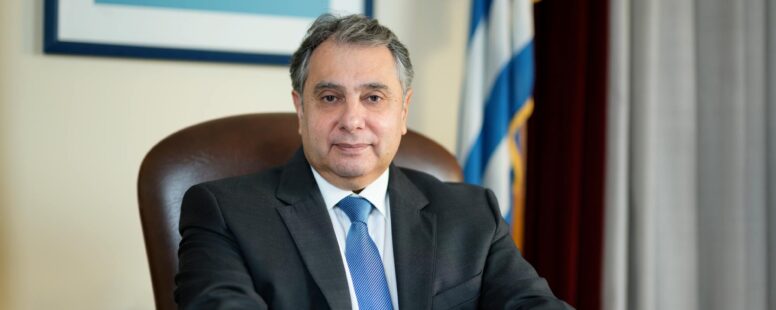
Mediterranean institutions and Chambers of Commerce will participate in the 2nd edition of Medsparc Business Summit, which will take place on May 12 and 13 in Izmir (Türkiye). This is an international summit organized by the Association of Businesswomen in Izmir (IZIKAD) which will feature insightful panel discussions to explore the intersection of green, digital, and social transformations. In addition, there will be B2B meetings that will bring together industry leaders, entrepreneurs, and investors to foster innovative collaborations. One of the speakers of this edition is Mr. Vasilis Korkidis, President of the Piraeus Chamber of Commerce and Industry, who explains in the following interview the reasons why to attend this international benchmark event. In the article, Mr. Korkidis gives us a preview of some of the topics to be addressed at the summit, such as the sustainable future of the Mediterranean, the opportunities of the blue economy, the key to fostering regional collaborations, inclusive entrepreneurship, innovation & digital transformation, and the new business opportunities in the region. Mr. Korkidis will participate along with Mr. Ahmed El Wakil, ASCAME’s President, Dr. Alaa Ezz, Secretary General of the Confederation of Egyptian European Business Associations (CEEBA) and the Federation of Egyptian Chambers of Commerce, and Ms. Rim Siam, Board Member of the ICC World Chambers Federation and President of the Economic Businesswomen Council.
Please, explain to us why to attend Medsparc. What are the main strengths of this summit?
Geopolitical developments on a global scale are defining a new picture on the international economic stage in which the green and digital transitions are inherent as key parameters that affect businesses while also determining social transformations. In this context, Medsparc becomes a unique opportunity to network, exchange knowledge and collaborate with industry leaders from across the Mediterranean. This is the place where prominent business representatives will present proposals that reflect the real foundations of the economy beyond political dimensions with the sole focus on development. The main strong points of this summit include analysis of the latest developments and opportunities in the fields of entrepreneurship, technology and sustainable development, meetings with leading professionals and institutions that can lead to new business and investment partnerships, and presentations and discussions with experts who provide valuable information and practical solutions to market challenges.
This year’s 2nd edition of Medsparc Business Summit will assess the sustainable future of the Mediterranean region by exploring the intersection of green, digital, and social transformations. To achieve the convergence of these three transformations, what should be the roadmap to be followed from now on by all the Mediterranean countries?
The roadmap has a “one-way street” marked out, which is cooperation. To achieve the convergence of the three transformations, we should take a look at the fields of cooperation on which business and operational actions will be described that can be developed. “Green energy” is just one of those fields that allows for collaborations at many levels, which also creates the framework for the digital transition. Technologies overlap and interact and, in some cases, one does not exclude the other from developing autonomously or in parallel. The clusters that can be developed will surely bring about social transformation as we all seek for the citizens of our countries to have a better economic situation and prosperity. The Mediterranean roadmap must therefore be based on cooperation, innovation and sustainability, ensuring that the region becomes a global center of green and digital development with strong social cohesion.
In your opinion, what innovative solutions and impactful partnerships could result from this summit?
The summit can be the springboard for new business models, technological investments and transnational collaborations, strengthening the Mediterranean as a center of innovation and sustainable development. For example, from the Piraeus CCI we believe that many synergies can be established in the field of the blue economy. Provided that we want positive signs in the coming years in the elements related to the development of entrepreneurship, we must invest in maritime innovation, which is a capital-intensive and knowledge-intensive sector, but also make every effort to improve the knowledge level of the human resources, which are active in the entire spectrum of maritime activities, on land and at sea, on new technologies, related to the effort of shipping, in the field of green transition.
The main strong points of Medsparc include analysis of the latest developments and opportunities in the fields of entrepreneurship, technology and sustainable development, meetings with leading professionals and institutions that can lead to new business and investment partnerships, and presentations and discussions with experts who provide valuable information and practical solutions to market challenges
This year’s theme is “Collaboration for a Sustainable Future”. What is the key to enhance regional collaboration and dialogue to achieve the strategic objectives set for the Mediterranean region? How to foster strategic partnerships between businesses from different cultures and sectors?
Strengthening regional cooperation and dialogue in the Mediterranean requires a comprehensive strategy based on transparency, innovation and mutual trust. A key priority is the formulation of a flexible production model, which will decisively contribute to ensuring the sustainability and competitiveness of businesses in a volatile international economic environment, overshadowed by geopolitical developments. This production model incorporates actions of the blue economy, and not only by recognizing that it is intertwined with development. Innovation, synergies, digitalization, business growth, training and retraining of executives in green technologies and AI are the pieces of the puzzle. Pieces that require special policies that should not ignore any different approaches between businesses from different cultures and sectors but should be composed by utilizing the strengths in development plans.
What do you expect from this year’s discussions and speakers who are invited?
This summit will be an excellent opportunity to analyse the challenges posed by climate change to all the countries of the Mediterranean from a business perspective. All Mediterranean countries have significant potential for climate change mitigation through an accelerated energy transition. This would include a gradual reduction in fossil fuels and a faster development of renewable energy sources. This ambitious energy transition, which goes beyond the plans and targets announced by governments and policymakers in line with their contributions to the UNFCCC Paris Agreement, requires a significant transformation of energy policies and economic models in Mediterranean countries. By 2040, the share of renewable energy sources could triple to 13-27% under current transition scenarios. Enhanced integration and cooperation of regional energy markets is crucial to unlock cost-effective climate change mitigation. Despite major research efforts in many disciplines and regions, a comprehensive assessment of the risks posed by climate and environmental changes in the Mediterranean basin has not yet been carried out. Many countries in the Middle East and North Africa (MENA) are likely to face potentially greater risks from climate and environmental change than other regions of the Mediterranean basin, but have limited capacity to monitor key environmental parameters or conduct appropriate risk analyses. The main challenges for the Mediterranean are to fill the data and knowledge gaps in the various countries and to promote the development of high-level climate services, including early warning systems.
Many countries in the Middle East and North Africa (MENA) are likely to face potentially greater risks from climate and environmental change than other regions of the Mediterranean basin, but have limited capacity to monitor key environmental parameters or conduct appropriate risk analyses
One of the key topics of Medsparc is the inclusive entrepreneurship in the region. From what perspective will this issue be addressed?
Poverty, inequalities and gender imbalances currently hinder the achievement of sustainable development and resilience in the Mediterranean countries. Culture is a key factor for the success of adaptation policies in the highly diverse multicultural environment of the Mediterranean basin. Growth losses due to inequality in recent years have consistently been more pronounced in the Southern Mediterranean countries than in Northern Mediterranean countries. The success of adaptation strategies must include consideration of specific circumstances, in sectoral, political and socio-economic contexts, ensuring dialogue between stakeholders through cooperation structures, knowledge transfer and monitoring of progress through regular reviews of policy objectives and the inclusion of new scientific information as it becomes available.
Regarding last question, what is the key to empowering Mediterranean women entrepreneurs? In addition, how to establish the Mediterranean Trade Network with the strength of women?
The key to empowering women entrepreneurs in the Mediterranean lies in creating a strong support ecosystem, which includes: the development of targeted financial tools that support women’s business initiatives, training, consulting and mentoring programs by successful professionals to develop skills and boost self-confidence, as well as creating connections between women entrepreneurs, companies and institutions to exchange knowledge and opportunities. Through the use of digital tools, I believe that a “Mediterranean Trade Network” can be created with the power of women through the establishment of an official platform that will bring together women entrepreneurs from different Mediterranean countries, providing access to markets, investors and business partnerships. The Mediterranean Women’s Business Network can become a dynamic community that will transform the business landscape, promoting equality, innovation and economic growth across the region.
Medsparc is also about innovation. What is the key to fostering innovative practices in various industries? What examples will be shown in the summit?
Key elements that contribute to enhancing innovation include: the adoption of advanced technologies such as Artificial Intelligence, the Internet of Things (IoT) and Blockchain to improve productivity and sustainability, the development of joint research programs and the application of scientific discoveries in real business solutions, the support of start-ups & investments as well as the development of technologies that reduce the environmental footprint, strengthen the circular economy and contribute to climate resilience. I estimate that topics related to renewable energy sources and green technologies, smart cities and the use of technologies such as AI and drones will be presented.
This event will focus on new business opportunities in Mediterranean countries. What are the main solutions that will be proposed at Medsparc?
The Medsparc Business Summit is expected to present key solutions and strategies that can create new business opportunities in the Mediterranean, focusing on sustainability, innovation and collaboration. The solutions for new business opportunities in the Mediterranean are linked to investments in solar and wind energy, the development of energy storage projects and the promotion of the circular economy, the support of start-ups active in Artificial Intelligence (AI), Fintech, Blockchain and agri-tech, the development of sustainable tourism models, the creation of joint investment schemes, as well as the development of logistics hubs to enhance trans-Mediterranean trade.
Solutions for new business opportunities in the Mediterranean are linked to investments in solar and wind energy, the development of energy storage projects and the promotion of the circular economy, the support of start-ups active in Artificial Intelligence, Fintech, Blockchain and agri-tech, the development of sustainable tourism models, the creation of joint investment schemes, as well as the development of logistics hubs to enhance trans-Mediterranean trade
Finally, what initiatives and actions carried out in your country will you present at this summit?
We will present initiatives and actions that promote sustainability, innovation and regional cooperation in our country. These initiatives can serve as good examples for other Mediterranean countries, because they are applicable, effective and adaptable to the needs of the region. One of them concerns the blue economy. The current reality in the business field requires the development of the best possible synergies with the aim of a better presence in the markets and the strengthening of the position in them. We know that the output of the global seas’ economy is currently estimated at 1.3 trillion euros, an amount that could be more than double by 2030. We also know that, of all the sectors of the blue economy, innovation is crucial for harnessing the growth potential and creating jobs. In the Mediterranean basin, the blue economy is of particular importance since it employs approximately 35% of all workers in Europe (approximately 1,800,000 people), while approximately 30% of the gross value added (GVA) is produced, i.e. approximately €60 billion according to data from previous analysis. The Mediterranean is losing its primacy in the blue economy at a European level since it shows a significantly lower total value of investments and profits, due to the various structural problems of the countries in the region compared to Northern Europe. Coming to the case of Greece, one could say that the blue economy is particularly important for the country’s economy, if not the most important. Furthermore, it would not be an exaggeration to note that Greece is very important for the European economy in this context, since it ranks 7th (out of 28) in the contribution of gross added value.